Choosing Soft Pastels for Blending, Dust, and Cost
Sennelier Soft Pastels lead for pigment richness and blend easily on paper or board. Mungyo Gallery Handmade fits beginners on a tighter budget. Rembrandt Soft Pastels suit painters who want firmer sticks with less breakage. All three layer well across multiple sessions.
Sennelier Soft Pastels stand out for pigment saturation, delivering strong color in a single pass without heavy layering.
Softness and pigment load trade off against durability, so we compared binder ratios, stick shapes, and owner reports on breakage to find sets that balance both.
The best picks, ranked

Sennelier Soft Pastels, 40-Half Stick Set
High pigment concentration gives strong color coverage in a single stroke, useful for landscape and portrait work. A soft, oil-free binder blends easily with a finger or blending stump. Half sticks cut cost while keeping the same pigment quality as full-size sticks.
Pros
- Strong pigment payoff in a single layer
- Blends smoothly without heavy pressure
- Half-stick format lowers cost per set
Cons
- Softer sticks break more easily if dropped
- Produces more dust than firmer pastel brands

Rembrandt Soft Pastels, 30-Half Stick Set
Rembrandt sticks hold a firmer shape than Sennelier, cutting breakage during transport. Colors layer well as an underpainting base before softer pastels go on top. A square profile handles both broad fills and edge work with one stick.
Pros
- Square shape works for both broad fills and edges
- Firmer hold reduces breakage in transit
- Solid base layer under softer pastel brands
Cons
- Less vivid than Sennelier in a single layer
- Needs more layering for deep saturation

Mungyo Gallery Handmade Soft Pastels, 48-Color Set
This set gives beginners a wide color range without the cost of premium French or Dutch brands. Pigment sits below Sennelier’s level but holds up fine for practice work and studies. Round, slightly harder sticks help new users avoid excessive breakage while learning technique.
Pros
- Wide 48-color range at a low cost per stick
- Firmer sticks resist breaking for beginners
- Full-size sticks last longer per color
Cons
- Lower pigment saturation than premium brands
- Colors can look chalky without multiple layers
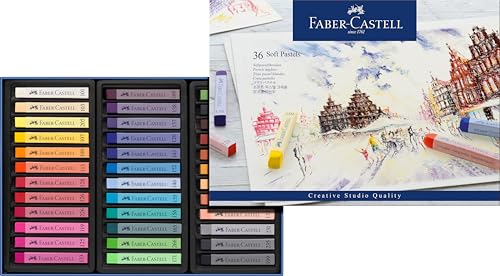
Faber-Castell Creative Studio Soft Pastels, 36-Count
A mid-range pigment load and consistent stick shape suit art classrooms and students building technique. Dust output stays lower than fully soft French pastels, useful in shared studio spaces. Colors mix reasonably well but need more pressure than Sennelier to reach full depth.
Pros
- Lower dust output suits shared classroom spaces
- Consistent stick shape for teaching technique
- Reasonably priced for a 36-color range
Cons
- Needs more pressure to achieve deep color
- Fewer specialty tones than professional sets

Pastels by Sennelier Extra Soft Half Stick Set, 12 Portrait Colors
A curated 12-color range targets skin tones and warm neutrals instead of a full spectrum. Portrait artists who don’t need greens or blues get a tighter, purpose-built starter set. Pigment quality matches the larger Sennelier line, with the same soft, blendable texture.
Pros
- Curated skin-tone palette saves mixing time
- Same high pigment quality as full Sennelier range
- Smaller set travels more easily
Cons
- Limited to portrait-focused colors, no greens or blues
- Fewer colors means fewer contrast options
Royal Talens Panda Soft Pastels, 25-Color Set
Designed for young students, this set uses a firmer, less messy formula than professional soft pastels. Sticks resist snapping under normal classroom handling. The color range stays basic but covers primary and secondary tones needed for early art education.
Pros
- Firmer sticks handle rougher classroom use
- Square shape teaches both fill and edge technique
- Lower dust than professional soft pastel lines
Cons
- Pigment intensity falls short of artist-grade sets
- Color range is limited next to 40+ sets
Blick Artists’ Soft Pastels, Assorted 30-Color Set
This mid-price set sits softer than Rembrandt but firmer than Sennelier, a middle ground for studio work. Colors blend well across multiple layers without excessive dust. It works as an everyday studio option rather than a specialty or beginner kit.
Pros
- Balanced softness works for layering and blending
- Manageable dust level for studio use
- Full-size sticks offer good longevity per color
Cons
- Not as saturated as premium French pastel brands
- Round shape limits precise edge control
How they compare
| # | Model | Stick count | Best for | Score | Price |
|---|---|---|---|---|---|
| 1 | Sennelier Soft Pastels, 40-Half Stick Set | 40 half sticks | Best overall | 9.5 | Check price |
| 2 | Rembrandt Soft Pastels, 30-Half Stick Set | 30 half sticks | Best for durability | 9.1 | Check price |
| 3 | Mungyo Gallery Handmade Soft Pastels, 48-Color Set | 48 full sticks | Best value | 8.7 | Check price |
| 4 | Faber-Castell Creative Studio Soft Pastels, 36-Count | 36 full sticks | Best for students | 8.5 | Check price |
| 5 | Pastels by Sennelier Extra Soft Half Stick Set, 12 Portrait Colors | 12 half sticks | Best for portraits | 8.3 | Check price |
| 6 | Royal Talens Panda Soft Pastels, 25-Color Set | 25 full sticks | Best for kids and beginners | 8.1 | Check price |
| 7 | Blick Artists’ Soft Pastels, Assorted 30-Color Set | 30 full sticks | Best for studio blending | 8.0 | Check price |
What matters most
What makes a pastel soft vs hard Binder ratio controls softness. Less binder and more pure pigment creates a softer stick that blends easily but breaks more often. Harder pastels hold their shape better for sketching and fine lines. Most artists keep both types on hand for different stages of a piece.
How pigment load affects color payoff Higher pigment concentration means stronger color in fewer layers. Premium brands like Sennelier use less filler, so a single stroke covers more visibly. Budget sets often need two or three layers to reach the same depth. Chalky color in owner reviews usually points to a low pigment load.
Choosing a set size for your skill level Beginners rarely need 40 or more colors right away. A 25 to 30 color set covers primary mixing needs without overwhelming a new artist. Portrait specialists benefit from curated skin-tone sets instead of a full spectrum. Gaps in a palette become clear with practice, and that’s the right time to expand.
Managing dust and breakage Softer pastels shed more dust during blending, which affects paper choice and workspace cleanup. Foam-lined boxes reduce breakage during storage and transport. Square sticks tend to survive drops better than round ones. A fixative spray after each session limits smudging on finished work.
Questions worth asking
What is the best soft pastel brand for beginners?
Mungyo Gallery Handmade and Royal Talens Panda sets offer a solid color range at lower cost, with firmer sticks that resist breaking during early practice.
Are soft pastels better than oil pastels?
Soft pastels behave more like powder pigment and suit layering techniques, while oil pastels are stickier and better for bold, unblended strokes.
How many soft pastels do I need to start?
A 24 to 30 color set covers most beginner needs; larger 40-plus sets add convenience but aren’t required at the start.
Do soft pastels expire or dry out?
Soft pastels contain minimal liquid binder, so they don’t dry out like paint, and a well-stored set lasts for years.
Soft pastels vs hard pastels, what is the difference?
Soft pastels carry more pigment and less binder for rich color and blending, while hard pastels hold a point better for detail and underdrawing.
What paper works best with soft pastels?
Textured or sanded pastel paper holds pigment better than smooth printer paper, which lets color fall off after light handling.
Can soft pastels be used for portrait work?
Yes, curated skin-tone sets like Sennelier’s portrait selection focus pigment choices on warm neutrals suited to skin rendering.
How do you stop soft pastels from creating too much dust?
Working over a drop cloth, using less pressure, and choosing a medium-soft brand instead of the softest options cuts dust output.
Which soft pastels last longest without breaking?
Firmer sticks like Rembrandt and Royal Talens Panda hold up better in transit and daily handling than fully soft French-style pastels.
The bottom line
Sennelier Soft Pastels deliver the strongest pigment payoff for artists ready to manage extra dust and breakage. Beginners on a budget should start with Mungyo Gallery Handmade instead, and anyone prioritizing durability over pure saturation gets more consistent results from Rembrandt’s firmer sticks.