Solar Mosquito Traps That Actually Keep Your Yard Bite-Free
The Flowtron BK-15D leads our list because it uses a powerful UV bulb and fan to draw in mosquitoes over a full acre, and it runs on solar power with battery backup. Its main limitation is that it requires direct sunlight for the solar panel to charge effectively. For smaller spaces, the LiBa Solar Mosquito Killer offers a compact, waterproof design that suits patios and balconies.
Mosquitoes can turn a pleasant evening outdoors into an itchy ordeal. Solar mosquito traps offer an eco-friendly way to reduce their numbers without cords or chemicals. They harness sunlight to power fans, lights, or electric grids that attract and capture mosquitoes.
Choosing the right trap depends on your yard size, typical mosquito activity, and willingness to clean the device. Some models are set-and-forget, while others need regular emptying. We compared specifications and owner experiences to help you pick the best fit.
What to look for
Our top picks

Flowtron BK-15D Electronic Insect Killer
This unit combines a 15-watt UV bulb and an internal fan to pull insects into a catch basin. It can be powered by the included solar panel or an AC adapter for continuous operation. Owners report significant mosquito reduction in their yards when the trap is placed away from human activity.
Pros
- Large coverage area
- Dual power options
- Effective fan and UV combination
Cons
- Requires direct sunlight for solar charging
- Some assembly needed

LiBa Solar Mosquito Killer
A stake-mounted trap with a UV LED light and a fan that sucks mosquitoes into a holding chamber. The solar panel is integrated into the top, and the unit is waterproof for year-round outdoor use. Users like its low profile and easy-to-clean tray.
Pros
- No wiring needed
- Weatherproof design
- Quiet operation
Cons
- Smaller coverage area
- Battery may need replacement after a few seasons
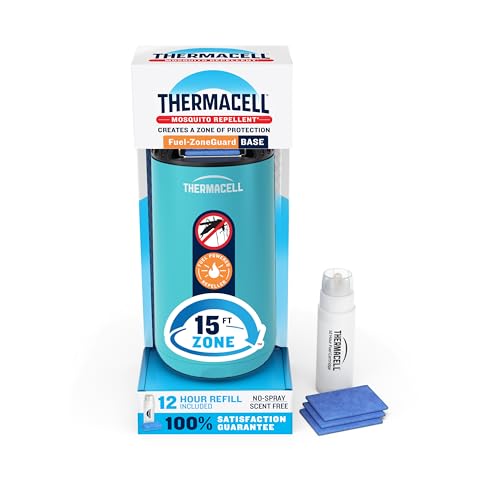
Thermacell MR-SG Mosquito Repellent Patio Shield
Although not a trap, this solar-powered device creates a 15-foot zone of protection using a heat-activated repellent pad. It is designed for patios, decks, and camping. Users appreciate its portability and the fact that it does not require a fan or light.
Pros
- Extremely portable
- Quick activation
- No dead insects to clean
Cons
- Requires periodic refills
- Not effective in high wind

Gowi Mosquito Killer Lamp
This lamp uses a UV light and a fan to trap mosquitoes, and it also doubles as an LED night light. It can be charged via the solar panel or a USB cable. The compact size suits small gardens, porches, or even indoor use if placed near a window.
Pros
- Affordable price point
- Two-in-one light and trap
- Dual charging options
Cons
- Small capacity requires frequent emptying
- Solar panel is small

Zeropest Solar Mosquito Zapper
A solar-powered stake with a metal grid that electrifies mosquitoes on contact. It emits a blue-violet light to attract insects. The grid is rainproof, and the unit has an on/off switch. Owners report satisfying zaps and easy installation.
Pros
- No need to clean captured insects
- Durable construction
- Effective against multiple flying insects
Cons
- Zapping sound may be annoying
- Requires cleaning of dead insects on grid

Neatfi Solar Mosquito Lamp with Fan
This trap comes with a stake and a hanging hook, letting you place it anywhere. It features a UV lamp and a fan that pulls bugs into a catch tray. The solar panel is separate and connected by a cord, so you can position the panel for maximum sun while the trap stays in a shaded spot.
Pros
- Flexible placement options
- Detachable solar panel
- Easy to clean tray
Cons
- Solar panel cable may be short
- Battery life could be longer

Homasy Solar Mosquito Killer Lamp
A lightweight, foldable trap that can be hung from a tree or placed on a table. It uses a UV light and a fan to capture mosquitoes. The unit has a USB charging port for cloudy days, making it ideal for camping trips. Users like its small footprint and effective performance in tents.
Pros
- Very portable
- USB charging backup
- Hanging loop included
Cons
- Smaller catch basin
- Not as powerful for large areas
How they stack up
| # | Model | Coverage | Best for | Score | Price |
|---|---|---|---|---|---|
| 1 | Flowtron BK-15D Electronic Insect Killer | Up to 1 acre | Large yards up to 1 acre | 9.4 | Check price |
| 2 | LiBa Solar Mosquito Killer | Approximately 500 sq ft | Patios and balconies | 8.8 | Check price |
| 3 | Thermacell MR-SG Mosquito Repellent Patio Shield | 15-foot zone | Effective zone repellent without killing | 8.6 | Check price |
| 4 | Gowi Mosquito Killer Lamp | 300 sq ft | Budget-friendly with dual function | 8.4 | Check price |
| 5 | Zeropest Solar Mosquito Zapper | Up to 800 sq ft | Electric grid zapping | 8.2 | Check price |
| 6 | Neatfi Solar Mosquito Lamp with Fan | 600 sq ft | Versatile hanging or stake use | 8.1 | Check price |
| 7 | Homasy Solar Mosquito Killer Lamp | 300 sq ft | Outdoor camping and travel | 8.0 | Check price |
Frequently asked questions
Do solar mosquito traps really work?
Solar mosquito traps can be effective when placed correctly and maintained. They work best in smaller, contained areas. Many users report noticeable reductions in mosquito activity, but they may not eliminate all mosquitoes, especially in large open yards.
How far does a solar mosquito trap cover?
Coverage varies by model. Some compact units cover about 300 square feet, while larger traps can cover up to 1 acre. Always check the manufacturer’s specifications for the specific model you consider.
How do I charge a solar mosquito trap on cloudy days?
Many solar traps have a USB charging port as a backup. You can charge the internal battery via USB when sunlight is insufficient. Some models also allow you to use an AC adapter if available.
Are solar mosquito traps safe for pets?
Solar traps do not use chemicals, so they are generally safe for pets. However, if the trap uses an electric grid, keep it out of reach of curious pets to avoid accidental shocks. The grids are usually low voltage, but it is best to supervise.
How often do I need to clean the trap?
For fan-based traps, empty the catch basin every 2 to 3 days during peak mosquito season. Electric grid traps may need cleaning every week or so. Regular maintenance ensures the trap works efficiently.
Can I use solar mosquito traps indoors?
Yes, you can use them indoors near windows or doors where mosquitoes may enter. However, the solar panel needs sunlight, so you will need to place the panel outside or use USB charging for indoor use.
What attracts mosquitoes to the trap?
Most traps use UV light, which is attractive to many insects. Some models also emit carbon dioxide or use a fan to create a plume of air that mosquitoes follow. However, UV light alone is less effective than other attractants for host-seeking mosquitoes.
How long do the batteries last?
Battery life varies, but most solar traps can run for 6 to 12 hours on a full charge. Over time, battery capacity diminishes, and you may need to replace them after 1 to 2 years of use.
Are solar mosquito traps weatherproof?
Most are designed for outdoor use and are water-resistant or waterproof. However, prolonged exposure to heavy rain or snow may damage them. It is advisable to store them indoors during extreme weather or off-season.
Do these traps kill beneficial insects?
UV light primarily attracts mosquitoes and other flying insects like moths and flies. It does not attract bees or butterflies, which are active during the day and not drawn to UV light. Thus, the impact on beneficial insects is minimal.
The bottom line
For most homeowners, the Flowtron BK-15D is the best choice due to its large coverage and effective fan and UV combination. If you need a portable solution for camping or small patios, the LiBa Solar Mosquito Killer offers reliable performance in a compact package. Avoid models with only UV light and no fan, as they are less effective.


