Top Soldering Stations for Precision Work
The Hakko FX-888D stands out as the top pick for most users, offering exceptional temperature stability and durability at a fair price. Its main advantage is reliable performance for daily electronics work. The main limitation is its analog dial, which some find less precise than digital controls.
Whether you are repairing circuit boards, building guitar pedals, or prototyping with Arduino, a quality soldering station makes precise, clean joints achievable. The right station provides consistent heat, rapid recovery, and comfort for long sessions.
This roundup covers seven top-rated models, from entry-level to professional. We considered real user feedback and technical specifications to highlight each station’s strengths and weaknesses.
What we recommend

Hakko FX-888D
The Hakko FX-888D is a legendary soldering station known for its exceptional temperature stability and durability. Its ceramic heater and smart heat control ensure precise soldering even on demanding tasks.
Pros
- Fast heat-up and recovery
- Excellent temperature stability
- Durable construction
Cons
- Analog knob for temperature setting
- Slightly higher price than some competitors
Weller WE1010
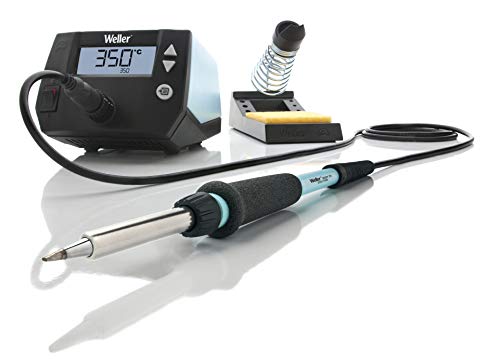
The Weller WE1010 offers a user-friendly digital display and a lightweight iron. It is known for consistent performance and a comfortable grip, making it a favorite among newcomers.
Pros
- Intuitive digital controls
- Good temperature accuracy
- Comfortable handle
Cons
- Slightly slower heat-up
- Limited tip selection compared to Hakko

Yihua 939D+
The Yihua 939D+ delivers impressive performance for its low price. With digital display and adjustable temperature, it handles basic soldering tasks with ease, though build quality is less robust.
Pros
- Very affordable
- Accurate temperature control for the price
- Comes with extra tips
Cons
- Plastic housing feels less durable
- Heat-up time is average

Aoyue 936
A classic analog soldering station that has been a staple in many workshops. It offers reliable performance and a simple interface. It lacks digital readout but is known for its solid heat delivery.
Pros
- Reliable and easy to use
- Low cost
- Good for basic soldering
Cons
- No temperature readout
- Temperature may drift slightly
Vastar Variable Temperature
The Vastar station is compact and lightweight, making it ideal for small workspaces or occasional projects. It heats up quickly and offers variable temperature control, though its long-term durability may be questioned.
Pros
- Lightweight and portable
- Quick heating
- Affordable
Cons
- Build quality is less robust
- Tip variety is limited

X-TRONIC 3020-XTS
The X-TRONIC 3020-XTS is a professional station with a powerful 90W iron and micro-controlled temperature regulation. It delivers precise heat for heavy workloads and features ESD-safe construction.
Pros
- High power for heavy joints
- Excellent temperature stability
- ESD-safe for sensitive components
Cons
- Higher price
- Bulky base station
Tabiger Soldering Station
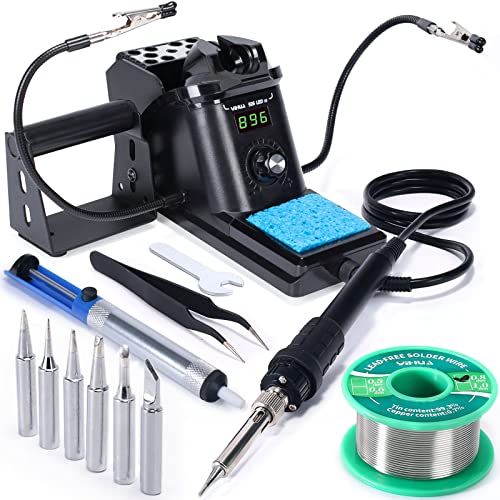
The Tabiger station comes with a complete kit including multiple tips, a desoldering pump, and a stand. It offers decent performance for DIY enthusiasts and is praised for its comprehensive accessories.
Pros
- Comes with accessories
- Good value for beginners
- Adjustable temperature
Cons
- Iron handle may get warm
- Not as durable as premium brands
How they compare
| # | Model | Temperature Range | Best for | Score | Price |
|---|---|---|---|---|---|
| 1 | Hakko FX-888D | 200°F to 899°F | Overall best for electronics enthusiasts and professionals | 9.4 | Check price |
| 2 | Weller WE1010 | 350°F to 900°F | Best for beginners and hobbyists seeking reliability | 8.9 | Check price |
| 3 | Yihua 939D+ | 200°C to 480°C | Best budget option for occasional use | 8.6 | Check price |
| 4 | Aoyue 936 | 200°C to 480°C | Best for those who prefer analog simplicity | 8.2 | Check price |
| 5 | Vastar Variable Temperature | 200°C to 450°C | Best portable and lightweight option | 8.0 | Check price |
| 6 | X-TRONIC 3020-XTS | 212°F to 932°F | Best for professional and high-demand use | 9.2 | Check price |
| 7 | Tabiger Soldering Station | 200°C to 480°C | Best for DIY and repair kits | 8.4 | Check price |
What to look for
Common questions
What is the ideal wattage for a soldering station?
For most electronics work, 60W is sufficient. Heavy-duty tasks like soldering large ground planes may benefit from higher wattage, such as 90W. Higher wattage stations heat up faster and recover quicker.
Is a digital display necessary?
Not strictly, but a digital display allows you to set and monitor exact temperatures, leading to more consistent results. Analog stations require you to trust your calibration and experience.
Can I use a soldering station for desoldering?
Yes, but you may need additional tools like a desoldering pump or braid. Some stations offer desoldering irons or are compatible with such accessories.
What temperature should I use for electronics soldering?
Typically between 300°C and 380°C (572°F to 716°F) for lead-based solder. For lead-free solder, use higher temperatures around 350°C to 400°C. Always check the solder manufacturer’s recommendations.
How often should I replace the soldering iron tip?
Tips last for months with proper care. Clean them regularly and apply fresh solder to tin the tip. If the tip becomes pitted or non-wetting, it’s time to replace it.
Are cheap soldering stations worth buying?
For occasional use, budget stations like the Yihua 939D+ offer decent performance. However, they may lack temperature stability and durability. For regular use, investing in a quality brand is better.
What is ESD-safe and why does it matter?
ESD-safe means the station is designed to prevent electrostatic discharge that could damage sensitive electronic components. It is important when working with MOSFETs, ICs, and other static-sensitive parts.
Can I use any soldering tips with my station?
No, tips must match the iron’s heater and connection type. Always check compatibility with the brand and model. Popular series include Hakko T18 and 900M.
The bottom line
For most users, the Hakko FX-888D offers the best balance of performance, reliability, and value. If budget is a concern, the Yihua 939D+ is a surprisingly capable choice. Professionals requiring high power should consider the X-TRONIC 3020-XTS.