Portable SSDs Built for the Road
The Samsung T7 Shield takes the top spot for most travelers. It is compact, fast, and rugged enough to survive drops and dust. Its main limitation is the lack of an IP68 rating, but it handles everyday travel hazards well.
Traveling with data can be risky. Laptops get bumped, backpacks get tossed, and coffee spills happen. A solid state drive built for travel keeps your photos, videos, and work files safe without weighing you down.
The best travel SSDs are small enough to slip into a pocket, tough enough to handle a drop, and fast enough to edit video on the go. We looked at real-world specs and owner feedback to narrow down the field.
The shortlist, ranked
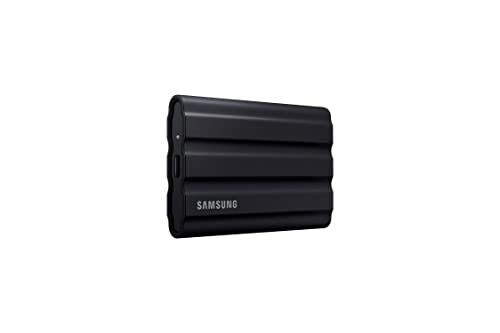
Samsung T7 Shield
The Samsung T7 Shield is a rugged, pocket-sized SSD with IP65 water and dust resistance. It delivers sequential read speeds up to 1,050 MB/s and write speeds up to 1,000 MB/s. Owners report it stays cool even during long transfers, and the included USB-C cable works with modern laptops and phones.
Pros
- Fast real-world performance
- Rugged build with IP65 rating
- Compact and lightweight
Cons
- No IP68 for full submersion
- Can get warm under heavy load
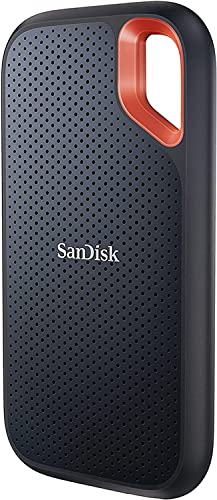
SanDisk Extreme Pro
The SanDisk Extreme Pro is a top choice for creative professionals. It offers read speeds up to 2,000 MB/s and write speeds up to 1,900 MB/s, making it one of the quickest portable SSDs available. Its forged aluminum enclosure provides drop protection up to 3 meters, and it is IP65 water and dust resistant. Owners love the included USB-C to USB-C cable and the ability to edit 4K video directly from the drive.
Pros
- Blazing fast transfer speeds
- Sleek and durable design
- Great for on-the-go editing
Cons
- Requires USB 3.2 Gen 2×2 port for max speed
- Pricier per GB than other options

LaCie Rugged SSD Pro
The LaCie Rugged SSD Pro is engineered for the most demanding environments. It features IP67 water and dust resistance and can withstand drops from up to 3 meters. With read speeds up to 2,800 MB/s and write speeds up to 2,300 MB/s, it is also incredibly fast. The integrated Thunderbolt 3 cable is a nice touch, though you will need a Thunderbolt port to unlock full performance.
Pros
- Extreme durability with IP67
- Thunderbolt 3 speed
- No cable to lose
Cons
- Heavier and bulkier
- High cost per GB
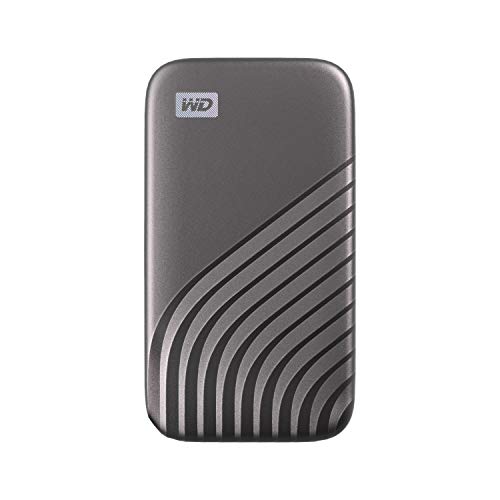
WD My Passport SSD
The WD My Passport SSD is a solid, affordable choice for travelers who need dependable storage without breaking the bank. It offers read speeds up to 1,050 MB/s and write speeds up to 1,000 MB/s. The drive is drop resistant up to 1.98 meters and comes with password protection and 256-bit AES hardware encryption. Owners appreciate its slim profile and the included USB-C cable.
Pros
- Affordable price
- Hardware encryption built in
- Lightweight and compact
Cons
- No water or dust resistance
- Slower than premium models
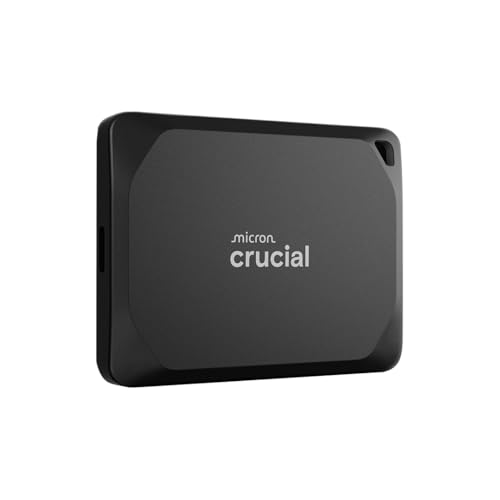
Crucial X10 Pro
The Crucial X10 Pro is a small but mighty SSD that appeals to content creators. It delivers read speeds up to 2,100 MB/s and write speeds up to 2,000 MB/s, making it one of the fastest USB 3.2 Gen 2×2 drives. It is IP55 rated for water and dust resistance and can survive drops from up to 7.5 feet. The drive comes with a USB-C cable and is compatible with PS4, PS5, Xbox, and PC.
Pros
- Very fast sequential speeds
- Rugged enough for travel
- Compact and lightweight
Cons
- IP55 less than IP65 or IP67
- 2×2 port required for peak performance

ADATA SE800
The ADATA SE800 is a rugged portable SSD that stands out for its IP68 rating, meaning it is fully dustproof and can be submerged in water up to 1.5 meters for 30 minutes. It offers read and write speeds up to 1,000 MB/s via USB 3.2 Gen 2. The drive is encased in a durable aluminum shell with a rubber bumper for extra protection. Owners like its affordability and peace of mind outdoors.
Pros
- IP68 waterproof rating
- Military-grade shock resistance
- Good value for ruggedness
Cons
- Speeds are average
- Rubber coating attracts dust

G-Technology ArmorATD
The G-Technology ArmorATD is a portable SSD that combines durability with macOS compatibility. It is IP67 water and dust resistant and can withstand drops from up to 3 meters. With read speeds up to 1,050 MB/s and write speeds up to 1,000 MB/s, it is quick enough for most travel needs. The drive comes with a USB-C cable and is formatted for Mac, but can be reformatted for Windows. Owners appreciate its lightweight design and the included carrying case.
Pros
- Lightweight and rugged
- Formatted for Mac out of the box
- Includes carrying case
Cons
- No hardware encryption
- Requires reformat for Windows use
Side by side
| # | Model | Capacity | Best for | Score | Price |
|---|---|---|---|---|---|
| 1 | Samsung T7 Shield | 1TB, 2TB, 4TB | Best overall travel SSD | 9.4 | Check price |
| 2 | SanDisk Extreme Pro | 1TB, 2TB, 4TB | Fastest speeds for video editors | 9.2 | Check price |
| 3 | LaCie Rugged SSD Pro | 1TB, 2TB | Maximum durability for extreme conditions | 9.0 | Check price |
| 4 | WD My Passport SSD | 500GB, 1TB, 2TB, 4TB | Budget-friendly reliable storage | 8.8 | Check price |
| 5 | Crucial X10 Pro | 1TB, 2TB, 4TB | Compact high-performance for creators | 8.7 | Check price |
| 6 | ADATA SE800 | 1TB, 2TB | Waterproof and portable | 8.5 | Check price |
| 7 | G-Technology ArmorATD | 1TB, 2TB | Lightweight rugged option for Mac users | 8.3 | Check price |
How to pick the right one
Common questions
What is the most durable portable SSD for travel?
The LaCie Rugged SSD Pro offers IP67 and drop resistance up to 3 meters, but the ADATA SE800 goes further with IP68, so it can be submerged deeper. For most travel, IP65 or higher is sufficient.
How fast do travel SSDs need to be?
For general file storage and backups, speeds of 1,000 MB/s are fine. If you edit high-resolution video directly from the drive, look for speeds above 2,000 MB/s, like the SanDisk Extreme Pro or Crucial X10 Pro.
Can I use a travel SSD with my phone?
Yes, many portable SSDs work with smartphones that support USB-C or USB on the go (OTG). You may need an adapter for iPhones. Check the drive’s compatibility, but most modern SSDs work with Android devices.
How much capacity do I need?
For trips with lots of photos and videos, 1TB is a good starting point. If you carry large media libraries or need to back up a full laptop, consider 2TB or more. 500GB is enough for documents and some photos.
Are travel SSDs safe to put in checked luggage?
SSDs are more shock-resistant than hard drives, but extreme temperatures and pressure changes in cargo holds can still be risky. It is safer to keep them in your carry-on, where you can also prevent theft.
Do I need a special cable for fast speeds?
Yes, to achieve the maximum speed of drives like the SanDisk Extreme Pro, you need a USB 3.2 Gen 2×2 port and cable. Most modern laptops have USB-C, but check the spec. For Thunderbolt drives, you need a Thunderbolt port.
What is the difference between IP65 and IP68?
IP65 means the drive is dust tight and protected against low-pressure water jets. IP68 means it is dust tight and can be immersed in water beyond 1 meter, typically up to 1.5 meters or more, for 30 minutes. IP68 is better for accidental drops in water.
Can I use a travel SSD for gaming on the go?
Yes, many portable SSDs are compatible with gaming consoles like the PS5 and Xbox Series X. They can store and play games, but you may need to move games to the console’s internal storage for optimal performance.
Final word
For most travelers, the Samsung T7 Shield is the best choice because it balances speed, durability, and price. If you need the fastest speeds for professional video work, go with the SanDisk Extreme Pro. For extreme conditions where water submersion is a real risk, the ADATA SE800 offers the highest IP rating. Avoid the LaCie Rugged SSD Pro unless you absolutely need Thunderbolt speeds and are willing to pay a premium for extra bulk.
You might also need

Compact Network Switches Built for Tight Spaces and Quiet Corners

Professional Racing Wheels Built for Serious Sim Racers

Portable Strategy Games for PlayStation: Our Top Picks
