Speed Cubes for Faster Solves, From Budget to Pro
The GAN 356 M is our overall pick for its adjustable magnets and refined turning feel. The MoYu RS3 M delivers close to flagship performance for a fraction of the outlay, and the QiYi Warrior W is the sensible first cube before anyone commits to the hobby.
If you are past the beginner method and want a cube that stops limiting you, the GAN 356 M is the one to buy, with the MoYu RS3 M offering close to the same experience for far less and the QiYi Warrior W the right first purchase for someone who has not yet decided whether this is a hobby.
Speed cubes are confusing to compare because the specifications that get advertised, corner cutting angles and magnet grades, mean very little until you have felt the difference, and preference varies genuinely between solvers. We compared magnet systems, adjustability, corner cutting and out of box setup, then ranked the seven below by how well each suits a particular stage rather than by raw speed.
The shortlist, ranked

GAN 356 M 3×3 Magnetic Speed Cube
A flagship level cube with adjustable magnet strength and a tensioning system that can be tuned without dismantling the cube, so the same puzzle can suit a light flick or a firm turn. The corner cutting is generous enough that misaligned layers still turn through. Owners report it is the cube that removes hardware as an excuse, leaving only technique.
Pros
- Magnet strength genuinely adjustable to preference
- Excellent corner cutting in both directions
- Tuning without dismantling the cube
Cons
- Costs several times a good budget cube
- So many adjustments that new solvers overtune it

MoYu RS3 M Magnetic Speed Cube
The cube that reset expectations for what a budget magnetic 3×3 should feel like, with a smooth turn, sensible magnet strength and adjustable tensions out of the box. It gets very close to flagship behaviour for a small fraction of the outlay. Owners report it is the standard recommendation for anyone moving on from a beginner cube, and that many competitive solvers keep one regardless.
Pros
- Close to flagship feel at a fraction of the cost
- Good out of the box setup with no tuning needed
- Widely available and consistently produced
Cons
- Magnet strength is not adjustable
- Plastic feels less refined than flagship shells

QiYi MS 3×3 Magnetic Speed Cube
An entry level magnetic cube that delivers the alignment assist magnets provide without approaching flagship pricing, which makes it the natural upgrade from a non magnetic beginner puzzle. The magnets are moderate rather than strong, which suits solvers still developing turning accuracy. Owners report it as the point where most people first understand why magnets matter.
Pros
- Very affordable introduction to magnets
- Moderate magnet strength forgives imprecise turns
- Good corner cutting for the price
Cons
- Less refined turning than higher tiers
- Tension system is basic

GAN 12 Maglev 3×3 Speed Cube
A top tier cube using magnetic repulsion in place of springs, which removes the spring noise entirely and gives an unusually smooth, quiet turn. The difference is subtle and matters most to solvers already near their technique ceiling. Owners report the feel is genuinely distinctive, while acknowledging it will not shave seconds off an intermediate solver’s average.
Pros
- Spring free suspension gives a distinctive smooth turn
- Very quiet compared with sprung cubes
- Core magnet strength is adjustable
Cons
- Expensive relative to the practical gain
- Complex adjustment system

MoYu WeiLong WR M Magnetic Speed Cube
A long running competition series cube known for a fast, slightly crisp turn and strong stability at speed, which suits solvers who turn hard rather than lightly. Successive versions have refined the magnet and core arrangement. Owners report it is a frequent choice among competitive solvers who prefer a firmer feel than the GAN flagships offer.
Pros
- Stable under fast heavy turning
- Well proven in competition use
- Strong corner cutting
Cons
- Firmer feel does not suit light turners
- Version differences make buying confusing
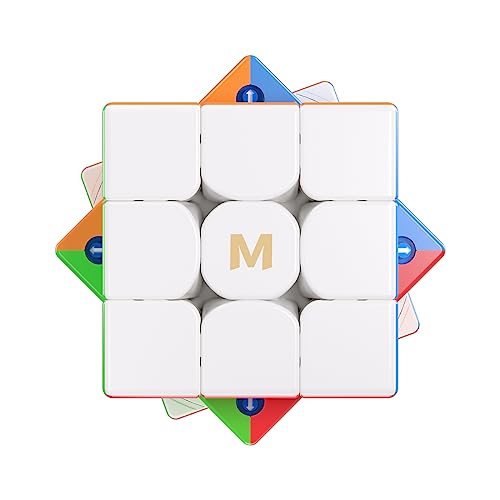
YJ MGC 3×3 Elite Magnetic Speed Cube
A cube known for an unusually smooth, low friction turn straight out of the packet, requiring almost no setup or lubrication to feel right. It sits well below flagship pricing while feeling far better than that suggests. Owners report it as the cube to recommend when someone wants performance without wanting to learn about tensioning and lubricants.
Pros
- Excellent out of the box feel
- No lubrication or setup required
- Good value for the performance
Cons
- Less adjustable than flagship cubes
- Lighter feel is not to everyone’s taste

QiYi Warrior W 3×3 Speed Cube
A non magnetic budget cube that turns far better than the mass market puzzles most people start on, which makes it the sensible first purchase before anyone knows whether the hobby will stick. Learning on a cube that does not lock up removes the main source of early frustration. Owners report it is the cube handed to beginners in cubing groups more than any other.
Pros
- Costs very little for a genuine speed cube
- Far less locking than mass market puzzles
- Ideal for buying several at once for a group
Cons
- No magnets, so no alignment assist
- Outgrown once solve times drop
What to look for
Magnets are the biggest single upgrade Magnetic speed cubes place small magnets in the pieces so that each layer snaps into alignment at the end of a turn. The effect is that the cube settles itself rather than requiring you to place it accurately, which reduces lockups and lets you turn faster with less precision. Moving from a non magnetic cube to a magnetic one is the most noticeable improvement available, far more than moving between two magnetic cubes. Strength is a preference: lighter magnets suit fast loose turners, stronger ones suit people who want a definite click at each turn.
Corner cutting is why good cubes feel effortless Corner cutting describes how far out of alignment a layer can be while still turning through rather than locking. A cube with generous corner cutting forgives the small inaccuracies that occur at speed, which is exactly when you cannot afford to stop and realign. Manufacturers quote this in degrees for both forward and reverse cutting. In practice, any modern speed cube from the brands above cuts well enough that the solver rather than the puzzle is the limit, which was not true a decade ago.
Setup matters as much as the cube you buy Almost every cube benefits from tension and lubrication adjustment. Tensions control how loose the layers are: looser turns faster and pops more easily, tighter is more stable and locks more. Lubricants come in different weights, with thicker ones slowing and smoothing a cube and thinner ones speeding it up. Change one variable at a time and give yourself a few dozen solves to judge, because immediate impressions after an adjustment are unreliable. A well set up mid range cube beats a poorly set up flagship.
Match the cube to the stage you are at A beginner learning the layer by layer method gains almost nothing from a flagship, because the limiting factor is knowing what to do next rather than how fast the cube turns. A budget speed cube removes the frustration of a locking puzzle and is enough for a long time. Once solve times drop into the sub minute range and technique becomes the constraint, a magnetic cube helps meaningfully. Flagship cubes with adjustable magnets are for solvers who already have a clear preference and want to tune to it.
The lineup, side by side
| # | Model | Type | Best for | Score | Price |
|---|---|---|---|---|---|
| 1 | GAN 356 M 3×3 Magnetic Speed Cube | 3×3 magnetic speed cube | Best overall | 9.4 | Check price |
| 2 | MoYu RS3 M Magnetic Speed Cube | 3×3 magnetic speed cube | Best value | 9.2 | Check price |
| 3 | QiYi MS 3×3 Magnetic Speed Cube | 3×3 magnetic speed cube | Best budget magnetic | 9.0 | Check price |
| 4 | GAN 12 Maglev 3×3 Speed Cube | 3×3 magnetic speed cube | Best premium | 8.8 | Check price |
| 5 | MoYu WeiLong WR M Magnetic Speed Cube | 3×3 magnetic speed cube | Best for competition | 8.6 | Check price |
| 6 | YJ MGC 3×3 Elite Magnetic Speed Cube | 3×3 magnetic speed cube | Best smooth turning | 8.3 | Check price |
| 7 | QiYi Warrior W 3×3 Speed Cube | 3×3 speed cube, non magnetic | Best first cube | 8.0 | Check price |
Frequently asked questions
Do magnets actually make you faster?
They help, but indirectly. Magnets reduce lockups and let layers settle into alignment on their own, which means you can turn faster with less precision and recover more smoothly from imperfect turns. They do not add speed on their own, and a beginner learning algorithms will see very little difference. For an intermediate solver, the improvement is real and noticeable.
What is a good first speed cube?
A budget speed cube such as the QiYi Warrior W or an entry level magnetic cube like the QiYi MS. Both turn far better than mass market puzzles and cost little enough that an abandoned hobby is no great loss. Avoid starting with a flagship, since the adjustability is wasted before you know what you prefer.
Stickered or stickerless?
Stickerless cubes use coloured plastic, so nothing peels, fades or chips, and most solvers now prefer them. Stickered cubes allow custom colour schemes and some people prefer the slightly different surface feel, but stickers wear and eventually need replacing. Both are permitted in competition, though a cube must not have both stickers and coloured plastic showing.
How do I set up a new speed cube?
Solve it a few dozen times first to break it in before changing anything. Then adjust tensions gradually, a small fraction of a turn at a time on all six faces equally, and test again. Add lubricant sparingly, since too much makes a cube sluggish. Change one thing at a time so you know what caused any difference.
What lubricant should I use on a cube?
Silicone based lubricants made for puzzles, in a weight matched to what you want. Thicker weights slow and smooth a fast cube, thinner weights speed up a sluggish one. A small amount goes a long way. Never use household oils or general purpose sprays, since many contain solvents that damage the plastic.
Why does my cube pop pieces out?
Tensions are too loose, allowing pieces to escape during fast turns. Tighten each face slightly and equally, then retest. Popping can also indicate a worn or damaged piece, particularly on older cubes or after a drop. Very aggressive turning on a loose setup will pop almost any cube.
Are expensive cubes worth it?
For solvers whose technique is the limiting factor, yes, mainly for the adjustability rather than raw speed. For everyone else, a good mid range magnetic cube performs close enough that the difference is preference rather than capability. Many competitive solvers use mid range cubes by choice.
What comes after the 3×3?
Most people move to the 2×2 and 4×4 next, then either larger cubes or the other competition puzzles such as the Pyraminx, Skewb, Megaminx and Square-1. Each has its own methods to learn. The 4×4 is the biggest jump because it introduces parity cases that do not exist on odd numbered cubes.
Final word
The GAN 356 M is the cube to buy if you have reached the point where hardware is holding you back and you want to tune the feel to your own turning style. For almost everyone else the MoYu RS3 M is the smarter purchase, delivering most of the same experience for a small fraction of the outlay, and the QiYi Warrior W remains the right first cube for someone still deciding whether this is a hobby.


