Cable Thickness and Bearings Decide the Best Speed Jump Rope
WOD Nation Speed Jump Rope suits most lifters as an all-around choice, with ball bearings and an adjustable steel cable. RPM Training Evolve Speed Rope handles fast double unders best, thanks to a thin 2.5mm cable. XYLsports Speed Jump Rope fits tight budgets without dropping the bearing system.
Speed jump ropes trade thick vinyl cord for thin steel or nylon cable that turns faster with less wrist effort. WOD Nation Speed Jump Rope, RPM Training Evolve Speed Rope, and XYLsports Speed Jump Rope each solve a different problem: all-around use, double-under speed, and tight budgets. Bearing type and cable thickness change the feel more than price does.
Ball bearings, bushings, and cable materials all affect how a rope spins mid-set, and marketing rarely explains the difference clearly. We compared cable diameter, bearing systems, handle material, and adjustability across each listing. Owner feedback on durability and use-case fit, from double unders to freestyle tricks, shaped the final order.
Our top picks

WOD Nation Speed Jump Rope
PVC-coated steel cable pairs with a ball bearing system inside each handle. A tool-free screw mechanism adjusts length up to 10 feet. Aluminum handles keep grip weight consistent through fast sets.
Pros
- Ball bearings reduce cable twist during fast reps
- Tool-free adjustment fits most heights
- Comes with a spare cable
Cons
- Handles run slightly heavier than dedicated speed models
- Bearings need occasional lubrication

RPM Training Evolve Speed Rope
A 2.5mm coated cable spins on a bushing tuned for high RPM. Interchangeable cables let athletes dial in tension for unbroken double-under sets. Knurled 5-inch handles hold grip once palms sweat.
Pros
- Thin cable clears the floor fast for double unders
- Interchangeable cables extend rope life
- Knurled handles improve grip when sweaty
Cons
- Thin cable stings more on mis-hits
- Not ideal for jumpers still learning rhythm
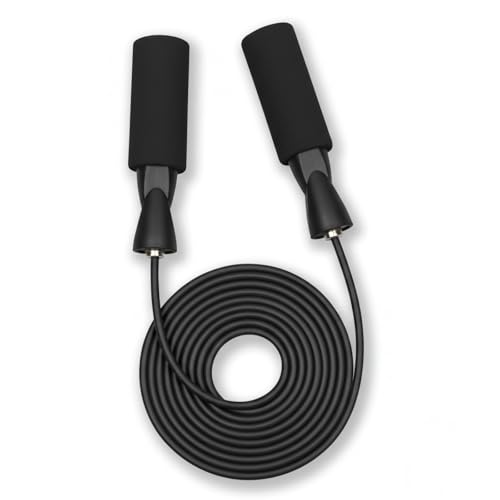
XYLsports Speed Jump Rope
Nylon-coated steel cable runs through a basic ball bearing housed in plastic handles. Scissors trim the cable to length, so sizing becomes permanent after the first cut. A carrying pouch keeps the rope travel-ready.
Pros
- Low cost for a bearing-equipped rope
- Includes a carrying pouch
- Lightweight for travel
Cons
- Cut-to-size adjustment is not reversible
- Plastic handles feel less durable long term

Buddy Lee Aero Speed Jump Rope
Braided nylon cable replaces bare steel, slowing rotation for learners still building rhythm. Foam-grip handles house a bushing swivel that smooths out inconsistent form. Screw-lock adjustment sets the length without tools.
Pros
- Slower cable speed forgives timing mistakes
- Foam grips reduce hand fatigue
- Designed with input from a former Olympic jump rope athlete
Cons
- Nylon cable wears faster than steel
- Not fast enough for advanced double-under work
Rogue SR-1 Speed Rope
Machined aluminum handles pair with a nylon-coated steel cable rated for daily gym floors. Snap-in end caps swap a worn cable without retying knots. Ball bearings keep spin consistent at competition pace.
Pros
- Handles hold up to years of gym floor contact
- Snap-in caps make cable swaps quick
- Consistent spin at competition pace
Cons
- Heavier handles than dedicated speed ropes
- Costs more than most alternatives on this list

JumpNrope Elite Freestyle Rope
Lightweight aluminum handles house a low-profile ball bearing built for quick direction changes. The cable detaches from the handle, so thickness swaps take seconds. Crosses and releases stay controlled through the balanced handle weight.
Pros
- Detachable cable supports trick-specific swaps
- Balanced handle weight aids control during releases
- Common choice among freestyle jump rope competitors
Cons
- Detachable connector can loosen with heavy use
- Premium price versus straightforward speed ropes
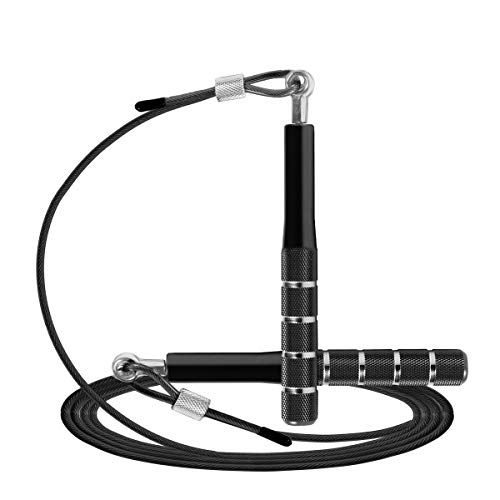
WildKlub Prime Speed Rope
A PVC-sleeved steel cable rides on sealed ball bearings, a spec usually reserved for pricier ropes. An internal slide locks length at marked points instead of a screw or knot. Aluminum alloy handles resist dust and sweat buildup at the bearing seal.
Pros
- Sealed bearings resist dust and sweat buildup
- Marked adjustment speeds up resizing
- Mid-range price for the bearing quality offered
Cons
- Fewer cable replacement options than bigger brands
- Handle diameter runs slightly thick for small hands
What matters most
What Makes a Jump Rope Built for Speed? Speed ropes trade thick vinyl cord for a thin steel or nylon cable, usually 2.5mm to 4mm across. A bearing or bushing in the handle lets the cable spin independent of the wrist, cutting drag. Lighter aluminum or foam handles reduce arm fatigue during high-rep sets. Most models here adjust from 8 to 10 feet, covering heights from about 5 feet to 6 foot 4.
Ball Bearings vs Bushings: Which Spins Better? Ball bearing systems, found in the WOD Nation and Rogue SR-1 ropes, hold up well under high RPM and daily CrossFit-style use. Bushing systems, used in the RPM Training Evolve and Buddy Lee Aero, spin smoothly at a lower cost but can wear faster under heavy use. Sealed bearings, like those on the WildKlub Prime, resist sweat and dust better than open designs. Training frequency and budget decide which system fits best, not one universal answer.
How Do You Size a Speed Rope for Double Unders? Double unders need a shorter rope than standard single jumps, since a shorter cable spins faster for the same arm effort. Stand on the center of the cable; handles should reach roughly the armpits for double-under training, versus chest height for general cardio. Screw-lock adjustment, used on WOD Nation and Buddy Lee, allows quick resizing between workouts. Cut-to-size ropes like XYLsports save cost but lock in one length for good.
Speed Ropes for Beginners vs Competitive Athletes Beginners tend to do better with a bushing system and a slightly heavier cable, since it slows rotation enough to build timing first. The Buddy Lee Aero fits that role through its braided nylon cable. Competitive and CrossFit athletes lean toward thinner steel cables and ball bearings for sustained speed, seen in the RPM Training Evolve and Rogue SR-1. Freestyle jumpers prioritize detachable cables, like the JumpNrope Elite, for switching between trick-specific setups.
How they compare
| # | Model | Cable type | Best for | Score | Price |
|---|---|---|---|---|---|
| 1 | WOD Nation Speed Jump Rope | PVC-coated steel | Best overall | 9.4 | Check price |
| 2 | RPM Training Evolve Speed Rope | 2.5mm | Best for double unders | 9.2 | Check price |
| 3 | XYLsports Speed Jump Rope | Nylon-coated steel | Best budget | 9.0 | Check price |
| 4 | Buddy Lee Aero Speed Jump Rope | Braided nylon | Best for beginners | 8.8 | Check price |
| 5 | Rogue SR-1 Speed Rope | Machined aluminum | Best for CrossFit and durability | 8.5 | Check price |
| 6 | JumpNrope Elite Freestyle Rope | Aluminum | Best for freestyle tricks | 8.2 | Check price |
| 7 | WildKlub Prime Speed Rope | PVC-sleeved steel | Best value | 8.0 | Check price |
Frequently asked questions
What is the difference between a speed rope and a regular jump rope?
Speed ropes use thin steel or nylon cables with bearing systems, while basic ropes often use thicker vinyl cord without bearings. The thinner cable and bearing reduce drag, allowing faster rotation per swing.
How do I size a speed jump rope for my height?
Stand on the center of the cable and pull the handles up. For general use, handles should reach chest height, while double-under training favors a shorter length near the armpits.
Which jump rope is best for double unders?
RPM Training Evolve Speed Rope uses a 2.5mm cable and a bushing system tuned for high RPM, making it a common pick for double-under training among the options compared here.
Can beginners use a speed jump rope?
Yes, though a bushing-based option like the Buddy Lee Aero with its braided nylon cable rotates more slowly, helping new jumpers build timing before moving to thinner steel cables.
Is a ball bearing jump rope worth it?
Ball bearings let the cable spin independently of the handle, reducing wrist strain during high-rep sets. For frequent training, owners report bearing systems hold up better than simple swivel connections.
What is the best jump rope for CrossFit workouts?
Rogue SR-1 Speed Rope pairs machined aluminum handles with a nylon-coated steel cable and replaceable end caps, built for daily workout use according to the listing specifications.
Speed rope vs weighted rope, which builds more coordination?
Speed ropes build faster footwork and timing due to their light cable and quick rotation. Weighted ropes emphasize shoulder and arm strength instead, with a slower, heavier swing.
How often should I replace a jump rope cable?
Cable lifespan depends on surface and frequency, but fraying, kinks, or inconsistent spin signal it is time to swap. Models with replaceable cables, like the Rogue SR-1 and JumpNrope Elite, make swaps simple without buying a new handle set.
What cable thickness works best for double unders?
A thinner cable, around 2.5mm like the one on RPM Training Evolve, clears the floor faster per rotation than the 3mm to 4mm cables used on general fitness ropes.
The verdict
WOD Nation Speed Jump Rope stays the most balanced pick for general training, backed by ball bearings and adjustable length. Athletes chasing double unders should look at RPM Training Evolve Speed Rope, while XYLsports Speed Jump Rope covers anyone testing the format on a budget. Match bearing type and cable thickness to the training goal, not price alone.


