Which Squat Rack Fits Your Home Gym and Ceiling Height
Rogue R-3 Power Rack ranks best overall for its 11-gauge steel and deep attachment lineup. Titan T-3 Power Rack matches many specs at a lower cost, making it the value pick. Fitness Reality 810XLT Super Max Power Cage suits tight budgets and smaller rooms without skipping safety bars.
Rogue R-3 Power Rack tops this list for 11-gauge steel and a deep attachment catalog that lets a home gym expand for years. Titan T-3 Power Rack delivers nearly identical hardware at a lower cost. Fitness Reality 810XLT Super Max Power Cage works best for lifters short on space or budget.
Ceiling height, floor space, and target lifting weight change which rack makes sense, and thin steel can flex or bend under real loads. We compared steel gauge, hardware diameter, footprint, rated capacity, and attachment support across owner feedback and published specifications to rank these seven picks.
What we recommend

Rogue R-3 Power Rack
Rogue builds the R-3 from 11-gauge 3×3 steel with westside hole spacing for precise bar catch heights near the bench and squat range. A wide attachment ecosystem lets the frame grow into a full training station over several years. Owners report the welds and powder coat hold up under repeated heavy loads.
Pros
- Extremely rigid under heavy loads
- Deep attachment ecosystem
- Precise westside hole spacing
Cons
- Costs more than value competitors
- Needs floor bolts for full stability

Titan T-3 Power Rack
Titan matches the R-3 on 11-gauge steel and westside hole spacing while pricing the T-3 well below premium competitors. Two height options, 71 or 82 inches, fit garages with lower ceilings. Owners report the rack handles heavy squats and bench work without flexing.
Pros
- Near-premium specs at lower cost
- Short height option for low ceilings
- Wide Titan attachment catalog
Cons
- Powder coat can chip on edges
- Assembly hardware needs careful alignment

Fitness Reality 810XLT Super Max Power Cage
The 810XLT packs a full four-post cage, a multi-grip pull-up bar, and adjustable safety bars into a compact footprint. Nineteen upright adjustment levels let the rack fit lifters of different heights. Based on its specifications, it suits beginners and moderate lifters more than advanced strength athletes.
Pros
- Full cage at a budget price
- Multi-grip pull-up bar included
- Compact footprint for small rooms
Cons
- Steel is thinner than premium racks
- Attachment options are limited
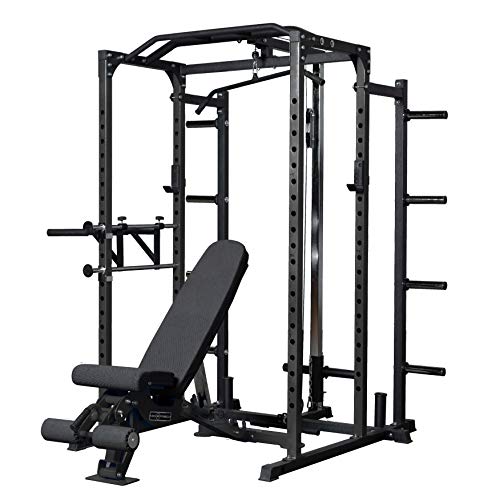
REP Fitness PR-4000 Power Rack
REP builds the PR-4000 from 11-gauge 3×3 steel with 1-inch hardware, a step up from the 5/8-inch pins common on lighter racks. Configurable depth and upright height let it fit narrow rooms or wide training areas. An extensive attachment lineup covers spotter arms, dip bars, and lat pulldown options.
Pros
- 1-inch hardware for very heavy loads
- Configurable depth and height
- Strong attachment lineup
Cons
- Priced above value-tier racks
- Heavy frame makes solo assembly slow

Force USA MyRack Modular Power Rack
Force USA designed the MyRack as a base frame that accepts more than twenty add-ons, including a lat pulldown and cable crossover station. Twelve-gauge steel and a 2000-pound rated frame support the added machines. Lifters who want one system to replace several separate machines gain the most from this modular layout.
Pros
- Expands into a near-complete gym
- Large add-on catalog
- High rated frame capacity
Cons
- Each add-on raises total cost
- Footprint grows once expanded

Sunny Health & Fitness Power Zone Squat Rack
This two-post stand skips the full cage frame, cutting the footprint enough for a garage corner or spare room. Multiple J-hook levels adjust for different bar heights during squats and presses. Lifters who mainly squat and bench without needing pull-up work gain the most from the smaller frame.
Pros
- Small footprint for tight rooms
- Lower cost of entry
- Fast to assemble
Cons
- Less stable than a four-post cage
- No pull-up bar on the base model

PRx Performance Profile PRO Folding Squat Rack
PRx mounts the Profile PRO to wall studs and folds it flat against the wall in about 4 inches of depth when not in use. Eleven-gauge steel matches the strength of fixed racks despite the folding hinge. Garages that double as parking spots or workshops benefit most from reclaiming the floor.
Pros
- Folds flat to free floor space
- Matches fixed-rack steel gauge
- Ideal for multi-use garages
Cons
- Requires solid wall studs to mount
- Fixed mounting location once installed
How to choose
How to choose a squat rack for your home gym Match the rack to three things first: available floor space, ceiling height, and how heavy you plan to lift. A cramped garage favors a squat stand or folding rack over a full cage. Heavier lifters need thicker steel and larger hardware, while casual lifters can save money on a lighter frame. Attachment support matters too if you expect to add a pull-up bar or dip station later.
Best squat rack for low ceilings or small garages Standard power cages often reach 82 to 90 inches tall, which leaves little clearance for pull-ups in a low garage. Titan’s T-3 offers a 71-inch height option built for shorter ceilings. Folding wall-mount racks like the PRx Profile PRO solve the space problem differently by disappearing when not in use. Squat stands such as the Sunny Power Zone also shrink the footprint since they skip the rear cage posts.
Squat stand vs power cage vs folding rack A power cage surrounds the lifter on four posts with safety bars that catch a missed rep, giving the most protection for solo training. A squat stand uses two posts instead of four, trading some stability for a smaller footprint and lower cost. Folding racks bolt to wall studs and fold flat, which suits garages shared with vehicles or tools. Pick based on how much floor space you can dedicate full time versus part time.
How much steel gauge and weight capacity do you need Lower gauge numbers mean thicker steel, so 11-gauge resists flex better than the 12-gauge found on some modular frames. Hardware size matters as much as gauge: 1-inch pins on the REP PR-4000 outlast 5/8-inch pins under very heavy loads. Most home lifters are covered by a rack rated to 700 pounds or more. Competitive powerlifters and strongman athletes should prioritize thicker steel and larger hardware over a lower rated capacity number alone.
How they stack up
| # | Model | Steel | Best for | Score | Price |
|---|---|---|---|---|---|
| 1 | Rogue R-3 Power Rack | 11-gauge 3×3 | Best overall | 9.5 | Check price |
| 2 | Titan T-3 Power Rack | 11-gauge 3×3 | Best value | 9.2 | Check price |
| 3 | Fitness Reality 810XLT Super Max Power Cage | Power cage | Best budget | 8.9 | Check price |
| 4 | REP Fitness PR-4000 Power Rack | 11-gauge 3×3 | Best for heavy lifters | 8.7 | Check price |
| 5 | Force USA MyRack Modular Power Rack | Modular power rack | Best for expanding into a full gym | 8.4 | Check price |
| 6 | Sunny Health & Fitness Power Zone Squat Rack | Squat stand | Best for small spaces | 8.2 | Check price |
| 7 | PRx Performance Profile PRO Folding Squat Rack | Wall-mount folding | Best for shared or multi-use rooms | 8.0 | Check price |
Frequently asked questions
What is the difference between a squat rack and a power cage?
A power cage encloses the lifter on four posts with safety bars that catch a failed rep. A squat rack or stand typically uses two posts, cutting the footprint but offering less protection during solo lifts.
How much ceiling height does a squat rack need?
Most full-size cages stand 82 to 90 inches tall, and pull-ups or overhead presses need extra clearance above that. Garages under 8 feet tall usually fit better with a short-height rack or a folding wall-mount design.
Which squat rack is best for a small garage?
Squat stands and folding wall-mount racks use the smallest footprint since they skip the rear cage posts. The PRx Profile PRO folds to about 4 inches deep, and the Sunny Power Zone stand fits tight corners without a full cage.
Is 11-gauge steel better than 12-gauge for a squat rack?
Yes, lower gauge numbers indicate thicker steel, so 11-gauge resists bending under load better than 12-gauge. Heavy lifters and powerlifters should prioritize 11-gauge frames over thinner modular options.
Do folding squat racks hold as much weight as fixed racks?
Quality folding racks such as the PRx Profile PRO use the same 11-gauge steel as fixed cages and anchor into wall studs for stability. The mounting wall needs solid studs, since drywall alone will not hold heavy loads.
Can I add a pull-up bar or dip station to a squat rack later?
Most name-brand racks support add-on attachments sold separately, including pull-up bars, dip handles, and spotter arms. Rogue, Titan, REP, and Force USA all sell attachment catalogs that bolt onto their base frames.
What weight capacity should a home squat rack have?
A rating of 700 pounds or higher covers most home lifters with a wide safety margin over their bar weight. Competitive strength athletes should look for racks rated well above that, paired with thicker hardware.
Squat stand vs power cage: which is safer?
A power cage offers more safety since its four posts and adjustable safety bars catch a missed lift from multiple angles. A squat stand relies on J-hooks and spotter arms alone, which works for confident lifters training within their limits.
Do I need to bolt a squat rack to the floor?
Full cages are generally stable once loaded, but bolting them down adds security during kipping pull-ups or fast movements. Folding wall-mount racks must be anchored into studs regardless of floor bolting.
The bottom line
Rogue R-3 Power Rack remains the top pick for its 11-gauge steel and long attachment runway. Titan T-3 Power Rack earns the value nod with nearly matching specs at a lower price. Choose Fitness Reality 810XLT Super Max Power Cage when floor space or budget rules out the pricier frames.


