How to Pick a Stand Mixer You Will Keep for Years
The KitchenAid Artisan is our best overall stand mixer for its sturdy build and consistent mixing across doughs and batters. The Cuisinart SM-50 is the best value with a large bowl and strong motor, while the Aucma stand mixer is the best budget pick for occasional bakers.
If you bake often and want a mixer that handles stiff dough without walking across the counter, the KitchenAid Artisan leads our list for its proven build and versatility, followed by the Cuisinart SM-50 for value and the Aucma for tight budgets. Below we rank 7 real models so you can match one to how much and how often you bake.
Stand mixers look similar, but the things that separate a great one, motor torque under load, bowl reach, and long-term reliability, are hard to judge from a showroom. To choose these 7, we compared published motor and capacity specs, attachment ecosystems, and mixing action, then weighed them against how owners report each machine holds up over years of kneading and creaming.
The best picks, ranked

KitchenAid Artisan Series 5-Quart Tilt-Head Mixer
The KitchenAid Artisan is the reference point for home stand mixers, pairing a 5-quart tilt-head design with planetary mixing that reaches the whole bowl. Owners report it handles most home baking, from whipped cream to bread dough, and value the huge range of attachments. It is not the cheapest, but its build and resale reputation earn the top spot.
Pros
- Planetary action mixes the whole bowl evenly
- Massive attachment ecosystem adds versatility
- Sturdy build with strong resale reputation
Cons
- Heavier bread doughs push a tilt-head to its limits
- Positioned above budget mixers

KitchenAid Professional 600 Series 6-Quart Mixer
The KitchenAid Professional 600 steps up to a 6-quart bowl-lift design with a stronger motor built for bigger batches and heavier bread dough. Owners who bake in volume report it powers through stiff dough more comfortably than the tilt-head Artisan, though it is larger, heavier, and takes more counter space.
Pros
- Strong motor handles heavy bread dough
- Large 6-quart bowl suits big batches
- Bowl-lift design is stable under load
Cons
- Large and heavy on the counter
- Bowl-lift is less convenient than a tilt-head for quick tasks
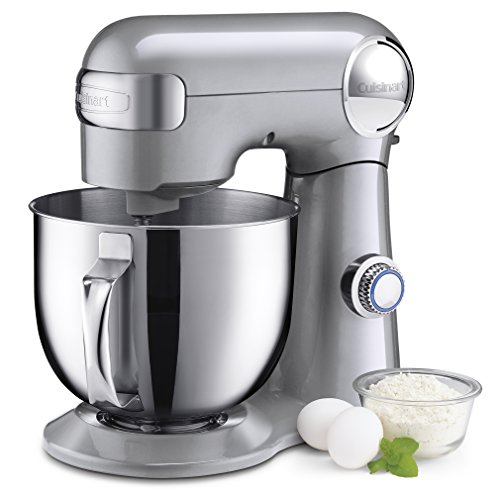
Cuisinart SM-50 5.5-Quart Stand Mixer
The Cuisinart SM-50 offers a large 5.5-quart bowl and a powerful motor at a friendlier position than the big KitchenAid models. Owners report it mixes and kneads well for everyday baking and appreciate the 12 speeds and included attachments, though its attachment ecosystem is smaller than KitchenAid’s.
Pros
- Large bowl and strong motor for the class
- 12 speeds and included whisk, beater, and hook
- Splash guard keeps the counter clean
Cons
- Smaller attachment range than KitchenAid
- Bulkier footprint than compact mixers

Breville the Bakery Chef Stand Mixer
The Breville Bakery Chef leans on load-sensing electronics and a die-cast build to keep speed steady as dough stiffens. Owners report smooth, quiet operation and useful touches like a built-in timer and light, which justify its premium position for bakers who want refinement beyond the basics.
Pros
- Load sensing holds speed as dough thickens
- Quiet, smooth operation with a die-cast body
- Built-in timer and bowl light are handy
Cons
- Premium positioning for the category
- Smaller third-party attachment range

Kenwood kMix Stand Mixer
The Kenwood kMix packs a solid metal build into a more compact 5-liter footprint with a bright retro finish. Owners report it mixes and kneads capably for its size and like the sturdy feel, though its attachment lineup and parts support are more limited than the mainstream KitchenAid ecosystem.
Pros
- Solid metal build in a compact footprint
- Capable mixing and kneading for its size
- Distinctive finish options
Cons
- Fewer attachments and parts than KitchenAid
- Bowl capacity is modest for big batches
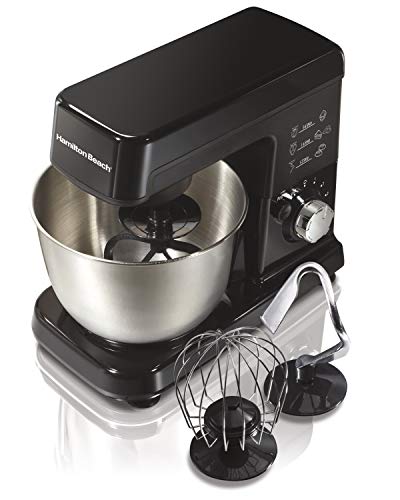
Hamilton Beach Electrics 63325 Stand Mixer
The Hamilton Beach Electrics 63325 is an approachable, affordable mixer with a large 4.5-quart bowl and a unique tilt-and-lift head that also lets you scrape the bowl easily. Owners report it handles cookies, cakes, and lighter tasks well, making it a friendly first mixer, though it is not built for heavy repeated bread kneading.
Pros
- Approachable and affordable first mixer
- Large bowl for its class with a fold speed
- Tilt-and-lift head eases bowl access
Cons
- Not built for heavy repeated bread dough
- Fewer attachment options

Aucma Stand Mixer (6.5-Quart)
The Aucma stand mixer offers a large 6.5-quart bowl and a tilt-head design at the budget end, with a splash guard and included beater, whisk, and hook. Owners report it manages everyday cookies, cakes, and lighter doughs for the price, but it lacks the refinement and long-term track record of premium mixers under heavy loads.
Pros
- Large bowl and included attachments at a low entry point
- Splash guard reduces mess
- Simple, easy-to-use controls
Cons
- Less refined and proven than premium mixers
- Best kept to lighter doughs rather than heavy bread
How they compare
| # | Model | Bowl capacity | Best for | Score | Price |
|---|---|---|---|---|---|
| 1 | KitchenAid Artisan Series 5-Quart Tilt-Head Mixer | 5 quarts | Best overall | 9.4 | Check price |
| 2 | KitchenAid Professional 600 Series 6-Quart Mixer | 6 quarts | Best large capacity | 9.1 | Check price |
| 3 | Cuisinart SM-50 5.5-Quart Stand Mixer | 5.5 quarts | Best value | 8.9 | Check price |
| 4 | Breville the Bakery Chef Stand Mixer | 5 quarts | Best premium | 8.7 | Check price |
| 5 | Kenwood kMix Stand Mixer | 5 liters | Best compact | 8.4 | Check price |
| 6 | Hamilton Beach Electrics 63325 Stand Mixer | 4.5 quarts | Best for beginners | 8.2 | Check price |
| 7 | Aucma Stand Mixer (6.5-Quart) | 6.5 quarts | Best budget | 8.0 | Check price |
How to choose
Motor power and dough handling The real test of a stand mixer is how it holds speed when dough stiffens. Wattage is a rough guide, but motor design and gearing matter as much, which is why bowl-lift models like the KitchenAid Professional 600 handle heavy bread dough more comfortably than lighter tilt-heads. If you mostly bake cookies and cakes, a mid-power tilt-head is plenty; if you knead bread often, prioritize a stronger motor and a sturdier lift design.
Bowl capacity and design Bowl size ranges from about 4.5 quarts for lighter tasks up to 6.5 quarts for big batches. Tilt-head designs are convenient for adding ingredients and swapping attachments, while bowl-lift designs are more stable for heavy loads. Match the capacity to your typical batch size, and remember that a larger bowl needs a minimum amount of ingredients to mix small quantities effectively.
Attachments and versatility A stand mixer can become a food-prep hub through its attachment hub. KitchenAid has by far the largest ecosystem, with pasta rollers, grinders, and more, which is a major reason it stays popular. Rivals like Cuisinart and Kenwood offer fewer add-ons. If you only need to whip, beat, and knead, the included attachments are enough; if you want the mixer to expand over time, the attachment ecosystem is worth weighing.
Stability, build, and longevity A good stand mixer should stay planted while kneading rather than wandering across the counter, which comes down to weight and base design. Heavier metal-bodied machines feel more stable and, based on owner reports, tend to last longer under load. Longevity is best judged by aggregated owner feedback rather than spec sheets, and models like the KitchenAid Artisan earn their reputation by holding up over many years of regular baking.
Frequently asked questions
What is the best stand mixer overall in 2026?
Based on specifications and owner feedback, the KitchenAid Artisan is our overall pick. Its planetary mixing reaches the whole bowl, it handles most home baking, and its huge attachment range and long-standing durability reputation make it the safest all-round choice.
Tilt-head or bowl-lift, which should I choose?
Tilt-head mixers like the Artisan are convenient for adding ingredients and swapping attachments and suit most home baking. Bowl-lift mixers like the Professional 600 are more stable under heavy loads and better for frequent bread baking or large batches. Choose based on how often you knead stiff dough.
How much power do I need for bread dough?
For occasional bread, a mid-power tilt-head handles it, though it works harder. For frequent or large batches of stiff dough, a stronger bowl-lift mixer like the KitchenAid Professional 600 holds speed better and reduces strain. Motor design matters as much as raw wattage.
Is a KitchenAid worth the extra money?
A KitchenAid earns its position through build quality, the largest attachment ecosystem, and a strong durability and resale reputation. Value alternatives like the Cuisinart SM-50 mix well for less, so the right choice depends on how much versatility and longevity you want.
What size mixer bowl do I need?
For most households, a 5 to 5.5 quart bowl covers everyday baking. Larger 6 to 6.5 quart bowls suit big batches and frequent bread baking, while 4.5 quart models fit lighter tasks. Note that very small quantities mix better in a smaller bowl.
Can a stand mixer knead bread dough?
Yes, with the dough hook attachment, though heavier doughs work the motor harder. Bowl-lift models handle stiff dough most comfortably, while lighter tilt-heads are better for smaller or softer batches. Avoid overworking a budget mixer with large, dense dough loads.
Do stand mixer attachments transfer between brands?
No, attachments are generally brand-specific and not cross-compatible. KitchenAid has the widest range of add-ons like grinders and pasta rollers, while other brands offer fewer. If you plan to expand your mixer’s uses, factor the attachment ecosystem into your decision.
Why does my stand mixer move across the counter?
Walking usually happens with heavy dough on a lighter mixer, or when the mixer sits on a slick surface. A heavier, well-built base stays planted better, and lowering the speed for stiff dough helps. A grippy mat under the mixer can also reduce movement.
How long should a good stand mixer last?
A quality stand mixer can last many years of regular home baking, and models like the KitchenAid Artisan are well known for their longevity. Longevity depends on matching the mixer to your workload, so avoid consistently pushing a lighter or budget model with heavy dough.
The verdict
For most people, the KitchenAid Artisan is the stand mixer to buy, thanks to its proven build, even mixing, and unmatched attachment range. Choose the Cuisinart SM-50 if you want strong power and a large bowl for the money, or the Aucma if you need a capable mixer for occasional baking on a tight budget.