Stereo Amplifiers for Turntables, Bluetooth and Small Rooms
Denon PMA-600NE leads this list for balanced power paired with a built-in phono stage. Fosi Audio ZA3 gives budget shoppers a capable desktop amp in a palm-sized case. Turntable owners should check the Marantz PM6007, which adds a moving magnet phono input as standard.
Denon PMA-600NE suits listeners running vinyl and streaming from the same shelf, since its built-in phono stage skips a separate preamp purchase. Clean power headroom handles most bookshelf speakers without strain, though Bluetooth needs an added receiver. Fosi Audio ZA3 covers a desktop system at a fraction of the size and cost, while the Marantz PM6007 rewards turntable owners with a phono stage tuned for vinyl warmth.
Receivers add tuners and extra switching, while integrated amps focus purely on amplification and often sound cleaner per dollar spent. Impedance ratings and rated wattage must match a speaker’s spec sheet, or the amp runs hot under load. We compared rated power, input counts, phono support and owner reports on hum, heat and long-term reliability.
Before you buy
What to look for in a stereo amplifier Rated power per channel decides how loud and clean an amp stays under load. Match wattage to a speaker’s recommended range, printed on its rear panel or manual. Input selection matters just as much, since a built-in phono stage or optical input skips buying a separate box. Impedance rating, usually 4 or 8 ohms, must suit the connected speakers or the amp runs hot.
Integrated amp vs receiver An integrated amp focuses purely on amplification and often delivers cleaner sound per dollar spent. A receiver adds a radio tuner and sometimes extra switching, useful for anyone who still listens to AM or FM. Home theater receivers handle multiple channels, while stereo receivers like the Yamaha R-S202BL stick to two channels for music. Choose a receiver only when the tuner or multi-input switching actually gets used.
Best amplifier for turntables A phono stage amplifies and equalizes the weak signal from a turntable’s cartridge, and skipping one means barely audible playback. Marantz PM6007 and Denon PMA-600NE both build this in, so a basic turntable connects directly. Confirm cartridge type first, since most built-in phono stages support moving magnet only, not moving coil. External phono preamps exist for amps that lack a built-in stage.
Best amplifier for streaming and small spaces Bluetooth amps like the Fosi Audio BT20A or Sony STR-DH190 suit phone and laptop streaming without extra cables. Desktop class D amps such as the Fosi Audio ZA3 fit tight spaces and nearfield monitors. Apartments generally need less rated power than a living room with floor speakers, since smaller rooms reflect sound more efficiently. Weigh compact size against the phono or tuner features missing from most streaming-focused models.
The shortlist, ranked
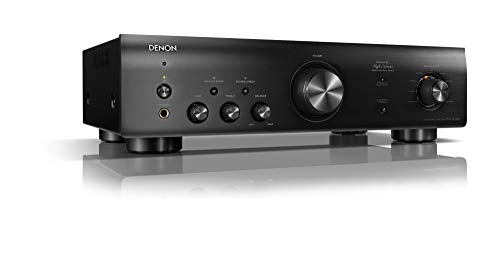
Denon PMA-600NE Integrated Amplifier
A discrete amplifier circuit drives bookshelf and floor speakers with headroom to spare. Its built-in moving magnet phono stage removes the need for a separate preamp. Owners running vinyl and streaming side by side report a quieter noise floor than older Denon models.
Pros
- Phono stage removes a separate preamp purchase
- Clean power handles most bookshelf speakers
- Two speaker pairs switch for a second room
Cons
- No Bluetooth without an added receiver
- Larger chassis than desktop class D amps
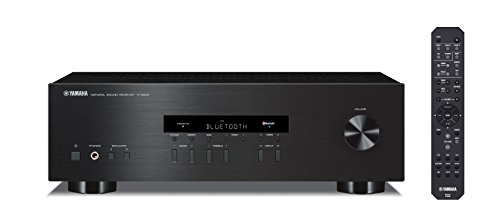
Yamaha R-S202BL Stereo Receiver
An AM/FM tuner and phono input cover two jobs a standalone amp cannot handle alone. Pure direct mode bypasses tone circuitry for a cleaner signal path on demand. Owners moving from an all-in-one system note a real jump in bass control.
Pros
- Tuner and phono input avoid extra purchases
- Pure direct mode cleans up the signal path
- Strong rated power for the price
Cons
- No Bluetooth or digital inputs
- Remote lacks backlighting
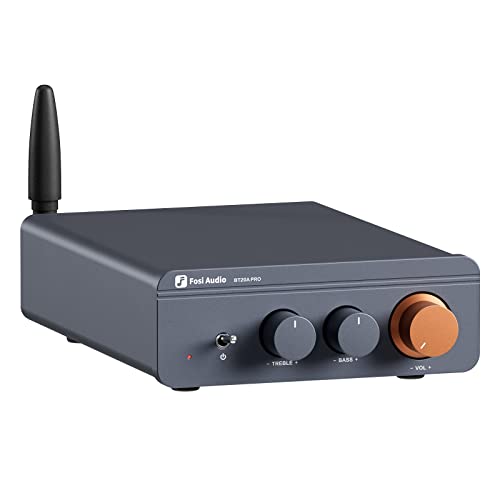
Fosi Audio ZA3 Mini Stereo Amplifier
A board this small still pushes enough power for a desktop or small bookshelf pair. Bass and treble knobs shape sound without a separate equalizer. Owners mainly pair it with computer speakers and small nearfield monitors.
Pros
- Very low cost for the rated power
- Small enough for any desk
- Bass and treble knobs add flexibility
Cons
- No phono stage or Bluetooth
- Peak wattage figures overstate real output
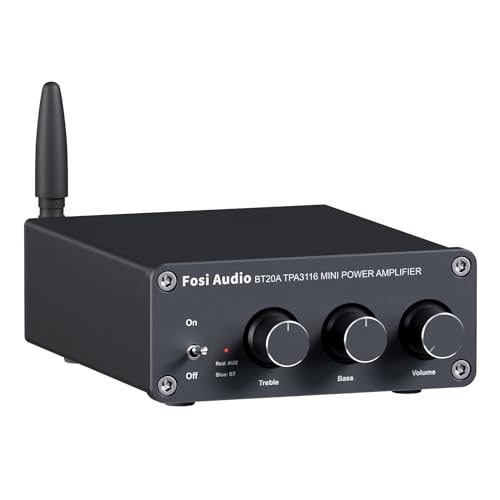
Fosi Audio BT20A Bluetooth Stereo Amplifier
Bluetooth 5.0 pairs with a phone in seconds, while optical and coaxial inputs cover a TV or DAC. Bass and treble dials sit next to the volume knob for quick adjustment. Owners praise it for reviving old passive speakers without running new cables.
Pros
- Bluetooth removes the need for cables
- Optical input works well with older TVs
- Compact enough for a shelf or desk
Cons
- No phono input for turntables
- Bluetooth codec is basic SBC only

Marantz PM6007 Integrated Amplifier
Marantz tunes its phono stage for warmth rather than clinical accuracy, favoring vinyl listeners. A moving magnet input handles most turntables without an outboard preamp. Owners running a dedicated record setup rate the phono section above the digital inputs it also carries.
Pros
- Phono stage tuned specifically for vinyl warmth
- USB input covers computer playback too
- Compact chassis fits tight shelving
Cons
- Lower rated power than rivals here
- Only one speaker pair supported
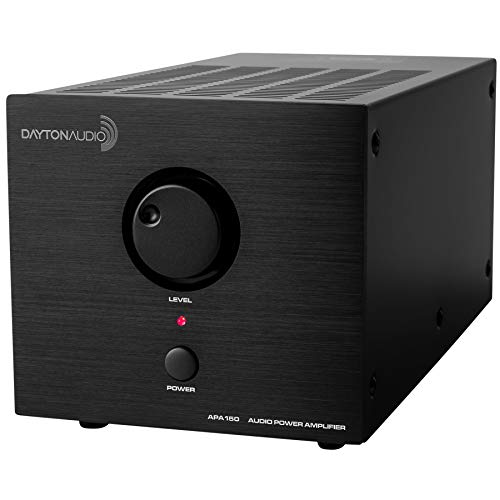
Dayton Audio APA150 Amplifier
Metal chassis and screw terminals feel closer to a commercial amp than a desktop toy. Three stereo channel pairs let it drive extra zones or a subwoofer alongside main speakers. Owners running whole-room audio projects like the flexible wiring options most.
Pros
- Metal build feels sturdier than plastic rivals
- Multiple channel pairs suit multi-room use
- Screw terminals accept thicker speaker wire
Cons
- No Bluetooth or digital inputs
- Fan noise audible on some units under load

Sony STR-DH190 2-Channel Stereo Receiver
Bluetooth streaming and a phono input cover both a phone and a turntable from one box. Rated power stays modest, suiting smaller bookshelf speakers rather than large towers. Owners in apartments and dorm rooms rate it highest for the space it saves.
Pros
- Bluetooth and phono cover most sources
- Compact width saves shelf space
- Simple controls suit casual listening
Cons
- Underpowered for large floor speakers
- Bluetooth range shorter than dedicated streamers
Side by side
| # | Model | Power output | Best for | Score | Price |
|---|---|---|---|---|---|
| 1 | Denon PMA-600NE Integrated Amplifier | 70 watts per channel at 8 ohms | Best overall | 9.4 | Check price |
| 2 | Yamaha R-S202BL Stereo Receiver | 100 watts per channel at 8 ohms | Best value | 9.1 | Check price |
| 3 | Fosi Audio ZA3 Mini Stereo Amplifier | 2 x 100 watts at 4 ohms peak | Best budget | 8.8 | Check price |
| 4 | Fosi Audio BT20A Bluetooth Stereo Amplifier | 2 x 100 watts at 4 ohms peak | Best for Bluetooth streaming | 8.6 | Check price |
| 5 | Marantz PM6007 Integrated Amplifier | 45 watts per channel at 8 ohms | Best for turntable setups | 8.4 | Check price |
| 6 | Dayton Audio APA150 Amplifier | 2 x 150 watts at 4 ohms | Best for compact desktop use | 8.2 | Check price |
| 7 | Sony STR-DH190 2-Channel Stereo Receiver | 100 watts per channel at 6 ohms | Best for small rooms | 8.0 | Check price |
Frequently asked questions
What is a good wattage for a stereo amplifier?
Match an amp’s rated watts per channel to a speaker’s recommended power range, usually printed on the speaker itself. Bookshelf speakers commonly want 30 to 100 watts, while larger floor speakers can use more. Extra headroom above the minimum prevents distortion at higher volumes rather than risking damage.
Can you use a stereo amplifier with a turntable?
Only if the amp includes a phono input, or a separate phono preamp gets added first. Connecting a turntable directly to a line input produces a thin, very quiet sound. Denon PMA-600NE and Marantz PM6007 both include a phono stage built in.
Is a receiver better than an integrated amplifier?
Neither wins universally, since each solves a different need. A receiver adds a tuner and often more input switching, useful for radio listeners. An integrated amp skips those extras and can deliver cleaner amplification for the same budget.
Do Bluetooth stereo amplifiers sound worse than wired ones?
Bluetooth compresses audio during transmission, which some listeners notice on very revealing systems. Casual listening on bookshelf speakers rarely exposes the difference. Wired inputs remain available on most Bluetooth amps for critical listening sessions.
How many speakers can one stereo amplifier power?
Most stereo amps drive a single pair, though several models here support two switchable pairs for a second room. Running two pairs together, rather than switching between them, drops the impedance the amp sees and can cause overheating. Check the amp’s manual before wiring both pairs at once.
What is the difference between class A and class D amplifiers?
Class A stays simple and often sounds warm, but runs hot and wastes energy as heat. Class D switches rapidly and stays cool while remaining compact, which is why desktop amps like the Fosi Audio ZA3 use it. Efficiency, more than raw sound quality, usually decides which class a small amp picks.
Do I need thick speaker cables for a stereo amp?
Thicker gauge wire matters more over long cable runs than for rated wattage alone. A run under 25 feet driving typical bookshelf speakers works fine with standard 16 gauge wire. Longer runs or higher power amps benefit from thicker 12 or 14 gauge cable.
Can a stereo amplifier replace a home theater receiver?
Not for surround sound, since a stereo amp only drives two channels. It works well as a dedicated music system alongside a separate home theater setup. Many enthusiasts keep both, using the stereo amp purely for two-channel listening.
Stereo amplifier vs receiver, which suits a small apartment?
A compact receiver like the Sony STR-DH190 covers Bluetooth streaming and turntable playback from one small chassis, useful when shelf space runs short. A dedicated integrated amp skips the tuner but often costs less for the same power in a tight footprint. Apartments benefit most from whichever option covers the fewest extra boxes on the shelf.
The bottom line
Denon PMA-600NE suits anyone running vinyl and everyday listening from the same system, since its phono stage and clean power handle both jobs. Tight budgets get real value from the Fosi Audio ZA3 for a desktop pair. Turntable owners chasing warmth over power should skip straight to the Marantz PM6007 instead.

