Which Strategy Board Game Actually Fits Your Group?
Catan remains the top overall pick for its balance of negotiation, luck and accessible rules. Ticket to Ride teaches fastest to a mixed group. Azul packs the most strategy into the shortest playtime and lowest cost.
A brilliant heavy game that takes forty minutes to explain will die on the table with casual players, while a light game bores a group that wants real decisions. Catan strikes that balance for most groups, Ticket to Ride teaches newcomers fastest, and Azul delivers real strategy in about an hour.
Matching a game’s weight to the group matters more than the game itself. We compared published player counts, box playtimes, rules complexity and component quality, then checked what owners report about how well each title holds up after ten plays.
What we recommend

Catan Board Game
Open trading keeps the table social even while everyone calculates their next move. A modular board means no two games start the same, which is a large part of why it has stayed popular for decades. Some strategic players find the dice element frustrating, though it is exactly what keeps casual players competitive.
Pros
- Trading keeps everyone involved between turns
- Modular board gives high replay value
- Rules are quick to teach
Cons
- Dice luck can undermine a good position
- Base box caps at four players without an expansion

Ticket to Ride Board Game
Draw cards, claim routes, complete destination tickets. That simple loop hides a genuine tension between building your own network and blocking someone else’s. Based on specifications it plays two to five, making it one of the most flexible options here for varying group sizes.
Pros
- Explains in about five minutes
- Works across a wide player range
- Blocking adds real tension to a light game
Cons
- Limited strategic depth for veteran players
- Route blocking can feel harsh to newcomers

Azul Board Game by Next Move Games
Every tile taken also decides what opponents can take next, which makes this a genuinely tight puzzle in around 40 minutes. Resin tiles are the best components in this whole group by a clear margin. Owners report it is the game most likely to trigger an immediate second play.
Pros
- Excellent depth for the playtime
- Outstanding tactile components
- Teaches in a few minutes
Cons
- Little theme to draw in narrative players
- Punishing scoring can discourage newcomers

7 Wonders Board Game
Because everyone drafts cards simultaneously, a seven player game takes roughly the same time as a three player one, solving the biggest problem in large group gaming. Scoring rewards long term planning across three ages. Based on specifications the base box handles two through seven players.
Pros
- No downtime regardless of player count
- Plays fast even with seven
- Strong replay value from varied wonders
Cons
- First game feels overwhelming with icons
- Interaction is limited to your two neighbours

Wingspan Board Game by Stonemaier Games
Each bird played makes later turns more powerful, which makes this an accessible entry point into engine building games. Artwork and component quality are a real part of the appeal at the table, not just a bonus. Owners report it takes one full game to understand how the engine compounds, after which it clicks.
Pros
- Satisfying engine that compounds each round
- Excellent solo mode
- Beautiful cards and components
Cons
- Interaction between players is minimal
- Card draw can favour one player early

Terraforming Mars Board Game
Hundreds of project cards interact in ways that keep revealing themselves across many games, making this the heavyweight of the group. Sessions commonly run two hours or more, so it needs a group ready for that commitment. Based on specifications the base box supports one through five players including a solo mode.
Pros
- Enormous strategic depth and card variety
- Extremely high replay value
- Solid solo mode
Cons
- Long teach and long sessions
- Card driven combos can create runaway leads
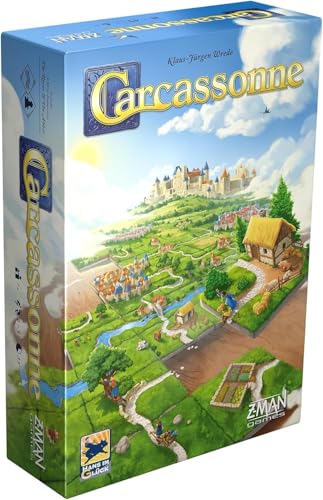
Carcassonne Board Game
A single core rule, draw a tile and place it sensibly, makes this the cheapest way into real strategic play. Tension comes from deciding when to commit a follower and when to hold back. Owners report it works particularly well as a two player game, unlike most titles in this list.
Pros
- Very low entry cost
- Strong two player game
- One simple rule to explain
Cons
- Tile draw luck affects outcomes
- Feels thin after many plays without expansions
What matters most
What does game weight mean, and why does it matter most? Hobby gamers describe complexity as weight, running from light party games to heavy multi hour designs. The common mistake is picking above a group’s tolerance. Groups that have never played anything past a family game should start light and move up gradually. A game explained badly because it was too heavy for the occasion usually never comes back out of the cupboard.
How does player count change the game itself? Many strategy games play best at a specific count, not just any count the box allows. Two players in a box designed for four often loses the tension that comes from competing over shared resources. Games using simultaneous actions, like drafting, scale to large groups without adding time, while sequential-turn games get slower with every added player.
How much do teaching time and downtime matter? Two practical numbers decide whether a games night works: how long the rules take to explain, and how long a player waits between turns. A twenty minute teach is a real cost inside a three hour evening. Long downtime is what drives people to their phones, so games with simultaneous turns or short individual turns keep a group engaged.
Do I need expansions for replay value? Modular boards, variable setups and large card pools are what stop a game feeling solved after five plays. Expansions extend a favourite considerably, but they cannot fix a game the group did not enjoy in the first place. Play the base game several times before adding anything, since expansions usually add complexity along with variety.
Side by side
| # | Model | Players | Best for | Score | Price |
|---|---|---|---|---|---|
| 1 | Catan Board Game | 3 to 4, expandable to 6 | Best overall | 9.4 | Check price |
| 2 | Ticket to Ride Board Game | 2 to 5 | Best for beginners | 9.2 | Check price |
| 3 | Azul Board Game by Next Move Games | 2 to 4 | Best value | 9.0 | Check price |
| 4 | 7 Wonders Board Game | 2 to 7 | Best for larger groups | 8.7 | Check price |
| 5 | Wingspan Board Game by Stonemaier Games | 1 to 5 | Best for engine building | 8.5 | Check price |
| 6 | Terraforming Mars Board Game | 1 to 5 | Best for long sessions | 8.2 | Check price |
| 7 | Carcassonne Board Game | 2 to 5 | Best budget | 8.0 | Check price |
Common questions
What is a good first strategy board game?
Ticket to Ride or Carcassonne. Both teach in under ten minutes, both reward planning, and neither punishes a beginner so hard that they refuse a second game.
Which strategy games work well for two players?
Carcassonne and Azul are both excellent at two. Many larger box games technically support two but lose the competition for shared resources that makes them interesting.
How long do strategy board games usually take?
Lighter titles run 30 to 60 minutes. Medium weight games sit around 60 to 90 minutes, and heavy games like Terraforming Mars routinely run past two hours once setup and teaching are added.
Are strategy games suitable for children?
Many are. Ticket to Ride, Carcassonne and Azul all work well from around age eight upward, since the rules stay simple even though the decisions have depth. Heavier titles generally need a teenager or older.
What is an engine building game?
One where early plays create combinations that make later turns more powerful. Wingspan is a good example, since each bird placed adds an ability that triggers on future turns.
Do I need expansions to enjoy these games?
No. Every game here is complete in the base box. Expansions are worth considering only after the base game has been played enough times to want more variety or a higher player count.
Which game handles six or seven players best?
7 Wonders is the standout, because drafting happens simultaneously so the playtime barely changes with more players. Catan reaches five or six only with its extension set.
How do I keep a heavy game from dragging?
Teach the rules before game night if possible, set up in advance, and agree a soft time limit for turns. Downtime, not complexity, is usually what makes a heavy game feel like a slog.
Catan vs Ticket to Ride, which should a beginner group buy first?
Ticket to Ride teaches faster and forgives mistakes better. Catan adds negotiation and a bit more depth once a group is comfortable with basic strategy games.
Final word
Catan is still the strategy game most likely to work for a mixed group, because trading keeps everyone talking while the decisions stay meaningful. Groups new to the hobby should start with Ticket to Ride, and Azul is the one to keep on the shelf for evenings when there is an hour rather than three.

