Surf Gear for Kids: What Survives a Full Season?
O’Neill’s Youth Reactor-2 3/2mm Full Wetsuit balances warmth and flexibility for a kid surfing several times a month. Pair it with the FCS Comp Essential Surf Leash on a lighter youth board. Once water temps drop into the 50s, Rip Curl’s Junior Omega 4/3mm adds the thickness the O’Neill suit lacks.
A kid surfing several times a month gets the most mileage from the O’Neill Youth Reactor-2 3/2mm Full Wetsuit, where flatlock seams and a back zip balance warmth against a price that survives a growth spurt. It won’t out-warm a dedicated cold-water suit once winter swells roll in, though. Grab the FCS Comp Essential leash if a used board didn’t come with one, and step up to Rip Curl’s Omega 4/3mm once water temps drop into the 50s.
Youth surf gear tends to fail in predictable ways. Seams blow out mid growth-spurt, thin leash cords snap under a heavier board, and wax formulated for warm water turns slick once it cools. Thickness and seam construction were compared across wetsuits, cord diameter and cuff design across leashes, UPF ratings on rash guards, and owner reports of sizing accuracy for kids roughly 5 to 16.
The top picks, ranked

O’Neill Youth Reactor-2 3/2mm Full Wetsuit
3mm neoprene covers the torso while 2mm wraps the arms and legs, a common split for moderate water temperatures. Flatlock stitched seams hold the price down while resisting rash on skin still adjusting to neoprene. A wide-opening back zip helps when a parent is doing the zipping for a squirming kid.
Pros
- Balances warmth against flexibility for regular sessions
- Flatlock seams cost less than glued and blind stitched builds
- Wide back zip entry speeds up getting a kid dressed
Cons
- Back zip lets in more water than a chest zip design
- Not warm enough alone once water drops into the 50s

FCS Comp Essential Surf Leash
A slimmer cord than FCS’s All Round line cuts drag on a lighter youth board. An in-cuff silicone strip keeps the ankle cuff from sliding mid-session. Molded velcro and an extended overmold near the swivel cut down on the tangling that plagues thinner leashes.
Pros
- Slim cord adds less drag on a lighter youth board
- Silicone-lined cuff stays put without pinching the ankle
- Overmolded swivel resists tangling better than basic leashes
Cons
- Thinner cord suits small to medium waves, not heavy surf
- Cuff padding is thinner than all-round leash models

Rip Curl Junior Omega 4/3mm Full Wetsuit
An extra millimeter over the O’Neill suit above comes from this 4/3mm build, priced within Rip Curl’s economical Omega line. E5 stretch neoprene stays pliable in cold water instead of stiffening up. E-Stitch flatlock seams handle the added thickness without noticeable bulk at the joints.
Pros
- 4/3mm thickness extends the surf season into colder months
- E5 neoprene stays flexible instead of stiffening in the cold
- Priced below premium cold-water suits from other brands
Cons
- Bulkier at the joints than a 3/2mm suit on warm days
- Back zip entry is less watertight than a chest zip

Body Glove Boys UPF 50+ Rashguard
UPF 50+ protection on this long sleeve swim shirt covers the sun exposure a wetsuit’s short sleeves or a bare torso leave open. Quick-dry fabric sheds water fast enough to head off the post-surf chill some cotton shirts cause. An athletic stretch fit keeps paddling motion unrestricted.
Pros
- UPF 50+ rating cuts sunburn risk during long beach days
- Quick-dry fabric reduces chill after leaving the water
- Stretch fit doesn’t restrict paddling or duck diving
Cons
- Provides no thermal insulation for cool water sessions
- Sizing runs snug per several buyers, so consider sizing up

Dakine Front Foot Surf Traction Pad
Five separate pieces with a low profile diamond groove pattern replace one solid slab, keeping board feel light under a smaller frame. Marine-grade 3M adhesive holds through repeated saltwater sessions. Placed near the front foot, it fills the grip gap that wax alone leaves for a beginner still learning stance.
Pros
- Extra front-foot grip reduces slipping for new surfers
- Low-profile design keeps the board’s feel from bulking up
- 3M adhesive holds through repeated saltwater exposure
Cons
- Covers only the front foot, so the tail still needs wax or a pad
- Adhesive needs a clean, fully dry deck to bond properly

Sticky Bumps Original Surf Wax
Four temperature formulas, from cold to tropical, let grip match the water a young surfer actually paddles out in. Natural, non-paraffin ingredients wash off skin more easily than harder waxes. A blueberry scent is the brand’s signature detail, though it has no bearing on grip.
Pros
- Temperature-matched formulas hold grip through a full session
- Natural ingredients rinse off skin more easily than paraffin wax
- Sold in multi-bar packs, so replacement bars stay on hand
Cons
- Warm and tropical formulas soften and wear faster than cold bars
- Needs a base coat underneath for the longest-lasting grip
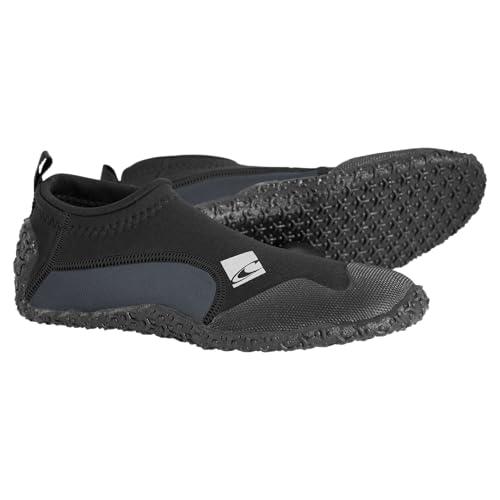
O’Neill Youth Reactor Reef Boot 2mm
A textured rubber sole protects growing feet from reef and rock at low tide, where bare feet risk cuts. Round toe construction fits kids more comfortably than a split-toe design built for adult fin shapes. 2mm Fluidfoam neoprene with flatlock stitching adds warmth without slowing a paddling kick.
Pros
- Rubber sole protects feet from reef and rocky entries
- Round toe shape fits growing feet better than split-toe designs
- 2mm neoprene adds warmth without restricting the kick
Cons
- Less ankle support than a taller-cuff boot
- Round toe fits some fin straps less precisely than split-toe boots
Side by side
| # | Model | Thickness | Best for | Score | Price |
|---|---|---|---|---|---|
| 1 | O’Neill Youth Reactor-2 3/2mm Full Wetsuit | 3mm torso, 2mm arms and legs | Best overall | 9.4 | Check price |
| 2 | FCS Comp Essential Surf Leash | 5 ft and 6 ft options | Best value | 9.2 | Check price |
| 3 | Rip Curl Junior Omega 4/3mm Full Wetsuit | 4mm torso, 3mm arms and legs | Best for cold water | 9.0 | Check price |
| 4 | Body Glove Boys UPF 50+ Rashguard | UPF 50+ | Best for sun protection | 8.7 | Check price |
| 5 | Dakine Front Foot Surf Traction Pad | 5 piece low-profile pad | Best for beginner traction | 8.4 | Check price |
| 6 | Sticky Bumps Original Surf Wax | Temperature specific: cold, cool, warm, tropical | Best budget | 8.2 | Check price |
| 7 | O’Neill Youth Reactor Reef Boot 2mm | 2mm neoprene | Best for reef protection | 8.0 | Check price |
How to choose
What actually matters when gearing up a young surfer Kids outgrow surf gear faster than they wear it out, so fit today matters more than squeezing extra years from one purchase. Wetsuit thickness should match the coldest water a family actually surfs, not a worst-case guess, since extra neoprene restricts paddling for no benefit in warm months. Seam type is the next factor: flatlock keeps cost down for moderate temperatures, while glued and blind stitched construction holds heat better in genuinely cold water. Budget the leash and wax as consumables, since a snapped cord or a spent bar of wax happens mid-season regardless of suit quality.
Matching wetsuit thickness to real water temperature High 60s water and above calls for a 3/2mm suit like the O’Neill Reactor-2, keeping a kid mobile without overheating between sets. Once temperatures drop into the upper 50s, the extra millimeter in Rip Curl’s Omega 4/3mm becomes worth the added bulk. A rash guard under either suit adds a thin layer of extra warmth and blocks board rash on the chest. Sizing charts vary by brand, so measuring height and weight beats guessing from age alone.
Traction, wax and grip for a beginner still finding their footing New surfers slip most often on the front third of the board, exactly where a traction pad like Dakine’s front foot pad adds grip a coat of wax alone can’t match. Wax still matters everywhere else on the deck, and matching the formula to water temperature keeps that grip from turning slick or crumbly. Reapplying wax every few sessions costs little and prevents the slow fade that makes a board feel unpredictable underfoot. Skip a full deck pad on a rented or borrowed board, since peel-and-stick adhesive can damage a foam finish on return.
Foot and skin protection for reef breaks and long sun exposure Reef and rocky point breaks call for a boot like O’Neill’s Reactor Reef Boot, where a rubber sole stands between a foot and sharp coral or rock. Sand-bottom beach breaks rarely need boots at all, so save that purchase for a family that surfs reef passes specifically. Sun exposure adds up fast on a board, since reflected glare hits skin a wetsuit’s short sleeves leave bare. A UPF 50+ rash guard covers that gap on warm days when a full suit would overheat a kid faster than the sun would burn them.
Good to know
What thickness wetsuit does a kid need for surfing?
Most temperate coastlines call for 3/2mm, meaning 3mm through the torso and 2mm at the arms and legs. Water below 60 degrees Fahrenheit usually needs 4/3mm or thicker, trading some flexibility for warmth.
How do you size a wetsuit for a growing kid?
Measure height and weight against the brand’s own size chart rather than buying by age, since growth spurts vary widely. A snug fit at the neck, wrists and ankles prevents water from flushing through, but a suit that restricts arm movement during a mock paddle runs too small.
Is a rash guard enough instead of a wetsuit?
In warm water above roughly 75 degrees, yes, a UPF rash guard covers sun protection and mild chafing without the cost of neoprene. Below that, a wetsuit becomes necessary for keeping core temperature stable during longer sessions.
Which surf leash size fits a youth shortboard?
Match the leash length to the board length, so a leash close to the board’s own footage works for most youth shortboards. A slimmer comp-style cord, like the FCS Comp Essential, cuts drag for the lighter boards kids typically ride.
Can kids use the same surf wax as adults?
Yes, surf wax formulas are matched to water temperature rather than rider age or weight. A cold, cool, warm or tropical bar works the same way regardless of who applies it.
Do surf booties fit inside fins?
Round toe booties like O’Neill’s Reactor Reef Boot fit most open-heel fins designed with extra volume for boots. Fins sized only for bare feet may feel tight, so check a fin’s boot compatibility before a reef session.
Traction pad vs surf wax, which does a beginner need?
Both, in most cases. Wax covers the full deck cheaply, while a traction pad adds extra grip at the front foot specifically, where beginners slip most while popping up.
How long does a kids wetsuit typically last before it’s outgrown?
Growth speed varies, but many families replace a youth wetsuit every one to two seasons rather than from wear. Buying slightly ahead of current size, without going so large that it fits loosely, stretches that timeline a bit further.
What surf gear does a beginner kid actually need to start?
A properly sized wetsuit and a leash cover the essentials for most beginners. Wax or a traction pad comes next for grip, and a UPF rash guard matters most in warm water or for extra sun coverage under a suit.
Final word
For most families outfitting a kid who surfs regularly, the O’Neill Youth Reactor-2 3/2mm Full Wetsuit balances warmth, flexibility and durability better than the alternatives here. Add the FCS Comp Essential leash rather than whatever ships with a used board, since a slimmer cord suits a lighter youth setup. Families surfing through winter should skip straight to Rip Curl’s Junior Omega 4/3mm suit instead, since the standard 3/2mm won’t hold up once water drops into the 50s.


