Sushi Knives That Slice Clean, Even Nervous Hands
The Shun Classic 9.5 inch yanagiba slices fish cleanly with a keen single bevel edge and comfortable handle. Yoshihiro’s yanagiba suits traditionalists wanting hand forged carbon steel. Mercer Culinary’s Asian collection blade brings that pull cut style to a beginner budget.
A proper sushi knife parts raw fish in one clean pull rather than sawing through it. The Shun Classic 9.5 inch yanagiba fits most home cooks, with a sharp single bevel edge, VG MAX steel and a balanced pakkawood handle. Traditionalists who want hand forged carbon steel should choose a Yoshihiro yanagiba. Newcomers testing the style get a capable pull cut blade from Mercer Culinary for far less.
The long single bevel grind that makes these knives glide also makes them unforgiving, since the edge steers left or right if your angle drifts. We compared steel hardness, bevel geometry, blade length and handle shape, then weighed owner reports on edge retention, ease of sharpening and how each blade behaves for cooks new to single bevel knives.
Before you buy
What makes a sushi knife different A yanagiba is a long, single bevel blade built to slice raw fish in one clean pull rather than a sawing motion. The single bevel geometry parts flesh with less drag, which keeps the surface of sashimi glossy instead of ragged. That same grind is directional, so most blades are ground for right handed use. Length lets the whole cut finish in a single stroke without dragging back and forth.
Choosing steel and hardness Harder steel near 61 to 62 HRC holds a keen edge longer but resists resharpening and can chip if twisted. Carbon steels like shirogami take the sharpest edge and sharpen fastest, yet they react and rust unless dried after every use. Stainless cores trade a little keenness for low maintenance, which suits cooks who slice occasionally. Match the steel to how much upkeep you will realistically do.
Best sushi knife for a beginner New cooks should start shorter and more forgiving before committing to a long carbon blade. An 8.25 inch stainless yanagiba like the Kai Wasabi Black or TUO is easier to steer and cheaper to learn on. The pull cut takes practice, since the single bevel wants to wander until your angle is consistent. A softer stainless edge tolerates that learning curve without chipping.
Caring for a single bevel knife Hand wash and dry a yanagiba immediately, never leaving it in a sink or dishwasher where the thin edge can chip. Carbon steel blades need a wipe of food safe oil to hold off rust between uses. Sharpen on a whetstone rather than a pull through sharpener, which cannot follow the single bevel grind. Store the blade in a sheath or on a magnetic strip to protect the fine edge.
The top picks, ranked

Shun Classic 9.5-Inch Yanagiba Knife
A VG MAX steel core clad in Damascus layers takes a keen edge and resists staining. The single bevel grind releases thin slices of sashimi cleanly. Its D shaped pakkawood handle suits right handed cooks and balances the long blade well in the hand.
Pros
- Takes a very keen sashimi edge
- Stain resistant clad steel is low fuss
- Balanced handle steadies the long blade
Cons
- Single bevel is right handed only
- Premium price for occasional use

Yoshihiro Shiroko High Carbon Steel Yanagiba
Hand forged white steel takes an edge keener than most stainless blades and sharpens easily on a whetstone. The traditional magnolia handle keeps the knife light and nimble. Carbon steel demands drying after each use, since it reacts and can rust if left wet.
Pros
- Takes an exceptionally keen edge
- Sharpens quickly on a whetstone
- Light traditional handle aids control
Cons
- Carbon steel rusts if not dried
- Needs regular oiling and care
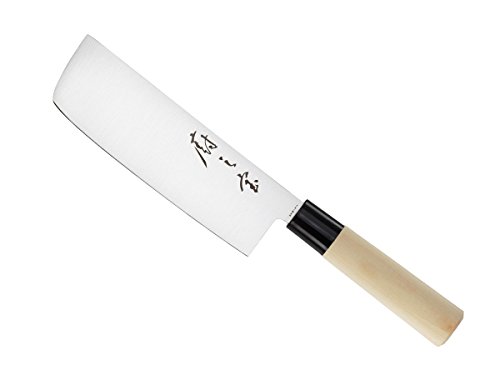
Mercer Culinary Asian Collection Yanagiba
High carbon German stainless steel keeps this pull cut blade affordable and low maintenance. The Santoprene handle grips securely even with wet hands. It lacks the refinement of premium Japanese steel, but it teaches the yanagiba pull cut without a big outlay.
Pros
- Low cost entry to single bevel slicing
- Stainless steel needs little upkeep
- Grippy handle stays secure when wet
Cons
- Edge is less keen than Japanese steel
- Handle feels utilitarian rather than refined

Dalstrong Shogun Series Yanagiba 10.5-Inch
An AUS 10V steel core hardened near 62 HRC holds its edge through long slicing sessions. Sixty seven Damascus layers give the blade a patterned finish and corrosion resistance. The G10 handle is nearly impervious to moisture, and a full tang adds heft toward the bolster.
Pros
- Holds an edge through long sessions
- Moisture proof G10 handle
- Corrosion resistant Damascus cladding
Cons
- Heavier than traditional yanagiba
- Hard steel is slower to resharpen
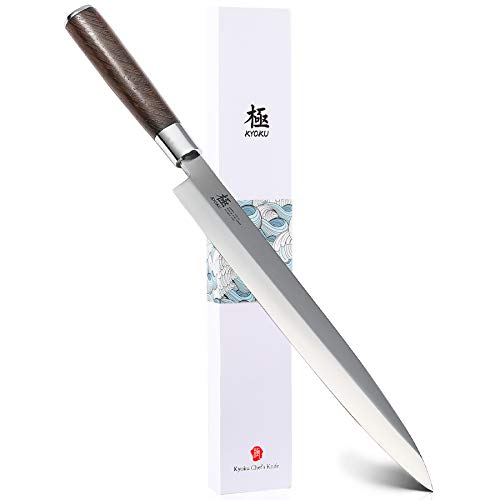
KYOKU Samurai Series Yanagiba 10.5-Inch
Japanese high carbon steel and a full tang arrive at a price near entry stainless blades. The pakkawood handle and included sheath add value for a first sushi knife. Owners note the edge needs a touch up out of the box to reach true sashimi sharpness.
Pros
- Low price with a sheath included
- Full tang feels solid in hand
- Decent steel for a starter blade
Cons
- Often needs sharpening out of the box
- Fit and finish trails premium brands

TUO Yanagiba Sushi Knife 8.25-Inch
A shorter 8.25 inch blade handles small kitchens and modest cuts of fish more easily than a full length yanagiba. German high carbon stainless keeps upkeep simple. The pakkawood handle stays comfortable, and the reduced length makes the pull cut easier to learn.
Pros
- Shorter blade suits small kitchens
- Stainless steel is low maintenance
- Easier length for beginners to control
Cons
- Short for slicing large fish blocks
- Steel is softer than Japanese cores
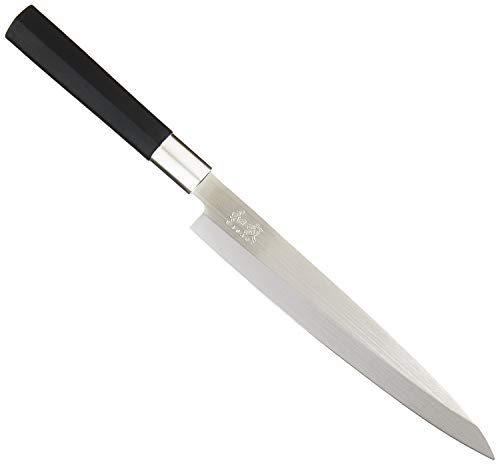
Kai Wasabi Black Yanagiba 8.25-Inch
Kai’s Daido 1K6 stainless steel is forgiving to sharpen and simple to maintain. The composite bamboo handle keeps the knife light and easy to steer through a pull cut. It is a sensible first single bevel blade for cooks unsure whether the style suits them.
Pros
- Forgiving steel for learners
- Light handle aids beginner control
- Simple stainless upkeep
Cons
- Softer steel dulls sooner
- Not built for heavy daily use
How they stack up
| # | Model | Blade length | Best for | Score | Price |
|---|---|---|---|---|---|
| 1 | Shun Classic 9.5-Inch Yanagiba Knife | 9.5 inches | Best overall | 9.4 | Check price |
| 2 | Yoshihiro Shiroko High Carbon Steel Yanagiba | 10.5 inches | Best traditional | 9.1 | Check price |
| 3 | Mercer Culinary Asian Collection Yanagiba | 10 inches | Best value | 8.8 | Check price |
| 4 | Dalstrong Shogun Series Yanagiba 10.5-Inch | 10.5 inches | Best for edge retention | 8.6 | Check price |
| 5 | KYOKU Samurai Series Yanagiba 10.5-Inch | 10.5 inches | Best budget | 8.3 | Check price |
| 6 | TUO Yanagiba Sushi Knife 8.25-Inch | 8.25 inches | Best compact | 8.1 | Check price |
| 7 | Kai Wasabi Black Yanagiba 8.25-Inch | 8.25 inches | Best for beginners | 7.9 | Check price |
Frequently asked questions
What kind of knife is best for making sushi at home?
A yanagiba, the long single bevel slicing knife, is the traditional choice for cutting fish. The Shun Classic 9.5 inch offers the best all around blend of sharpness and easy upkeep for home cooks.
What is the difference between a yanagiba and a sashimi knife?
They are essentially the same tool. Yanagiba is the Japanese name for the long single bevel blade used to slice sashimi and sushi fish, so the terms are used interchangeably.
Are single bevel sushi knives hard to use?
They take practice, because the one sided grind steers the blade until your cutting angle is consistent. Starting with a shorter, more forgiving stainless model like the Kai Wasabi Black makes the learning curve gentler.
Can left handed people use a yanagiba?
Most yanagiba are ground for right handed use, so a lefty needs a specifically left handed blade. Using a right handed single bevel in the left hand steers the cut off line and feels awkward.
Carbon steel or stainless steel for a sushi knife?
Carbon steel like shirogami takes and sharpens to a keener edge but rusts if not dried and oiled. Stainless is less keen but far lower maintenance. Choose based on how much care you will actually give the blade.
How do I sharpen a single bevel sushi knife?
Use a whetstone, laying the flat back nearly flush and honing the single bevel at its ground angle. Pull through sharpeners cannot match this geometry and will damage the edge.
What length yanagiba should I buy?
A 9.5 to 10.5 inch blade lets you slice a fillet in one stroke, which is ideal for sashimi. Smaller kitchens or beginners are better served by a shorter 8.25 inch blade that is easier to control.
Do I need a special knife for sushi or will a chef knife work?
A chef knife can cut rolls in a pinch, but its double bevel and shorter length tend to tear delicate fish. A yanagiba parts raw fish cleanly in a single pull, which matters most for sashimi.
How much should I spend on a sushi knife?
Beginners can start with a capable stainless yanagiba like the Mercer or Kai without a big outlay. Frequent sushi makers who want a keener, longer lasting edge will notice the gains from a Shun or hand forged Yoshihiro.
Our take
The Shun Classic 9.5 inch yanagiba is the pick for most home cooks, uniting a keen single bevel edge, stain resistant steel and a balanced handle. Traditionalists chasing the sharpest possible edge should choose a hand forged Yoshihiro and accept the carbon steel upkeep. Anyone new to single bevel knives is better starting with the shorter, forgiving Kai Wasabi Black before committing to a long carbon blade.