Which Tent Stakes Actually Hold in Sand, Dirt, and Rock
MSR Groundhog Tent Stakes top this list, since a Y-beam shank resists bending in dirt and gravel better than round rod. Backpackers counting ounces should pick the Vargo Titanium Nail Stake, while sandy or loose soil calls for the Orange Screw Original Tent and Canopy Anchor instead.
MSR’s Groundhog Tent Stakes hold the top spot for most campers, since a Y-beam shank resists bending in dirt and gravel better than a round rod. Solid rock and deep sand defeat that shape, though, which is where a screw-in anchor or a heavier steel rod takes over instead.
Material, shank shape, weight, and length were compared against owner reports from different ground conditions, from beach sand to rocky trail sites. No single stake design handles every campsite, so matching the shank to the ground matters more than brand name.
The top picks, ranked

MSR Groundhog Tent Stakes
A Y-beam cross-section resists bending better than round stakes in compacted dirt and light gravel. A reflective cord loop on top helps a stake catch headlamp light at night. Packs of six, eight, or ten stakes fit most three-season tents.
Pros
- Resists lateral bending better than round stakes
- Reflective cord loop aids nighttime retrieval
- Handles dirt, grass, and light gravel equally well
Cons
- Struggles to penetrate dense clay or solid rock
- Costs more per stake than plain steel alternatives

Vargo Titanium Nail Stake
A titanium shank drives through packed dirt with a mallet or a rock. The nail profile sheds weight next to an aluminum Y-beam of similar length. Thru-hikers tracking every ounce of base weight favor this style over bulkier shapes.
Pros
- Lightest stake in this comparison for backpacking
- Titanium resists corrosion and permanent bending
- Slim profile pulls free from the ground easily
Cons
- Round shank grips loose soil less than angled shapes
- Costs more per stake than aluminum or steel
GEERTOP 7075 Aluminum Tent Stakes
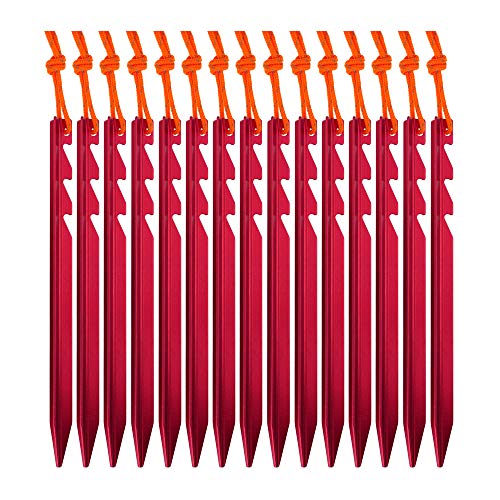
7075 aluminum alloy is stiffer than the 6061 grade found in many budget stakes. A V-angle profile adds surface area for grip in soft dirt. A mesh pouch keeps all ten stakes together between trips instead of loose in a pack.
Pros
- Stronger alloy holds up to repeated hammering
- Stuff sack included keeps stakes organized
- Priced well for the aluminum grade used
Cons
- V-shape still bends if driven into rocky ground
- Reflective cord ships with some sets, not all

Orange Screw Original Tent and Canopy Anchor
A screw thread bites into sand and loose soil where straight stakes pull free within hours. A T-handle or drill bit drives it in without a mallet. Beach campers and canopy owners on lawns rely on this shape most often.
Pros
- Holds firm in sand where spike stakes fail
- No hammer needed, just twist it into the ground
- Bright orange body stands out against grass
Cons
- Takes longer to install than a hammered stake
- Not rated for rocky or frozen ground

Eurmax USA Heavy Duty Galvanized Steel Stakes
A galvanized coating resists rust after repeated use in wet ground. A straight steel rod drives through compacted or rocky soil that would bend an aluminum stake. A hooked top keeps guy lines from slipping off under tension.
Pros
- Handles rocky and hard-packed ground without bending
- Galvanized finish resists rain and humidity
- Hook design secures cord under tension
Cons
- Heavier per stake than aluminum or titanium
- Sharp point needs care when packing away

Coleman Steel Tent Stakes
Steel construction covers dirt and grass campsites at a low per-stake cost. An angled tip helps start the stake without a pilot hole. Coleman sizes the six-pack to match most dome tents sold alongside it.
Pros
- Lowest cost per stake among steel options here
- Straightforward design with no learning curve
- Sold widely at outdoor and big-box retailers
Cons
- No rust coating, so the finish wears with wet use
- Bends if driven into rocky or root-filled ground

ABCCANOPY Heavy Duty Steel Stakes
Extra length gives canopies more holding depth when gusts pull at guy-out points. ABCCANOPY sells these alongside its pop-up canopy line, though they fit standard tent grommets too. Added length reduces uplift during sudden wind events.
Pros
- Extra length improves resistance to wind uplift
- Steel rod handles repeated setup and teardown
- Fits most canopy and tent grommets
Cons
- Longer stakes are harder to fit into a small bag
- Adds weight compared with aluminum for backpacking
How to pick the right one
What to look for in tent stakes Material determines how a stake handles force, and aluminum resists bending better than raw steel of similar weight. Titanium cuts weight further but costs more per ounce. Shank shape matters too, since Y-beam and V-angle profiles fight bending while round nails slide into ground more easily. Longer stakes anchor deeper in loose soil, so check the terrain before choosing a shape.
Matching stakes to your ground type Packed dirt and grass accept almost any stake, including basic steel. Sand and loose soil pull straight stakes free within hours, so a screw-in anchor like the Orange Screw holds better instead. Rocky or root-filled ground bends thin aluminum, while a straight steel rod like the Eurmax USA stake drives through it. Snow and ice call for a dedicated snow stake, which falls outside this comparison.
Backpacking versus car camping needs Backpackers weigh every gram, so titanium or thin aluminum stakes make sense despite the higher price. A set of eight Vargo titanium stakes weighs well under three ounces total. Car campers carry more slack in their pack weight, so heavier steel from Coleman or Eurmax USA lasts through repeated trips for less money. Canopy owners at fairs or backyard events lean toward longer stakes like the ABCCANOPY set for wind resistance.
When to replace stock tent stakes Tents often ship with thin wire stakes that bend on first use. Swap them out before a trip to rocky terrain or an exposed, windy site. Owners report fewer failed pitches after switching to Y-beam or straight steel designs. A mixed kit, combining a few screw-in anchors with standard stakes, covers unpredictable campsites without adding much weight.
How they compare
| # | Model | Material | Best for | Score | Price |
|---|---|---|---|---|---|
| 1 | MSR Groundhog Tent Stakes | 7000-series aluminum | Best overall | 9.4 | Check price |
| 2 | Vargo Titanium Nail Stake | Titanium | Best ultralight for backpacking | 9.2 | Check price |
| 3 | GEERTOP 7075 Aluminum Tent Stakes | 7075 aluminum alloy | Best value | 9.0 | Check price |
| 4 | Orange Screw Original Tent and Canopy Anchor | Reinforced polymer | Best for sandy or soft ground | 8.8 | Check price |
| 5 | Eurmax USA Heavy Duty Galvanized Steel Stakes | Galvanized steel | Best for rocky or hard-packed ground | 8.5 | Check price |
| 6 | Coleman Steel Tent Stakes | Steel | Best budget | 8.2 | Check price |
| 7 | ABCCANOPY Heavy Duty Steel Stakes | Steel | Best for high wind and storm conditions | 8.0 | Check price |
Frequently asked questions
What tent stakes work best in sandy ground?
Screw-in anchors like the Orange Screw Original Tent and Canopy Anchor outperform straight stakes in sand. The auger thread bites into loose material instead of pulling free. A T-handle or drill bit drives it in without a mallet.
How long should tent stakes be?
Most three-season stakes run 6 to 9 inches for dirt and grass. Sandy or loose soil benefits from 9 to 12 inch screw anchors for deeper hold. Canopy stakes built for wind resistance often reach 10 inches or more.
Are titanium tent stakes worth the extra cost?
Titanium saves real weight, with the Vargo Titanium Nail Stake weighing about 0.3 ounces each. Backpackers counting every ounce of base weight benefit most from the upgrade. Car campers with less concern for pack weight can save money with aluminum or steel instead.
Can regular nails work as tent stakes?
Construction nails work in a pinch but lack the length and grip angle of a purpose-built stake. They also lack a hook or loop for securing guy lines. A dedicated nail-style stake like the Vargo Titanium option solves both problems.
What tent stakes hold best in rocky soil?
Straight steel rods like the Eurmax USA Heavy Duty Galvanized Steel Stakes drive through compacted or rocky ground better than aluminum. Y-beam aluminum stakes such as the MSR Groundhog also hold up if the rock is not solid bedrock. Thin wire stakes bend on the first strike and should be skipped.
How many tent stakes does a 4-person tent need?
Most 4-person dome or tunnel tents need 8 to 10 stakes for the body and rainfly guy lines. Windy sites benefit from a few extra for additional guy-out points. A 10-pack, like the GEERTOP aluminum set, covers most tents with spares left over.
Do aluminum tent stakes bend easily?
Standard round aluminum stakes bend under lateral force in rocky or root-filled ground. Y-beam or V-angle profiles, like those on the MSR Groundhog and GEERTOP stakes, resist bending far better than round rod. Straight steel remains the sturdier choice for the hardest ground.
Is steel or aluminum better for tent stakes?
Steel holds up better in rocky or hard-packed soil but weighs more per stake. Aluminum saves weight and works fine in dirt, grass, and moderate ground. Backpackers should lean toward aluminum or titanium, while car campers can choose steel for durability without worrying about pack weight.
What is the best tent stake for high wind?
Longer stakes like the ABCCANOPY Heavy Duty Steel Stakes anchor deeper, resisting uplift during gusts. A straight steel rod holds better than lightweight aluminum when guy lines pull hard. Canopy owners at exposed sites benefit most from the extra length.
Our take
Most campsites with dirt, grass, or light gravel call for the MSR Groundhog Tent Stakes, since the Y-beam shape resists bending better than round steel or aluminum rods. Backpackers shaving ounces should switch to the Vargo Titanium Nail Stake instead, even though it costs more per stake. Anyone pitching on sand or a loose lawn should skip straight stakes entirely and use the Orange Screw Original Tent and Canopy Anchor.