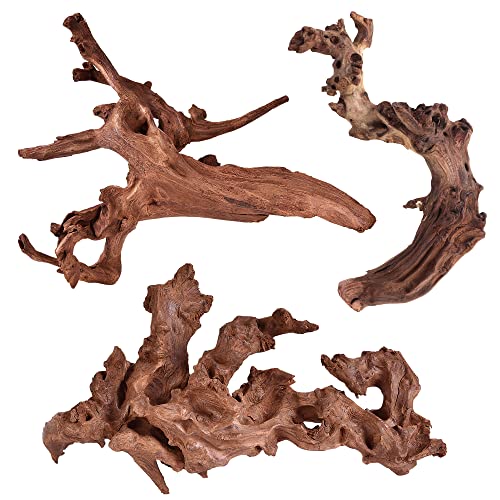
Terrarium Decor That Looks Natural and Cleans Easily
Zoo Med Natural Cork Bark Rounds top our list because they serve as hide, climb and humidity retreat in one piece. Exo Terra Jungle Vine is the most flexible way to add climbing height, and the Exo Terra Reptile Cave gives shy species a secure hiding spot.
The best all round terrarium decor is Zoo Med Natural Cork Bark, which works as a hide, a climbing surface and a humid retreat at once. Add Exo Terra Jungle Vine for vertical routes and an Exo Terra Reptile Cave for a secure hide, and most enclosures are covered.
Terrarium decor is difficult to choose because a piece that suits an arboreal gecko can be useless or unsafe for a terrestrial snake, and natural materials that look best are also the hardest to disinfect. We compared species suitability, edge and material safety, cleaning and sterilising methods, mounting security and appearance, then ranked the seven pieces below by the role each fills in an enclosure.
The shortlist, ranked

Zoo Med Natural Cork Bark Round
Cork bark is the most useful single item in most terrariums, because a hollow round works as a hide at ground level, a bridge across the enclosure or a climbing surface propped against a wall. It resists rot in humid setups where untreated wood breaks down. Owners report it holds a moisture gradient that many species use to help shedding.
Pros
- Fills three roles in one piece
- Resists rot in humid setups
- Textured surface is easy for animals to grip
Cons
- Natural pieces vary in shape and size
- Porous surface is harder to fully disinfect

Exo Terra Jungle Vine
A flexible vine can be bent into a route from the substrate to a basking spot, which effectively doubles the usable space in a tall enclosure. The wire core holds any shape and the outer texture gives claws something to grip. It suits crested geckos, tree frogs and young arboreal snakes.
Pros
- Bends into any route you need
- Adds usable vertical space
- Texture gives good grip
Cons
- Needs secure anchoring at both ends
- Wire core means it should not be cut carelessly
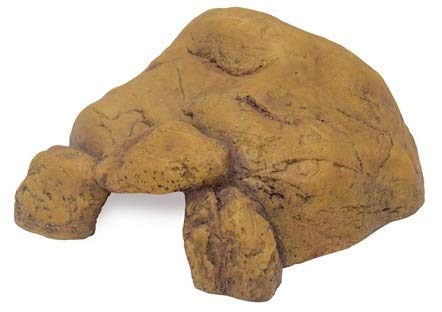
Exo Terra Reptile Cave
Every reptile needs somewhere it cannot be seen, and animals without a proper hide show more stress behaviour than any other single husbandry gap. This moulded cave has a single entrance and a solid shell that blocks light. The resin surface wipes clean and disinfects far more easily than natural wood or bark.
Pros
- Genuinely dark and secure inside
- Easy to disinfect properly
- Consistent sizing unlike natural pieces
Cons
- Looks less natural than bark or wood
- One entrance only, which some species dislike

Zoo Med Mopani Wood
Mopani is a dense hardwood that sinks rather than floats and lasts far longer in humid enclosures than softer driftwoods. Its two tone colouring and twisted shapes make it one of the better looking natural pieces. Owners report it needs a good soak and scrub before first use to remove dust and tannins.
Pros
- Extremely durable in humid enclosures
- Attractive two tone grain
- Heavy enough to stay where you place it
Cons
- Needs soaking before first use
- Heavy pieces can crush substrate features
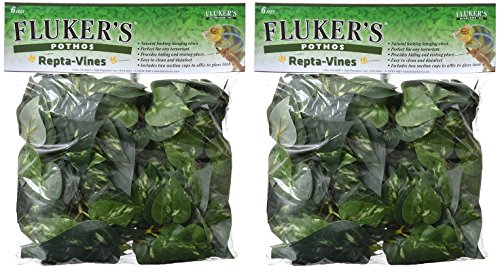
Fluker’s Repta Vines Pothos
Dense artificial foliage gives shy animals cover without the light, watering and root space that live plants demand. These pothos style vines drape from the enclosure top or wind along a branch to break up sightlines. Based on specifications they are made for terrarium humidity and rinse clean under a tap.
Pros
- Instant cover with no plant care
- Rinses clean quickly
- Works in humid and dry enclosures
Cons
- Does not help humidity like live plants
- Cheaper foliage can fade over time

Zilla Vertical Decor Bendable Branch
Tall enclosures often waste their height because there is no route upward. This bendable branch suckers or clips to the glass and holds a shape from substrate level to the top of the tank. It suits crested geckos and other species that spend their time off the ground.
Pros
- Makes tall tank height usable
- Mounts to the wall rather than the floor
- Shapes to any route
Cons
- Mounts can loosen in high humidity
- Not suitable for heavy species

Penn Plax Reptology Shale Step Ledge
A ledge that mounts to the glass gives a basking surface closer to the heat source without taking floor space. The rock textured resin surface holds warmth and gives claws grip. It suits smaller lizards and is a practical way to add a temperature gradient in a crowded enclosure.
Pros
- Adds a basking spot without floor space
- Textured surface for secure grip
- Easy to reposition as needed
Cons
- Weight limit rules out larger species
- Suction mounts need checking regularly
How to pick the right one
Decorate for behaviour, not just for looks The purpose of terrarium decor is to let an animal do what it would do in the wild, which usually means climbing, hiding, basking and moving between temperature zones. A tall enclosure with nothing to climb is effectively a small enclosure, and an animal with no hide will show stress no matter how attractive the setup is. Start by identifying whether your species is arboreal, terrestrial or fossorial, then add the pieces that support those behaviours before choosing anything decorative.
Safety checks before anything goes in Look for sharp edges, splinters and gaps that could trap a limb or tail. Anything mounted must be secured well enough that it cannot fall on the animal, since a heavy branch shifting overnight is a genuine hazard. Avoid wood collected outdoors unless you are willing to bake or freeze it thoroughly, since wild wood can carry mites, fungus and pesticide residue. Cork, mopani and manufactured resin pieces are the safest starting points.
Cleaning and disinfecting different materials Resin and plastic pieces can be scrubbed and disinfected properly, which is why they suit enclosures for animals prone to infection. Natural wood and cork are porous, so they cannot be fully sterilised, though baking at a low temperature or freezing kills most pests. Artificial foliage rinses clean under running water. Whatever the material, rinse away every trace of any cleaning product before returning a piece to the enclosure.
Live plants against artificial foliage Live plants raise humidity, help with air quality and look best, but they need appropriate lighting, drainage and a substrate that supports roots, and some species simply trample them. Artificial foliage gives instant cover with no maintenance and suits enclosures where lighting is chosen for the animal rather than the plants. Many keepers use both, with hardy live plants at the back and artificial vines where the animal actually travels.
Side by side
| # | Model | Material | Best for | Score | Price |
|---|---|---|---|---|---|
| 1 | Zoo Med Natural Cork Bark Round | Natural cork bark | Best overall | 9.4 | Check price |
| 2 | Exo Terra Jungle Vine | Flexible bendable vine | Best climbing decor | 9.2 | Check price |
| 3 | Exo Terra Reptile Cave | Moulded resin | Best hide | 9.0 | Check price |
| 4 | Zoo Med Mopani Wood | Mopani hardwood | Best hardwood piece | 8.8 | Check price |
| 5 | Fluker’s Repta Vines Pothos | Artificial pothos vine | Best artificial foliage | 8.6 | Check price |
| 6 | Zilla Vertical Decor Bendable Branch | Bendable branch with mounts | Best for vertical setups | 8.3 | Check price |
| 7 | Penn Plax Reptology Shale Step Ledge | Rock textured resin | Best basking ledge | 8.0 | Check price |
Common questions
How many hides does a reptile need?
At least two is the common guidance, one on the warm side and one on the cool side, so the animal can hide without giving up its preferred temperature. Shy species often benefit from a third in the middle.
Can I use wood I find outside?
Only with thorough treatment. Wild wood can carry mites, mould and pesticide residue. Baking at a low oven temperature or freezing for several days is the usual approach, and softwoods with strong resins should be avoided entirely.
How do I clean terrarium decor?
Scrub with hot water first, then use a reptile safe disinfectant on non porous pieces and rinse thoroughly. Porous wood and cork are better treated with heat or freezing, since chemicals soak in and are hard to rinse out.
Are live plants better than artificial ones?
Live plants help humidity and look best, but they need suitable lighting and drainage and some animals destroy them. Artificial foliage gives instant cover with no care requirements, and combining both is a common compromise.
What decor do arboreal species need?
Vertical routes above all, so branches, vines and wall mounted ledges that let the animal move from the substrate to the top of the enclosure. Foliage along those routes gives cover and makes the space feel secure.
Is cork bark safe for all reptiles?
It is one of the most widely used materials across species, suiting humid and dry setups alike. The main caution is choosing a piece with no sharp broken edges and securing it so it cannot roll or fall.
How often should decor be replaced?
Replace anything cracked, splintered or persistently soiled. Natural wood in a humid enclosure typically lasts a year or two before softening, while resin pieces last far longer if cleaned regularly.
Will too much decor stress my reptile?
Clutter is rarely the problem, and most enclosures are underfurnished rather than overfurnished. The one thing to preserve is clear access to the basking spot and enough open floor for the animal to move and stretch out fully.
The verdict
Build the enclosure around function first. Zoo Med Natural Cork Bark is the most versatile single piece you can add, working as hide, bridge and climbing surface, and Exo Terra Jungle Vine turns unused vertical space into somewhere your animal can travel. Pair those with an Exo Terra Reptile Cave so there is always a dark secure retreat, then add foliage and ledges to suit the species you keep.