Top Tile Tools for Clean Cuts and Fast Install
The QEP 24 Inch Manual Tile Cutter is our top pick for most DIYers because it delivers clean straight cuts up to 24 inches with a simple lever action, and it costs less than a wet saw. But it struggles with very thick porcelain and requires a steady hand for thin tiles.
Cutting tile neatly is the hardest part of any tiling job. A good tile tool makes straight cuts, keeps edges chip-free, and saves hours of work.
Whether you are laying a backsplash or flooring, the right tool depends on tile size, material, and how often you work. We compared top-rated models to help you choose.
The shortlist, ranked

QEP 24 Inch Manual Tile Cutter
This manual cutter scores a large cutting base and a carbide wheel that scores clean lines. Owners report smooth cuts on ceramic tiles up to 24 inches. It is lightweight and easy to store. Some find it needs practice to avoid chipping on very hard porcelain.
Pros
- Cuts up to 24 inches without electricity
- Quick and quiet operation
- Affordable for DIY budgets
Cons
- Not ideal for thick porcelain or stone
- Manual effort can tire arms on long runs
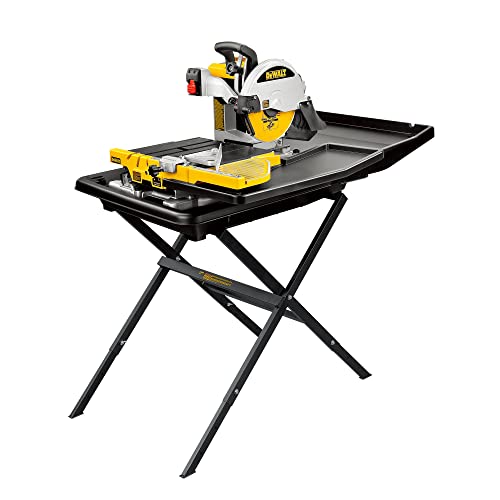
DEWALT 10-Inch Wet Tile Saw
This wet saw from DEWALT handles large format tiles with ease, thanks to a powerful motor and a large cutting surface. It features a folding table for portability. Users appreciate the smooth cuts and minimal chipping on porcelain and stone. It requires space and water management.
Pros
- Powerful motor cuts through hard tile
- Large table supports big tiles
- Folding design for easy transport
Cons
- Heavy at over 90 pounds
- Water cleanup is necessary

SKIL 7-Inch Wet Tile Saw
The SKIL wet saw is a space-saving option that still produces clean cuts. It has a 7-inch blade and a small water tray, ideal for backsplashes and small bathrooms. Owners like its affordability and ease of setup. It is not meant for large-format tiles and lacks a stand.
Pros
- Lightweight and portable
- Budget-friendly price point
- Simple water system keeps dust down
Cons
- Small table limits large cuts
- Less power for hard materials

RUBI Tools Star 36-N Manual Tile Cutter
RUBI is known among tilers for robust cutters. This model offers a hardened steel base and a precise scoring wheel. It cuts up to 36 inches, making it suitable for large porcelain tiles. The breaker mechanism is smooth, but the price is higher than typical DIY tools.
Pros
- Long cutting capacity for large tiles
- Durable construction for daily use
- Accurate cuts with minimal chipping
Cons
- Heavy and not portable
- Expensive for occasional use

Bosch 12-Inch Glide Tile Saw
Bosch’s Glide saw uses a unique rail system that allows for plunge cutting and angle adjustments without lifting the tile. It saves space compared to traditional sliding saws. Users like its smooth action and dust collection. It is pricey and the blade guard can be awkward for some.
Pros
- Plunge cut capability for cutouts
- Space-saving rail design
- Excellent dust collection port
Cons
- High cost
- Very heavy and requires assembly

Montolit 63P3 Tile Cutter
Montolit cutters are favorites among European tilers. This model features a patented breaking system that produces extremely fine cuts. It handles tiles up to 24 inches and includes a parallel guide. Owners report minimal waste, but the tool requires a learning curve and is not cheap.
Pros
- Very precise scoring and breaking
- Built-in parallel guide for repetitive cuts
- Handles thick porcelain well
Cons
- Steep price
- Setup is complex initially

Sigma 3E2M Tile Cutter
Sigma cutters are built to endure harsh job sites. This model has a solid steel frame and replaceable parts. It cuts tiles up to 24 inches with a smooth action. Users appreciate the replaceable cutting wheel, but the handle can be stiff until broken in.
Pros
- Rugged construction lasts years
- Replaceable scoring wheel extends life
- Consistent performance on thick tiles
Cons
- Heavier than comparable cutters
- Handle requires effort for first cuts
How to pick the right one
How they compare
| # | Model | Cutting capacity | Best for | Score | Price |
|---|---|---|---|---|---|
| 1 | QEP 24 Inch Manual Tile Cutter | 24 inches | Best for straight cuts on ceramic and porcelain | 9.4 | Check price |
| 2 | DEWALT 10-Inch Wet Tile Saw | 10 inches | Best for heavy-duty projects and large tiles | 9.2 | Check price |
| 3 | SKIL 7-Inch Wet Tile Saw | 7 inches | Best compact wet saw for small jobs | 8.8 | Check price |
| 4 | RUBI Tools Star 36-N Manual Tile Cutter | 36 inches | Best for professional-grade accuracy | 9.0 | Check price |
| 5 | Bosch 12-Inch Glide Tile Saw | 12 inches | Best for plunge cuts and versatility | 8.7 | Check price |
| 6 | Montolit 63P3 Tile Cutter | 24 inches | Best for precision on large-format tiles | 8.5 | Check price |
| 7 | Sigma 3E2M Tile Cutter | 24 inches | Best for durability and long service life | 8.3 | Check price |
Common questions
Can a manual tile cutter cut porcelain?
Yes, but only if the porcelain is rated for cutting. Some porcelain is very hard and may chip. A manual cutter with a sharp carbide wheel works for thinner porcelain tiles. For thick or dense porcelain, a wet saw is more reliable.
What is the difference between a tile cutter and a tile saw?
A tile cutter scores and snaps tiles without electricity. A tile saw uses a rotating diamond blade and water to cut. Cutters are quieter and cleaner, but saws handle harder materials and make curved cuts with a grinder.
How do I cut tile without a wet saw?
You can use a manual tile cutter for straight cuts. For curved or intricate shapes, use an angle grinder with a diamond blade or a tile nipper. Score the tile first if possible to guide the break.
What size tile saw do I need?
The saw’s table size and blade diameter determine the largest tile you can cut. For large format tiles, look for a saw with at least a 10-inch blade and a table that supports the tile length. Measure your biggest tile and add a few inches.
Can I use a wet tile saw for glass or stone?
Yes, if you use the appropriate blade. Diamond blades are available for glass, ceramic, and stone. Always check the blade’s compatibility and use water to cool and lubricate.
How do I make straight cuts with a manual cutter?
Align the tile on the base with the cutting line under the scoring wheel. Apply firm, even pressure as you pull the handle across. Then press down on the handle to snap the tile along the score.
What safety gear should I use when cutting tile?
Wear safety glasses to protect from flying chips. Use ear protection with wet saws. A dust mask is wise when dry cutting. Work in a well-ventilated area and keep water away from electrical cords.
How do I clean a tile saw after use?
Empty the water tray and wipe down the saw. Remove any debris from the blade and table. Dry metal parts to prevent rust. Store the saw in a dry place.
Can I rent a tile saw instead of buying?
Yes, many home improvement stores rent tile saws. Renting is a good option for one-time projects. However, for multiple rooms or future work, owning a tool might be more economical.
What is the best way to cut a circle in a tile?
For a circular cutout, use a wet saw to cut straight lines to the circle, then use a grinder or tile nippers to remove small pieces. Alternatively, a diamond core drill bit can create holes for pipes or fixtures.
The verdict
For most DIYers, the QEP manual cutter offers the best balance of price, ease, and performance for ceramic and porcelain. If you plan to work with stone or large tiles regularly, invest in the DEWALT wet saw. Professionals who demand precision should consider the RUBI or Montolit, but they come at a premium. Choose based on your project size and tile type, and always prioritize safety.