Snow Tire Chains Compared: Cable vs Link Traction
The Peerless Auto-Trac 0232605 takes the top spot for its self tensioning ratchets, which remove the need to stop and retighten. The Security Chain Company Super Z6 is the choice where clearance is tight, and the Glacier Chains 1042 cable set is the practical budget option for occasional passes.
The Peerless Auto-Trac 0232605 leads this roundup because its self tensioning ratchets tighten the chain as you drive, which is the single biggest source of trouble with traditional chains. The Security Chain Company Super Z6 is the answer for vehicles with very limited clearance between tyre and strut, and the Glacier Chains 1042 cable set covers the driver who crosses one mountain pass a year and wants something legal in the boot.
Chains are unusually easy to buy wrong, because the right set depends on your tyre size and on how much room the vehicle has around that tyre. Many modern cars are marked for class S traction devices only, meaning a low clearance cable or low profile chain, and fitting a chunky link chain to one of those can shred a wheel well or damage brake lines. We compared traction patterns, clearance class, tensioning method, material and stated fitment ranges, then weighed those against what owners report about fitting in the dark, ride harshness and chains that loosen after a few miles.
The shortlist, ranked
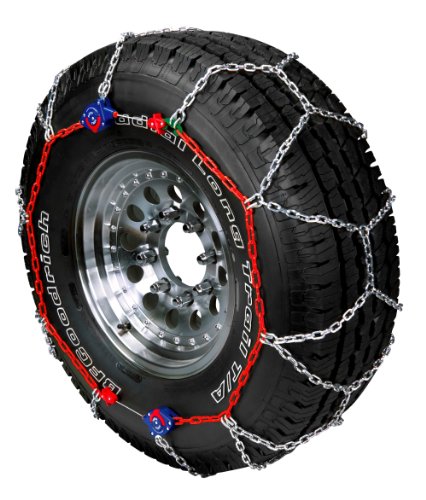
Peerless Auto-Trac 0232605 Tire Chains
The ratcheting tensioners pull the chain tight automatically once you drive forward, which means no crawling back out in the snow to retighten. The diamond pattern gives even bite for both traction and braking rather than only forward grip. Fitment is limited to vehicles with enough clearance, so check your handbook first.
Pros
- No stopping to retighten after fitting
- Diamond pattern helps braking as well as pull
- Fits over the tyre without moving the vehicle
Cons
- Not suitable for tight clearance vehicles
- Ratchets need cleaning to keep working smoothly

Security Chain Company Super Z6 Cable Tire Chain
The Super Z6 uses alloy cable rollers on a low profile diagonal pattern, so total added thickness stays inside what most modern cars allow. A rubber tensioner keeps it snug without a second stop. Traction is good on packed snow but falls short of heavy link chains in deep ruts.
Pros
- Fits vehicles that ban conventional chains
- Rubber tensioner removes the second tightening stop
- Smoother ride than heavy link chains
Cons
- Less bite than link chains in deep snow
- Cable rollers wear quickly on bare tarmac

Glacier Chains 1042 Passenger Cable Tire Chain
A straightforward cable set for the driver who needs something legal and functional for a handful of snowy days a year. Fitting is simple and the low profile suits most passenger cars. Owners report the rollers wear fast if used on cleared road, so fit them only where snow is continuous.
Pros
- Easy to fit for a first time user
- Compact and light to store in a boot
- Suits cars with restricted clearance
Cons
- Needs stopping to retighten after fitting
- Rollers wear quickly on bare pavement

Konig XG-12 Pro Snow Chains
Konig designed the XG-12 Pro around a self tightening system that does most of the work once you hook it up and pull the tensioner. It is one of the few sets people manage in gloves and darkness without swearing. The price and the storage bulk both reflect the engineering.
Pros
- Fastest fitting system in this group
- Low profile suits many modern vehicles
- Even chain tension around the tyre
Cons
- Bulkier storage case than cables
- More moving parts that need keeping clean
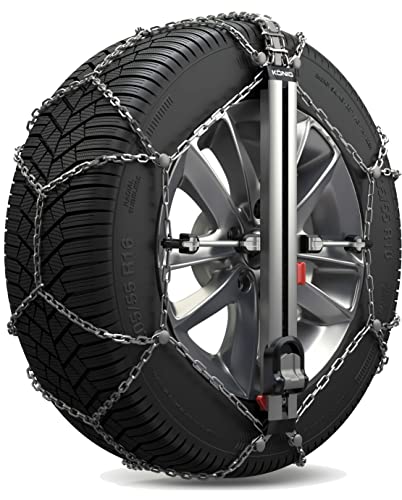
Thule Easy-Fit CU-9 Snow Chains
The Easy-Fit system mounts entirely from the front of the wheel, so you never reach behind the tyre into slush. Tension is applied automatically and a release lever handles removal cleanly. It is one of the more expensive options here and stores in a large case.
Pros
- No reaching behind the wheel to fit
- Automatic tensioning and quick release
- Well made components that resist corrosion
Cons
- Among the most expensive sets to buy
- Large storage case takes boot space

Security Chain Company SC1032 Radial Chain Cable Traction
This is the plain cable set to keep in the boot for emergencies, with no tensioner and no clever hardware. It fits low clearance vehicles and does what cables do, providing enough bite to get moving on packed snow. You will be stopping to retighten it after the first short stretch.
Pros
- Least bulky option to store year round
- Meets low clearance requirements
- Simple design with little to go wrong
Cons
- Manual retightening is mandatory
- Limited traction in deep or rutted snow
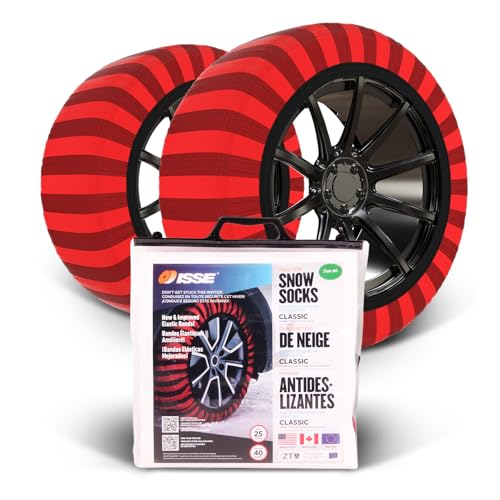
ISSE Classic Snow Socks
Snow socks are a woven textile cover that slips over the tyre and grips through fabric friction rather than metal bite. They fit vehicles with almost no clearance, go on faster than any chain and ride quietly. They are also the weakest option in deep snow and wear out fast on bare road.
Pros
- Fastest fitting of anything here
- Works where no chain will fit
- Quiet and smooth compared with chains
Cons
- Wears out quickly on cleared roads
- Not accepted everywhere chains are required
How they compare
| # | Model | Type | Best for | Score | Price |
|---|---|---|---|---|---|
| 1 | Peerless Auto-Trac 0232605 Tire Chains | Link chain, diamond pattern | Best overall | 9.4 | Check price |
| 2 | Security Chain Company Super Z6 Cable Tire Chain | Cable chain, diagonal pattern | Best for low clearance vehicles | 9.2 | Check price |
| 3 | Glacier Chains 1042 Passenger Cable Tire Chain | Cable chain | Best value | 9.0 | Check price |
| 4 | Konig XG-12 Pro Snow Chains | Link chain, low profile | Best for easy fitting | 8.8 | Check price |
| 5 | Thule Easy-Fit CU-9 Snow Chains | Link chain, low profile | Best for quick roadside install | 8.6 | Check price |
| 6 | Security Chain Company SC1032 Radial Chain Cable Traction | Cable chain | Best budget | 8.3 | Check price |
| 7 | ISSE Classic Snow Socks | Textile traction cover | Best for occasional light snow | 8.0 | Check price |
What matters most
Check your clearance before anything else Many modern cars specify class S traction devices, meaning the total added thickness on the inside of the tyre must stay under a small limit. Suspension components, brake lines and wheel arch liners sit close to the tyre, and a thick link chain in that space can cut through a line or tear a liner at speed. Your owner handbook states this plainly. If it says class S, buy cables or a low profile chain and nothing else.
Cable versus link traction Cable chains use steel cables with rollers, sit thin against the tyre and ride relatively smoothly. Link chains use steel links in a ladder or diamond pattern, add more thickness and bite harder in deep snow and ice. Diamond patterns keep more metal in contact at any moment than ladder patterns, which improves braking and lateral grip rather than just forward pull. Choose cables for clearance and comfort, links for genuine mountain conditions.
Fit them before you need them The worst time to learn a chain system is on a dark shoulder in falling snow with traffic passing. Practise once in a dry driveway, note which side faces out, and keep gloves plus a torch and a small mat in the boot with the chains. Chains go on the drive wheels, and on many all wheel drive vehicles the manufacturer specifies which axle, so check the handbook rather than assuming.
Speed limits and road surface will decide how long they last Almost every chain carries a speed limit around the low tens of miles per hour, and exceeding it is how chains break and whip into bodywork. Just as important, chains and cables are meant for snow covered surfaces. Running them on cleared tarmac grinds the metal flat within a few miles and chews the road. Take them off as soon as you reach continuous bare pavement, then rinse and dry them before storage so they do not rust into a solid lump.
Frequently asked questions
Do chains go on the front or rear wheels?
They go on the drive wheels, so front for a front wheel drive car and rear for rear wheel drive. Four wheel drive and all wheel drive vehicles vary, and the manufacturer usually specifies an axle in the handbook. Fitting them to the wrong axle can make handling worse, not better.
What does class S clearance mean?
Class S is a designation for vehicles with limited space between the tyre and surrounding components, requiring low profile traction devices. If your handbook says class S, you must use cables or chains marketed as class S compatible. Conventional link chains can contact suspension and brake components on these vehicles.
How fast can you drive with chains fitted?
Most manufacturers specify a low limit, typically in the region of twenty to thirty miles per hour, and the exact figure is on the packaging. Going faster risks a chain breaking and damaging the bodywork or brake lines. Slow down further on corners and never use cruise control.
Are snow socks a real substitute for chains?
They provide useful traction on packed snow and fit where nothing else will, but they are weaker in deep snow and wear out fast on bare road. Some jurisdictions do not accept them where chains are legally required, so check local rules before relying on them for a mandatory chain zone.
Do I need chains on all four wheels?
One pair on the drive axle is the normal requirement and is what most sets are sold as. Fitting four sets improves braking and stability and is sometimes specified for heavy vehicles or severe conditions. Never fit chains to only one wheel of an axle.
Will chains damage my tyres?
Correctly sized and properly tensioned chains do not damage tyres in normal use. Loose chains do, because the slack allows the metal to slap the sidewall. Retighten after a short distance unless the set is self tensioning, and never fit a chain sized for a different tyre.
How do I store them so they do not rust?
Rinse off road salt with fresh water, dry them fully, and store them in the supplied case or bag rather than loose in the boot. A light spray of oil on link chains helps if you live somewhere damp. Check for broken links or worn rollers at the start of each winter.
Can chains be used with winter tyres?
Yes, and the combination is the strongest traction option available. Winter tyres handle cold tarmac and light snow, and chains take over when snow is deep or roads are icy. Make sure the chain size matches the winter tyre size, which is sometimes different from the summer fitment.
Our take
For most drivers with normal clearance the Peerless Auto-Trac 0232605 is the one to buy, because self tensioning removes the step people skip and regret. If your handbook calls for class S devices, the Security Chain Company Super Z6 is the strongest option that will legally fit, and the Glacier Chains 1042 covers occasional use without taking much boot space.