Which Torque Wrench Fits Your Drive Size and Budget
Tekton’s 24335 click wrench leads for accuracy and a clear dual-range scale. EPAuto’s 1/2-inch model works well as a budget-friendly first torque wrench. ACDelco’s ARM601-4 digital wrench suits owners who want an exact numeric readout with audible alerts near target. All three cover common automotive fastening ranges without straying into niche territory.
Most home mechanics do best with the Tekton 24335, a 1/2-inch click wrench rated at plus or minus 4 percent accuracy with a scale you can read in a dim garage. Tight budgets fit the EPAuto click wrench, which covers the same core torque range for less. Anyone who wants a numeric readout instead of a click should look at the ACDelco ARM601-4.
Torque wrenches are deceptively hard to shop for, because a tool can feel sturdy in the hand yet still land outside its stated tolerance, and the range printed on the box may not match the fasteners in your garage. We compared stated accuracy ratings, drive sizes, torque ranges and owner feedback on click reliability, then prioritized wrenches whose range centers on common automotive torque values.
What matters most
Match drive size and range to your fasteners A 1/2-inch drive handles most automotive jobs, including lug nuts and suspension bolts. Bikes, brake hardware and interior trim usually call for a smaller 3/8-inch drive instead. Aim for a range where your everyday target values sit near the middle, since accuracy typically drops off at the very top and bottom of a wrench’s scale.
Read accuracy ratings correctly Most mechanical click wrenches list a tolerance such as plus or minus 4 percent, while digital and electronic models often claim a tighter 2 to 3 percent. That figure, based on manufacturer specifications, describes how close a reading should land to your set value. A 4 percent click wrench covers typical DIY fastening, while precision assembly work can justify a digital tool with a numeric readout.
Choose between click, split beam, digital and electronic types Click wrenches signal the set value with an audible snap and remain the familiar standard. Split-beam designs, like the Precision Instruments model, skip the step of resetting to zero after each use, which helps protect calibration. Digital and electronic wrenches display an exact number and, in some cases, measure angle, though both rely on batteries. Pick the type that matches how consistently you plan to store and maintain the tool.
Store and maintain the wrench so it keeps reading true Dial most click wrenches back to their lowest setting before storing, which relieves tension on the internal spring. Keep the tool in its case and away from drops, and never use it as a breaker bar to loosen stuck bolts. Recalibration on a regular schedule keeps long-term readings honest, and any wrench that takes a hard fall is worth checking before its next use.
What we recommend
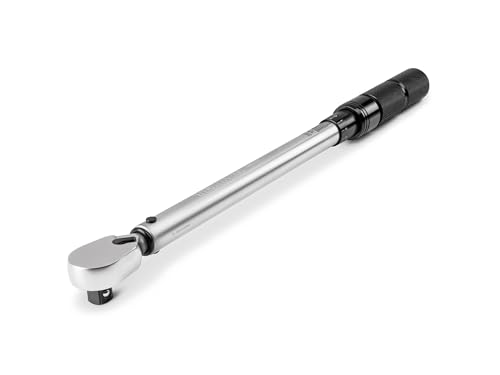
Tekton 24335 1/2-Inch Drive Click Torque Wrench
Tekton rates the 24335 at plus or minus 4 percent accuracy and etches a high-contrast dual-range scale onto the beam, which helps in a dim garage. Owners describe a firm, unmistakable click at the set value, useful for lug nuts and general fastening. The 1/2-inch drive and roughly 10 to 150 foot-pound range cover most passenger-vehicle work.
Pros
- Clear dual-range laser-etched scale
- Distinct, reliable click at target
- Strong accuracy for the price
Cons
- Range narrows near very low torque
- Needs resetting to lowest setting after use

EPAuto 1/2-inch Drive Click Torque Wrench
EPAuto’s 1/2-inch click wrench covers roughly the same 10 to 150 foot-pound range as pricier models, which explains its popularity as a first torque wrench. An extension bar and carrying case ship with the tool. Owners report a clear click for everyday jobs like wheel lug nuts and suspension bolts.
Pros
- Low entry cost for a torque wrench
- Extension bar and case included
- Handles common lug-nut torque values
Cons
- Scale feels less refined than premium tools
- Accuracy softens near range extremes

ACDelco ARM601-4 1/2-inch Digital Torque Wrench
A backlit digital display on the ACDelco ARM601-4 shows torque directly and buzzes as you approach the target, a feature owners cite for hitting an exact figure. Unit switching and stored settings add flexibility across different fastening specs. Its wider 12 to 250 foot-pound range extends past typical click wrenches.
Pros
- Exact numeric readout with backlight
- Audible and visual alerts near target
- Switches between torque units
Cons
- Depends on batteries to function
- More delicate than a mechanical click wrench
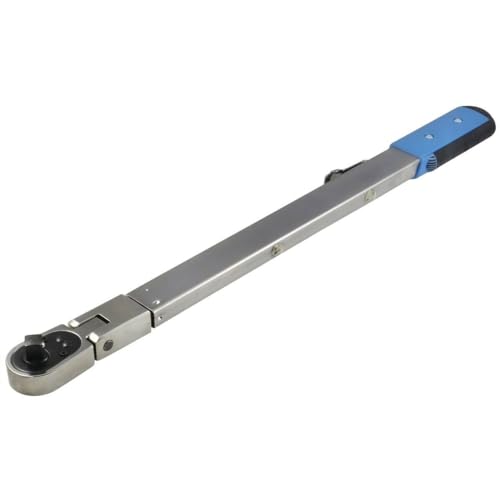
Precision Instruments PREC3FR250F 1/2-inch Split Beam
Precision Instruments built the PREC3FR250F around a split-beam mechanism, so it never needs dialing back to zero after use, a detail pros value for protecting calibration. A firm click and rugged housing suit daily heavy-duty fastening. Its 40 to 250 foot-pound range starts higher than most household torque wrenches.
Pros
- Skips the post-use reset step
- Holds calibration well over repeated use
- Rugged, shop-grade construction
Cons
- Costs more than basic click wrenches
- Range starts too high for delicate work
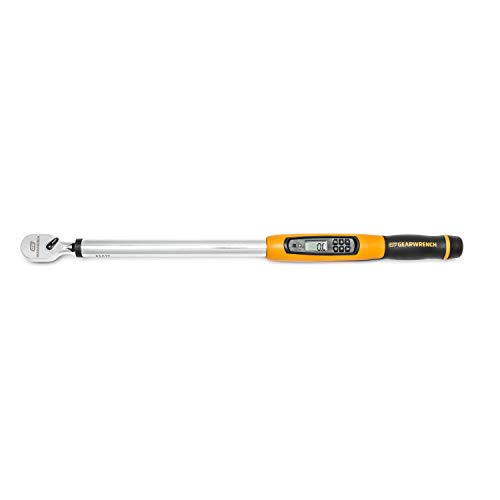
GEARWRENCH 85077 1/2-inch Electronic Torque Wrench
GEARWRENCH pairs a digital torque readout with an angle-measurement mode on the 85077, useful for torque-plus-angle specs common on newer engines. Multiple alert modes and unit switching give it flexibility for detailed shop work. Its 25 to 250 foot-pound range suits mid-size to larger fasteners.
Pros
- Measures both torque and angle
- Several alert modes plus unit options
- High-visibility digital display
Cons
- Runs on batteries like other electronic models
- Offers more features than casual users need
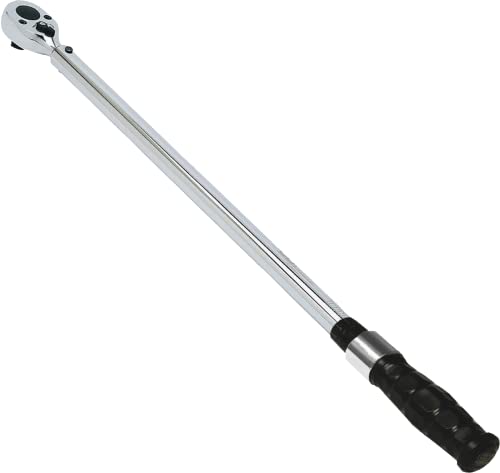
CDI 2503MFRPH 1/2-inch Drive Click Torque Wrench
CDI built the 2503MFRPH as a micro-adjustable click wrench for shops where hitting spec every time is non-negotiable. A consistent click and sturdy internal mechanism back a reputation for holding calibration under daily use. Its 30 to 250 foot-pound range matches common professional automotive work.
Pros
- Repeatable click across daily use
- Built for professional-grade durability
- Known for retaining calibration
Cons
- Priced above hobbyist-level wrenches
- More capability than occasional home tasks require

Neiko 03709B 3/8-inch Drive Click Torque Wrench
Neiko sized the 03709B around a 3/8-inch drive tuned for lower-torque tasks such as bike components, brake hardware and interior fasteners. A compact body suits tight spaces where a 1/2-inch wrench is unwieldy. The roughly 10 to 80 foot-pound range and included case round out a focused tool.
Pros
- Suited to lower-torque fasteners
- Compact size for tight spaces
- Ships with a storage case
Cons
- Not rated for high-torque lug nuts
- Narrower range limits broader use
How they stack up
| # | Model | Drive size | Best for | Score | Price |
|---|---|---|---|---|---|
| 1 | Tekton 24335 1/2-Inch Drive Click Torque Wrench | 1/2 inch | Best overall | 9.4 | Check price |
| 2 | EPAuto 1/2-inch Drive Click Torque Wrench | 1/2 inch | Best budget | 9.1 | Check price |
| 3 | ACDelco ARM601-4 1/2-inch Digital Torque Wrench | 1/2 inch | Best digital | 8.9 | Check price |
| 4 | Precision Instruments PREC3FR250F 1/2-inch Split Beam | 1/2 inch | Best split beam | 8.7 | Check price |
| 5 | GEARWRENCH 85077 1/2-inch Electronic Torque Wrench | 1/2 inch | Best electronic | 8.5 | Check price |
| 6 | CDI 2503MFRPH 1/2-inch Drive Click Torque Wrench | 1/2 inch | Best for pros | 8.3 | Check price |
| 7 | Neiko 03709B 3/8-inch Drive Click Torque Wrench | 3/8 inch | Best compact | 8.1 | Check price |
Good to know
What drive size torque wrench should I buy?
A 1/2-inch drive suits most automotive work, including lug nuts and suspension bolts, and covers the majority of home mechanic needs. A 3/8-inch drive, like the Neiko 03709B, fits lower-torque jobs such as bikes, brakes and interior trim. Match the size to the range your typical fasteners fall into.
How accurate is a torque wrench like the Tekton or EPAuto?
Click wrenches such as the Tekton 24335 and EPAuto list accuracy around plus or minus 4 percent, based on manufacturer specifications. Digital models including the ACDelco ARM601-4 and GEARWRENCH 85077 often claim a tighter plus or minus 2 to 3 percent.
Is a digital torque wrench better than a click wrench?
Click wrenches stay simple and battery-free, which suits most everyday fastening. Digital wrenches show an exact number, alert you near the target, and some measure angle, but they depend on batteries and cost more. Neither type is universally better; the right choice depends on how precise your work needs to be.
Do click torque wrenches need to be reset after use?
Most click wrenches, including the Tekton and EPAuto, should be dialed back to their lowest setting after use to relieve spring tension. Split-beam wrenches like the Precision Instruments PREC3FR250F are a notable exception and skip this step entirely.
How often should a torque wrench be calibrated?
Recalibration frequency depends on how often the tool sees use, though many owners send a frequently used wrench in periodically or after any hard drop. Proper storage between jobs, following the maker’s guidance, helps a wrench hold its accuracy longer between calibration checks.
Can a torque wrench be used to loosen bolts?
It shouldn’t be. Breaking loose a tight or seized fastener can strain the internal mechanism and throw off calibration, since a torque wrench is built as a measuring tool, not a breaker bar. Loosen with a standard ratchet first, then switch to the torque wrench to tighten to spec.
What is torque-angle and which wrench supports it?
Torque-angle tightening means bringing a fastener to a set torque, then rotating it an additional number of degrees, a method common on newer engines. The GEARWRENCH 85077 handles both steps in one electronic tool with its built-in angle mode.
Where in the range should my target torque fall?
Aim for the middle third of a wrench’s stated range whenever you can, since accuracy tends to drop near the very top and bottom of the scale. A target sitting at either extreme is a sign a differently ranged wrench would serve better.
Are professional-grade torque wrenches worth the extra cost?
For daily shop use, professional models like the CDI 2503MFRPH or Precision Instruments PREC3FR250F justify their price with durability and dependable calibration retention. Occasional home projects are usually well served by a value option such as the Tekton 24335 or EPAuto.
What’s the difference between a 3/8-inch and 1/2-inch torque wrench?
A 3/8-inch drive, as on the Neiko 03709B, is built for a lower torque range suited to bikes, brakes and interior fasteners. A 1/2-inch drive covers a higher range for lug nuts and suspension work. Choosing the wrong size means working at the edge of a wrench’s range, where accuracy suffers.
Final word
Tekton’s 24335 offers the strongest balance of accuracy, readability and price for most home mechanics. Tight budgets are well served by the EPAuto click wrench, while anyone who prefers a numeric readout and target alerts should choose the ACDelco ARM601-4 instead.