Gym Accessories Worth Adding to Your Training Bag
Fit Simplify Resistance Loop Exercise Bands are our top training accessory pick for warm ups and rehab work at almost no weight in a bag. Gymreapers Lifting Straps are the best value grip fix for heavy pulls, and the TriggerPoint GRID Foam Roller is the most useful recovery tool.
If you are building a training bag from scratch, Fit Simplify Resistance Loop Exercise Bands, Gymreapers Lifting Straps and a TriggerPoint GRID Foam Roller cover more real training problems than any other three purchases.
Training accessories are easy to overbuy because every product promises better performance, while the ones that actually change a session, grip aids, mobility tools and warm up bands, are unglamorous and cheap. We compared materials, stated dimensions and resistance ranges, stitching and closure designs, and long running owner feedback, then ranked items by how often they get used rather than how impressive they look.
Our top picks

Fit Simplify Resistance Loop Exercise Bands
These flat latex loops are the accessory that ends up in every gym bag because they cover hip warm ups, shoulder prep and rehab work in one small pouch. Five resistance levels mean the same set works for glute activation and light pressing drills. Owners report they last well if kept away from rough concrete and direct sun, which is true of all latex bands.
Pros
- Covers warm up, rehab and accessory work
- Weighs almost nothing in a bag
- Cheap enough to keep a set in the car
Cons
- Latex can roll up on larger thighs
- Wears out faster on rough floors
Gymreapers Lifting Straps
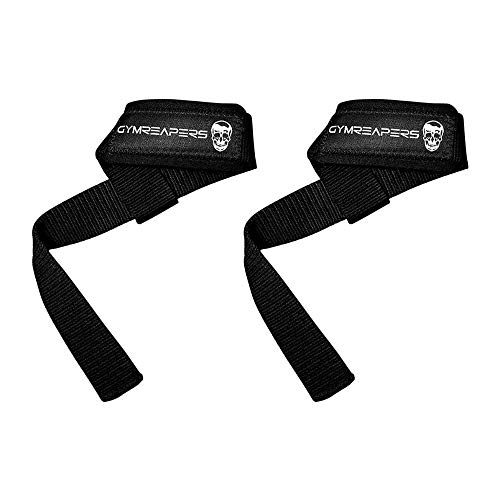
When grip fails before your back does on heavy rows, deadlifts or shrugs, a pair of cotton straps is the cheapest fix in training. Gymreapers uses thick stitched cotton with neoprene padding so the wrist does not get cut up on high rep sets. Owners report they outlast thin nylon straps by a wide margin under regular heavy use.
Pros
- Removes grip as the limiting factor
- Padding protects the wrist on high reps
- Stitching holds up to heavy loads
Cons
- Overuse can let grip strength stagnate
- Lasso style takes practice to set quickly

TriggerPoint GRID Foam Roller
The GRID uses a hollow core with a firm patterned surface, so it keeps its shape for years where cheap foam rollers compress into uselessness. The varied surface lets you work broad areas or target tighter spots without a second tool. Owners report it is firmer than basic foam, which is exactly what most people need after the first few weeks.
Pros
- Keeps its firmness over years
- Pattern targets both broad and narrow areas
- Compact enough for a gym bag
Cons
- Too firm for very sensitive users at first
- Costs more than plain foam rollers

WOD Nation Speed Jump Rope
A speed rope is the cheapest conditioning tool that fits in a pocket, and this one uses a coated steel cable with bearings that spin freely enough for double unders. The cable cuts to your height, which matters more for rope skill than any other factor. Owners report it holds up on gym flooring but frays faster on rough concrete.
Pros
- Spins fast enough for skill work
- Adjustable to your exact height
- Packs into any bag pocket
Cons
- Cable wears quickly on abrasive surfaces
- Steel cable stings on mistimed reps

Harbinger Pro Wristwrap Weightlifting Gloves
These combine padded palms with an integrated wrist wrap, so they solve callus tearing and mild wrist discomfort in the same accessory. The open back keeps the hand cooler than full gloves during long sessions. Owners report the leather palms need a short break in period before they mould to the hand.
Pros
- Protects hands from bar knurling
- Wrist wrap adds pressing support
- Vented back reduces sweating
Cons
- Padding slightly reduces bar feel
- Leather needs breaking in

Gymreapers Quick Locking Weightlifting Belt
A belt helps you brace harder on squats and deadlifts, and the quick locking buckle here means you can loosen it between sets without wrestling a prong. It uses a consistent width nylon design that suits mixed training rather than pure powerlifting. Owners report it is easier to live with than stiff leather belts for people who train varied sessions.
Pros
- Adjusts in seconds between sets
- Comfortable across varied training styles
- Less break in than thick leather
Cons
- Less rigid than a competition leather belt
- Sizing runs tight on some waists

TheraBand Resistance Tubing with Handles
TheraBand tubing with handles turns a door frame or post into a cable station, which makes it the accessory that keeps training going in hotels. Colour coded resistance levels let you progress in sensible steps rather than guessing. Owners report it suits pressing, rowing and rotational work far better than flat loop bands.
Pros
- Replicates cable movements while travelling
- Clear resistance progression system
- Handles are easier on the hands than loops
Cons
- Needs a secure anchor point
- Tubing must be checked for wear before use
The lineup, side by side
| # | Model | Set | Best for | Score | Price |
|---|---|---|---|---|---|
| 1 | Fit Simplify Resistance Loop Exercise Bands | 5 resistance levels | Best overall | 9.4 | Check price |
| 2 | Gymreapers Lifting Straps | Heavy duty cotton with neoprene padding | Best value | 9.2 | Check price |
| 3 | TriggerPoint GRID Foam Roller | 13 inches | Best for recovery | 9.0 | Check price |
| 4 | WOD Nation Speed Jump Rope | Coated steel, adjustable length | Best for conditioning | 8.8 | Check price |
| 5 | Harbinger Pro Wristwrap Weightlifting Gloves | Padded leather | Best for hand protection | 8.6 | Check price |
| 6 | Gymreapers Quick Locking Weightlifting Belt | Reinforced nylon | Best for heavy lifts | 8.3 | Check price |
| 7 | TheraBand Resistance Tubing with Handles | Tubing with moulded handles | Best for travel workouts | 8.0 | Check price |
What matters most
Buy accessories that remove a limiter, not ones that add novelty Straps exist because grip fails before the target muscle, bands exist because joints need low load preparation, and rollers exist because tissue quality affects range of motion. Each of those solves a specific problem you can name. If you cannot describe the limiter an accessory fixes, it will live in a cupboard rather than a gym bag.
Check materials, because that is what fails first Latex bands degrade with sun and rough concrete, nylon straps fray at the stitch line, and cheap foam rollers compress permanently within months. Look for thick stitching on straps and belts, hollow cores on rollers, and packaging that mentions natural latex rather than unnamed rubber. Storage matters too: keeping bands out of a hot car doubles their useful life.
Size and adjustability decide whether you use it A jump rope cut to the wrong length makes double unders nearly impossible, a belt that is a size out will pinch, and loop bands that roll on your thighs get abandoned. Look for adjustable cables, multiple size options and resistance sets rather than single strength items. Being able to progress within one purchase saves buying twice.
Keep the kit small enough to actually carry The accessories that improve training are the ones in your bag on the day you need them, which argues for a compact set rather than a collection. Bands, straps and a rope weigh almost nothing together, while rollers and belts are the bulky items worth choosing carefully. Many people keep a small pouch permanently packed so nothing needs remembering.
Common questions
Which training accessory should I buy first?
A set of resistance loop bands, because they cover warm ups, activation and rehab work for very little money or space. Lifting straps come next if grip limits your pulling work.
Do lifting straps weaken your grip?
They can if used on every set, since your forearms stop being challenged. Most lifters use them only on the heaviest pulling sets and train grip directly elsewhere.
Are weightlifting gloves worth it?
They help with calluses and comfort, especially on high rep dumbbell work. Some lifters prefer bare hands or chalk for maximum bar feel, so it comes down to preference.
How long do resistance bands last?
Months to years depending on storage and surface. Heat, sunlight and rough concrete are the main killers, and any band showing small tears should be replaced immediately.
Should I foam roll before or after training?
Before training it can improve range of motion for the session, and after it is mostly about comfort. Either is fine, and consistency matters more than timing.
Do I need a lifting belt as a beginner?
Not for early training, since learning to brace without one builds better habits. A belt becomes useful once squat and deadlift loads get heavy relative to your bodyweight.
What jump rope length should I use?
Standing on the middle of the rope, the handles should reach roughly to your armpits for speed work. Beginners often prefer slightly longer for more margin.
Can resistance bands replace weights entirely?
They can maintain strength while travelling and are excellent for accessory work, but they do not load the largest lifts the same way. Treat them as a supplement rather than a full replacement.
The verdict
Fit Simplify Resistance Loop Exercise Bands are the accessory we would buy first, since they fix warm ups and joint prep for almost nothing in cost or bag space. Add Gymreapers Lifting Straps when grip starts limiting your pulls, and a TriggerPoint GRID Foam Roller when recovery becomes the bottleneck. Everything else on this list is worth adding only once you can name the specific problem it solves.