How to Choose the Right Trickle Charger for Your Battery
NOCO Genius5 leads seven trickle chargers compared here, with 5-amp output and support for lead-acid, AGM, gel, and lithium batteries. Riders favor the Battery Tender Plus 021-0128 for powersports, while the CTEK MXS 5.0 manages AGM batteries through an adaptive 8-step program.
Matching amperage and chemistry support to your battery decides which trickle charger fits. NOCO Genius5 tops this list with 5-amp output and broad compatibility across lead-acid, AGM, gel, and lithium batteries. Battery Tender Plus 021-0128 and CTEK MXS 5.0 round out the top picks for powersports and AGM maintenance.
We compared official amperage ratings, voltage compatibility, supported battery chemistries, cable length, and safety certifications listed on each product page. Owner feedback on Amazon also shaped which models hold up during long-term storage and seasonal maintenance.
The shortlist, ranked

NOCO Genius5
Five amps of output power this charger, which switches to a low-current maintenance mode once the battery reaches full charge. Lead-acid, AGM, gel, and lithium chemistries all run through a single selectable mode. Owners report reliable performance on cars, motorcycles, and small boats stored over winter.
Pros
- Charges and maintains four battery chemistries
- Compact housing with mounting bracket included
- Repairs mildly sulfated lead-acid batteries
Cons
- Clamps are shorter than some competitors
- No built-in carry case

NOCO Genius10
Charging time drops on larger truck and marine batteries thanks to a 10-amp output. Voltage stabilization triggers an automatic switch to a trickle rate. Setup stays limited to a single selectable mode dial.
Pros
- Faster recovery for larger battery banks
- Works on deep-cycle marine batteries
- Reverse polarity and spark protection
Cons
- Bulkier than smaller maintainers
- Higher amperage unsuitable for small motorcycle batteries

Battery Tender Plus 021-0128
Motorcycle, ATV, and personal watercraft batteries charge here at 1.25 amps without excess heat buildup. A 72-inch cable reaches awkward mounting locations on powersports vehicles. Four-step charging monitors voltage continuously during storage.
Pros
- Long cable suits hard-to-reach battery locations
- Four-step microprocessor-controlled charging
- Ring terminal and clamp connectors included
Cons
- 12V only, no 6V support
- Amperage too low for larger car batteries

CTEK MXS 5.0
An eight-step program adapts charging current to battery condition, starting as low as 0.8 amps. AGM and calcium batteries get dedicated targeting here, alongside standard lead-acid support. A reconditioning mode attempts to recover batteries with reduced capacity.
Pros
- Dedicated AGM and calcium charging modes
- Reconditioning function for weak batteries
- Temperature-compensated charging algorithm
Cons
- No 6V compatibility
- Higher cost than basic maintainers

Battery Tender Junior 021-0123
Small engines and seasonal storage suit the 0.75-amp output on this maintainer. A 54-inch cable and alligator clips make garage installation straightforward. According to the listing, the microprocessor prevents overcharging without user input.
Pros
- Low price point for occasional use
- Simple two-light status indicator
- Compact size fits tight engine bays
Cons
- No 6V mode for classic vehicles
- Slower charge rate than higher-amp models

Schumacher SC1281
Beyond trickle maintenance, a 40-amp engine start function revives dead batteries on this unit. Selectable output ranges from 1.5 to 15 amps depending on the task at hand. A digital display shows voltage and charge status in real time.
Pros
- Doubles as an emergency jump starter
- Digital display for voltage monitoring
- Works across six battery chemistries
Cons
- Larger footprint than dedicated maintainers
- Engine start mode needs a charged outlet nearby
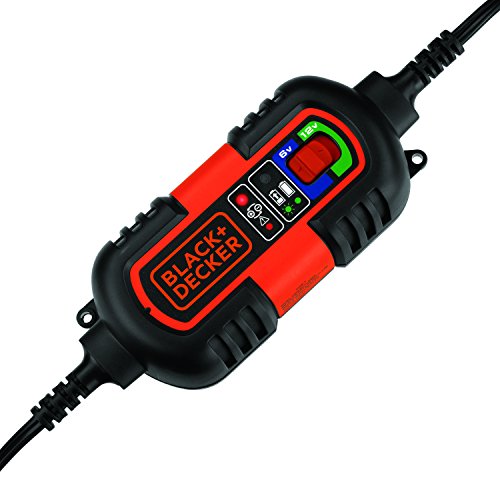
Black+Decker BM3B
One automatic mode keeps setup limited to connecting clamps and plugging in. Output holds steady at 1.5 amps for lead-acid and AGM batteries. LED indicators show charging and full-charge status without a manual.
Pros
- No settings or modes to configure
- Alligator clips and ring terminals both included
- Low cost for basic maintenance needs
Cons
- No 6V or lithium support
- Fewer safety certifications listed than premium models
What matters most
What to Look for in a Trickle Charger Amperage output, voltage compatibility, and supported battery chemistries determine which maintainer fits a given vehicle. Most trickle chargers stay under 5 amps to prevent overcharging during long-term storage. Automatic float or maintenance modes stop drawing current once the battery reaches full charge. Certifications like IP65 water resistance matter for chargers left connected in a garage or on a boat.
How to Match Amperage to Your Battery Size Smaller batteries in motorcycles and lawn equipment typically need 0.75 to 1.5 amps to avoid heat buildup. Car and truck batteries handle 2 to 10 amps without issue. Marine deep-cycle batteries often benefit from higher-amp chargers like the NOCO Genius10, which cuts charging time. Using too high an amperage on a small battery can shorten its lifespan.
Best Trickle Chargers for Motorcycles, ATVs, and Powersports Powersports batteries sit in tight spaces, so cable length matters as much as amperage. Battery Tender Plus 021-0128 ships with a 72-inch lead built for that constraint. Four-step charging protects smaller battery cells from the overcurrent that can occur with automotive-grade chargers. Seasonal riders rely on these lower-amp maintainers to keep batteries ready between rides.
How to Maintain AGM and Lithium Batteries Safely AGM and lithium batteries need charge profiles different from flooded lead-acid cells. CTEK MXS 5.0 adjusts its charging curve specifically for AGM and calcium construction. Chargers without a dedicated lithium mode can undercharge or trigger a battery management system shutoff. Checking the compatibility list before connecting any charger prevents damage to sensitive cells.
Compared at a glance
| # | Model | Output Current | Best for | Score | Price |
|---|---|---|---|---|---|
| 1 | NOCO Genius5 | 5 amps | Best Overall Trickle Charger | 9.4 | Check price |
| 2 | NOCO Genius10 | 10 amps | Best for Trucks and Boats | 9.2 | Check price |
| 3 | Battery Tender Plus 021-0128 | 1.25 amps | Best for Motorcycles and Powersports | 8.9 | Check price |
| 4 | CTEK MXS 5.0 | 5 amps, adaptive | Best for AGM Batteries | 8.8 | Check price |
| 5 | Battery Tender Junior 021-0123 | 0.75 amps | Best Budget Trickle Charger | 8.6 | Check price |
| 6 | Schumacher SC1281 | 1.5 to 15 amps, selectable | Best for Emergency Engine Starts | 8.3 | Check price |
| 7 | Black+Decker BM3B | 1.5 amps | Best Simple, Beginner-Friendly Charger | 8.0 | Check price |
Questions worth asking
What is the difference between a trickle charger and a battery maintainer?
A basic trickle charger applies a constant low current, while a maintainer, like the NOCO Genius5, monitors voltage and switches to a float mode automatically. Most current products combine both functions in one device.
How long can you leave a trickle charger connected to a battery?
Automatic maintainers with float or maintenance modes can stay connected for months without damaging the battery. Simple trickle chargers without an automatic cutoff should be checked periodically to avoid overcharging.
Can a trickle charger overcharge a battery?
Modern microprocessor-controlled units, including the Battery Tender Junior 021-0123, stop drawing current once the battery reaches full charge. Older analog trickle chargers lack this feature and can overcharge if left unattended.
What amperage trickle charger do I need for a car battery?
Standard car batteries typically pair well with 2 to 5-amp chargers. Higher amperage speeds up charging but generates more heat, so 5 amps suits most sedans and light trucks.
Is it safe to use a trickle charger on a lithium battery?
Only chargers rated for lithium chemistry, such as the NOCO Genius5 on its lithium setting, should connect to lithium batteries. A lead-acid-only charger can trigger a safety shutoff or reduce lithium battery life.
Do trickle chargers work on 6-volt batteries?
Some models, including the NOCO Genius5, Genius10, and Schumacher SC1281, include a 6V mode for classic cars and older equipment. Chargers built for 12V only, like the Battery Tender Plus 021-0128, cannot safely charge 6V batteries.
Can you trickle charge a completely dead battery?
Many maintainers detect deeply discharged batteries and either refuse to start or apply a low-current recovery mode first. CTEK MXS 5.0 includes a reconditioning function aimed at batteries with reduced capacity.
Are trickle chargers waterproof for outdoor use?
IP65-rated units like the NOCO Genius5 and Genius10 resist rain and dust for outdoor or garage use. Chargers without a listed IP rating, such as the Black+Decker BM3B, should stay in a dry, covered location.
Trickle charger vs jump starter: what is the difference?
A trickle charger restores or maintains charge slowly over hours, while a jump starter delivers a burst of current to start an engine immediately. Schumacher SC1281 combines both functions in one unit with a 40-amp start assist.
Which trickle charger is best for a motorcycle battery?
Battery Tender Plus 021-0128 fits motorcycle and powersports batteries best, since its 1.25-amp output avoids the heat buildup higher-amp car chargers can cause. Its 72-inch cable also reaches tight mounting spots under a seat or fairing.
Final word
Amperage, voltage compatibility, and battery chemistry support separate a basic trickle charger from a true maintainer. NOCO Genius5 covers the widest range of use cases, while Battery Tender Plus 021-0128 and CTEK MXS 5.0 serve powersports and AGM owners specifically. Matching amperage to battery size protects both the charger and the battery over years of seasonal storage.


