Tricycles for Toddlers Learning to Pedal Safely
The Radio Flyer 4 in 1 Stroll N Trike is our top overall pick because it converts through four stages as a child grows. The Joovy Tricycoo 4.1 is the best value for parent control features, and the Schwinn Roadster Tricycle is the best classic choice for confident pedallers.
The Radio Flyer 4 in 1 Stroll N Trike is the tricycle that lasts longest through the toddler years, the Joovy Tricycoo 4.1 offers the most useful parent controls, and the Schwinn Roadster is the pick once a child pedals confidently on their own. All three are stable and widely available.
Tricycles are harder to choose than they look because a model that suits a fifteen month old is useless to a four year old, and convertible designs vary hugely in how well each stage actually works. Wheel material, steering lockouts and harness quality all change how usable the early stages are. We compared stated age ranges, conversion mechanisms, adjustment ranges and wheel types, and we weighed what parents report about assembly, stability and how long each trike stayed in use.
Before you buy
Match the stage to your child, not the age label Manufacturer age ranges are optimistic at the bottom end. A child needs reliable trunk control and the ability to sit unsupported before even a harnessed push trike makes sense, which usually means well past their first birthday in practice. Independent pedalling normally arrives somewhere between two and three years old, and requires enough leg length to reach the pedals through a full rotation. Buy for the stage your child is in now plus one stage ahead, rather than for the full advertised range.
What convertible stages actually give you A typical four stage trike goes from parent steered stroller with harness and canopy, to parent pushed with the child pedalling, to a learner trike with a guardrail, to a plain independent tricycle. The value depends on whether each stage is genuinely usable. Models with a steering push handle, like the Joovy Tricycoo 4.1, let a parent control direction properly, while cheaper handles just push. If your child is already close to pedalling, skip the conversions entirely and buy a classic trike.
Wheels, steering and stability Rubber tread wheels grip better and roll far more quietly on pavement and indoor floors than bare plastic, which matters more than most buyers expect. A wide rear track and a low seat height reduce tipping when a child turns sharply. Limited turning radius is a safety feature rather than a limitation on trikes for the youngest riders. For grass and gravel, wide plastic wheels like those on the Fisher-Price Tough Trike cope better than narrow treaded ones.
Assembly, safety and sensible use Most tricycles arrive part assembled and need a spanner, a screwdriver and around thirty to sixty minutes. Check that seat bolts, pedal cranks and handle joints are fully tightened before first use and re check them monthly, since vibration loosens fasteners. Helmets are worth establishing as a habit from the first ride, even at trike speeds. Keep riding to pavements, driveways and parks away from traffic, and never leave a harnessed child unattended in a push trike.
What we recommend

Radio Flyer 4 in 1 Stroll N Trike
The Stroll N Trike moves through four configurations, starting as a parent pushed stroller trike with a harness and canopy and ending as a classic independent tricycle. Removable parts mean you strip away the guardrail, footrest and handle as your child gains ability. Parents report the earliest stage is genuinely usable as a light stroller substitute, which is what justifies the higher outlay over a simple trike.
Pros
- Genuinely usable across several years
- Canopy and harness make the early stage practical
- Solid steel frame with a stable stance
Cons
- Assembly takes time and several tools
- Heavier than simple pedal only trikes

Joovy Tricycoo 4.1 Tricycle
The Tricycoo 4.1 is built around parent usability, with a push handle that actually steers, a freewheel clutch that stops the pedals spinning against small feet and a five point harness in the earliest stage. Rubber tread on the wheels is quieter and grippier than bare plastic on pavements. It converts through four stages, though the final stage is a lighter duty trike than a dedicated classic model.
Pros
- Push handle genuinely steers rather than just pushes
- Freewheel clutch protects little legs
- Quiet rubber tread on hard surfaces
Cons
- Final independent stage feels light duty
- Narrower age window than some rivals

Schwinn Roadster Tricycle
The Roadster is a retro styled steel trike with a real wooden deck at the rear, aimed at children who already pedal without help. Its low centre of gravity and wide rear track make it very stable through turns at speed. There is no push handle or harness, so it is strictly a stage three purchase rather than a first trike.
Pros
- Very stable at speed with a wide rear track
- Durable steel and wood construction
- Adjustable seat extends usable life
Cons
- No parent handle or harness for younger toddlers
- Heavy for a small child to manoeuvre unaided

Little Tikes 4 in 1 Deluxe Edition Trike
The Little Tikes 4 in 1 starts younger than most, with a high backed seat, full harness and a steering push handle that lets a parent do all the work. As the child grows, the guardrail, footrest and handle come off in stages. Wheels are plastic rather than rubber tread, so it is noisier and less grippy on smooth pavement than the Joovy.
Pros
- Suits children younger than most trikes
- Full harness and high seat back for support
- Plenty of parent friendly storage
Cons
- Plastic wheels are noisy and less grippy
- Outgrown sooner than five year rated models

Radio Flyer Classic Red Tricycle
The Classic Red is the tricycle most adults picture, with a steel frame, chrome handlebars, streamers and a controlled turning radius that reduces tipping. There are no stages, no harness and nothing to convert, which means very little to break or lose. It is the right choice for a child who can already pedal and steer, and the wrong one for a toddler still learning.
Pros
- Very simple with almost nothing to break
- Controlled turning radius reduces tipping
- Durable enough to hand down between siblings
Cons
- No parent handle or harness at all
- Assembly instructions are minimal
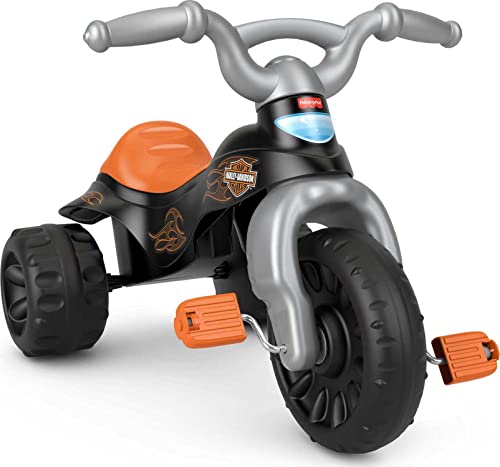
Fisher-Price Harley-Davidson Tough Trike
The Tough Trike uses a wide plastic body and chunky wheels that handle grass, gravel driveways and uneven paths better than narrow tyred steel trikes. A storage compartment under the seat appeals to children who want to carry things. Pedals are fixed to the front wheel with no freewheel, so a child who stops pedalling gets their feet pushed around.
Pros
- Handles grass and gravel better than most
- Very stable wide plastic body
- Under seat storage keeps children engaged
Cons
- No freewheel, so pedals spin with the wheel
- Plastic wheels wear on abrasive surfaces
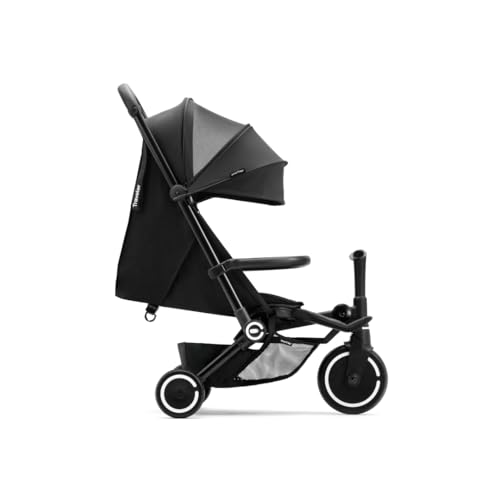
smarTrike STR3 Folding Baby Tricycle
The STR3 folds down for apartment storage or a car boot, which solves the biggest practical complaint about convertible trikes taking up hallway space. It converts through multiple stages with a harness, canopy and steering push bar for the earliest phase. The folding mechanism adds complexity, and owners report the fold takes practice before it becomes quick.
Pros
- Folds for apartments and car boots
- Starts very young with full support
- Rubber tread is quiet on hard floors
Cons
- Folding mechanism takes practice
- More parts means more to maintain
How they stack up
| # | Model | Age range | Best for | Score | Price |
|---|---|---|---|---|---|
| 1 | Radio Flyer 4 in 1 Stroll N Trike | Roughly 9 months to 5 years | Best overall | 9.4 | Check price |
| 2 | Joovy Tricycoo 4.1 Tricycle | Roughly 12 months to 4 years | Best value | 9.2 | Check price |
| 3 | Schwinn Roadster Tricycle | Roughly 2 to 4 years | Best classic tricycle | 9.0 | Check price |
| 4 | Little Tikes 4 in 1 Deluxe Edition Trike | Roughly 9 months to 3 years | Best for younger toddlers | 8.8 | Check price |
| 5 | Radio Flyer Classic Red Tricycle | Roughly 2.5 to 5 years | Best simple design | 8.6 | Check price |
| 6 | Fisher-Price Harley-Davidson Tough Trike | Roughly 2 to 5 years | Best for rough surfaces | 8.3 | Check price |
| 7 | smarTrike STR3 Folding Baby Tricycle | Roughly 6 months to 3 years | Best for small storage spaces | 8.0 | Check price |
Frequently asked questions
What age can a child start using a tricycle?
Push handle trikes with a harness suit many children from around twelve to eighteen months once they sit confidently unsupported. Independent pedalling usually starts between two and three years old.
Is a tricycle or a balance bike better?
They teach different things. A tricycle teaches pedalling and steering with full stability, while a balance bike teaches balance and is a faster route to a pedal bicycle. Many families use a trike first and a balance bike from around two and a half.
What does a freewheel clutch do on a tricycle?
It disconnects the pedals from the front wheel so they stop spinning when a parent pushes the trike. Without it, as on the Fisher-Price Tough Trike, the pedals turn against the child’s feet.
How do I know the seat is set correctly?
The child should reach the pedals at their furthest point with a slight bend in the knee, and sit with both hands comfortably on the handlebars without stretching forward.
Do children need a helmet on a tricycle?
Speeds are low, but a helmet is worth establishing as an automatic habit before a child moves to a bicycle. Many parents and paediatric safety guidance recommend it for all wheeled riding.
Are rubber wheels worth paying more for?
On pavements and indoor floors, noticeably. Rubber tread is quieter, grips better and does not skid on smooth surfaces the way bare plastic does. On grass and gravel the difference matters less.
How long does assembly take?
Expect thirty to sixty minutes for a multi stage convertible trike, with basic hand tools. Simpler models like the Radio Flyer Classic Red take considerably less.
Can a tricycle be used indoors?
Small trikes with rubber tread can work in a hallway or large room without marking floors. Plastic wheeled models are noisier and more likely to scuff, so they suit outdoor use.
Final word
The Radio Flyer 4 in 1 Stroll N Trike is the tricycle most families will get the longest use from, because each of its four stages is genuinely functional rather than a token conversion. The Joovy Tricycoo 4.1 is the better buy if parent steering and a freewheel clutch matter most, and the Schwinn Roadster is the right choice once a child pedals confidently on their own.


