Utility Knives That Change Blades Without Slowing You Down
Milwaukee’s Fastback Flip Utility Knife leads this lineup for one-handed opening and tool-free blade changes. The Stanley Classic 99 remains the dependable value pick with built-in blade storage. Gerber’s EAB Lite wins for pocket carry, clipping in like a wallet while still accepting standard replacement blades for everyday cutting tasks.
Milwaukee’s Fastback Flip Utility Knife suits most trade work, thanks to a quick flip-open action and press-and-flip blade swaps. Budget-conscious buyers still reach for the Stanley Classic 99, a die-cast body that has held up on job sites for decades. Anyone who carries a knife daily will likely prefer the slim Gerber EAB Lite.
Picking a utility knife gets complicated once blade-change speed, handle material and pocket fit all enter the decision. Some folding designs flex under heavy loads, and some retractable bodies need a screwdriver just to swap a blade. We ranked these seven models by comparing published specifications, blade systems and the patterns owners consistently report.
How to choose
Fixed, retractable or folding: which style fits your work Retractable knives hide the blade until you need it, which suits general trim and box work. Folding models close down small enough for a pocket or tool belt. Fixed-blade knives skip moving parts entirely, giving the most rigidity for heavy cuts. Match the style to how you carry the knife and the loads you put on it daily.
How fast should blade changes be Blade-change speed affects daily frustration more than almost any other spec. Tool-free press-and-flip systems, like Milwaukee’s, swap a blade in seconds. Screw-open bodies such as the Stanley Classic 99 cost less but need a screwdriver on hand. Anyone changing blades often should prioritize a tool-free mechanism over a lower price.
What grip and handle material works best Hand fatigue builds fast during long cutting sessions, so grip matters. Metal bodies feel durable but turn slippery when wet or greasy. Textured or contoured grips help in gloved or wet hands. Balance also shifts once the blade extends, so heavier knives can feel front-loaded.
Do you need onboard blade storage Job sites away from a workbench benefit most from onboard blade storage. A fresh blade stays ready without a trip back to the truck. Look for a firm lock that keeps the extended blade from retracting under pressure. A retracting or folding action also covers the edge safely between cuts.
The top picks, ranked
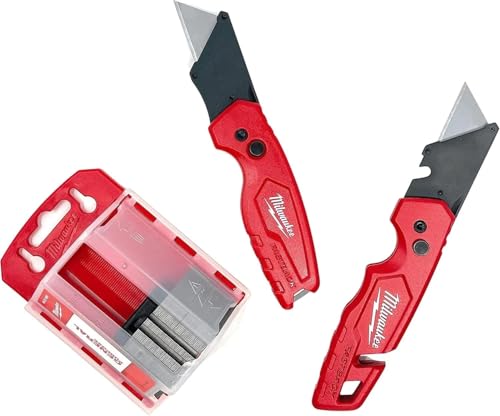
Milwaukee Fastback Flip Utility Knife
A quick wrist flick opens Milwaukee’s Fastback one-handed, no second hand needed. Blade swaps use a tool-free press-and-flip mechanism built into the metal body. Tradespeople get extra utility from an onboard wire stripper and integrated gut hook.
Pros
- Opens one-handed with a quick flip
- Tool-free press-and-flip blade changes
- Wire stripper and gut hook built in
Cons
- Folding body flexes under heavy prying
- No spare-blade storage inside the handle
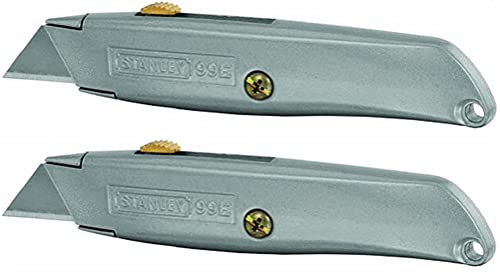
Stanley Classic 99 Retractable Utility Knife
Shops have relied on the Classic 99 for decades, and the design has barely changed. Its die-cast metal body stores spare blades inside the handle. A three-position retractable slider keeps the mechanism simple and easy to trust.
Pros
- Low cost with proven reliability
- Spare blades store inside the body
- Sturdy die-cast metal construction
Cons
- Blade changes require a screwdriver
- No one-handed opening action

DeWalt DWHT10046 Retractable Utility Knife
DeWalt built this knife around an all-metal cast body for job-site abuse. Blade changes need no tools, and the retractable blade locks firmly at full extension. Internal storage keeps spare blades on hand, and owners note the contoured grip holds up through long sessions.
Pros
- All-metal cast body resists damage
- Tool-free blade changes with a firm lock
- Internal storage for spare blades
Cons
- Heavier in the hand than folding models
- Slider can stiffen once debris builds up

Gerber EAB Lite Pocket Knife
Gerber’s EAB Lite folds flat and clips to a pocket much like a money clip. It accepts standard utility blades rather than a proprietary style. A liner lock keeps the blade steady in use, and the slim profile makes it easy to carry daily.
Pros
- Slim, lightweight pocket-clip design
- Accepts inexpensive standard blades
- Liner lock secures the blade in use
Cons
- Small grip feels tight for large hands
- Holds only one blade, no onboard storage

Olfa L-1 Heavy-Duty Utility Knife
Olfa’s L-1 relies on a snap-off segmented blade instead of a single fixed edge. Snapping off a dull segment reveals a fresh point without swapping the whole blade. A ratchet wheel locks the extended blade firmly, which flooring and packaging crews rely on for long cutting runs.
Pros
- Fresh cutting edge after every snap
- Ratchet lock holds the blade firmly
- Fiberglass body reinforces the handle
Cons
- Segmented blades flex more than solid ones
- Snapping the tip off needs careful handling

Klein Tools 44304 Folding Utility Knife
Klein built this folder for electrical and low-voltage work specifically. One-handed opening and tool-free blade changes speed up repetitive cuts. An aluminum handle keeps weight down in a tool pouch, and the lock holds steady through wire sheathing and cardboard alike.
Pros
- Lightweight aluminum folding handle
- Tool-free blade changes on the job
- Secure lock for confident cuts
Cons
- No onboard storage for spare blades
- Handle feels thin with heavy gloves on

Husky Folding Lock-Back Utility Knife
Husky’s folding knife covers the basics at a low cost. One-handed opening and tool-free blade changes come standard here. Spare blades store in the handle, and a lock-back mechanism holds the blade steady during occasional home projects.
Pros
- Affordable price for the feature set
- Spare blades store inside the handle
- Quick one-handed opening action
Cons
- Build quality feels less refined overall
- Lock can loosen with extended use
Compared at a glance
| # | Model | Blade type | Best for | Score | Price |
|---|---|---|---|---|---|
| 1 | Milwaukee Fastback Flip Utility Knife | Standard utility blade | Best overall | 9.4 | Check price |
| 2 | Stanley Classic 99 Retractable Utility Knife | Standard utility blade | Best value | 9.2 | Check price |
| 3 | DeWalt DWHT10046 Retractable Utility Knife | Standard utility blade | Best for durability | 8.9 | Check price |
| 4 | Gerber EAB Lite Pocket Knife | Standard utility blade | Best for pocket carry | 8.7 | Check price |
| 5 | Olfa L-1 Heavy-Duty Utility Knife | Snap-off segmented | Best snap-off blade system | 8.5 | Check price |
| 6 | Klein Tools 44304 Folding Utility Knife | Standard utility blade | Best for electricians | 8.2 | Check price |
| 7 | Husky Folding Lock-Back Utility Knife | Standard utility blade | Best budget | 8.0 | Check price |
Questions worth asking
What is the difference between a utility knife and a box cutter?
The terms overlap in everyday use. Box cutter usually means a light tool built for opening cartons. Utility knife covers sturdier models used for drywall, carpet and general trade work.
Are snap-off blades as strong as standard utility blades?
Snap-off blades stay sharp because you break away dull segments. Each segment runs thinner than a standard blade, though, so it flexes more. A solid trapezoid blade still holds up better for heavy prying cuts.
How often should you change a utility blade?
Swap the blade as soon as cutting starts to feel harder or ragged. A dull edge forces extra pressure, which raises injury risk more than a sharp blade does. Change early rather than pushing a blade past its useful life.
Do you need a tool-free blade change?
Frequent blade changers save real time with a tool-free design. Occasional home users can stick with a screw-open model like the Stanley Classic 99. That style costs less and still gets the job done.
Which utility knife is best for pocket carry?
Slim folders like the Gerber EAB Lite clip to a pocket much like a wallet. The design adds almost no bulk, which makes it the easiest pick here to carry daily.
Are metal-handle utility knives better than plastic ones?
Metal bodies last longer and feel more solid in hand. They can run heavier and turn slippery when wet, though. A textured or contoured grip often matters more day to day than the base material.
Can a utility knife cut carpet and drywall?
Yes, that covers core use cases for these tools. A fresh, sharp blade and a firm lock help most with carpet. Many people also use the blade to score drywall before snapping the board along the line.
What blade type do most utility knives use?
Most models use the standard trapezoid utility blade, which is cheap and widely stocked. Snap-off knives like the Olfa L-1 use a separate segmented blade instead. Check blade compatibility before buying refills for either style.
Is a folding utility knife safe to carry in a pocket?
Folding knives close the blade fully inside the handle when not in use. A liner lock or lock-back mechanism keeps the blade from opening accidentally. Look for a secure lock rating before trusting a folder for daily pocket carry.
Our pick
Milwaukee’s Fastback Flip Utility Knife earns the top spot here for fast one-handed opening and tool-free blade swaps that suit daily trade work. Budget-focused buyers get lasting value from the Stanley Classic 99, while the Gerber EAB Lite fits best when easy pocket carry matters most.