Utility Pumps for Flooded Basements and Wet Floors
The Superior Pump 91250 is the most practical submersible utility pump for household water removal thanks to its flow rate and low cost. The Liberty Pumps 404 handles heavier duty jobs, and the Wayne WAPC250 is purpose built for pool cover water.
The Superior Pump 91250 covers most household water removal jobs, the Liberty Pumps 404 steps up for repeated heavy duty use, and the Wayne WAPC250 is the specialist answer for pool covers. Which one you need depends on how low the water must go and how often the pump runs.
Utility pumps are tricky because the important spec is rarely the headline flow rate, and a pump that moves huge volume but leaves an inch of water behind is useless for a garage floor. We compared published flow curves, minimum draw down depth, housing materials, solids tolerance and switch type, and weighed what owners report about seals and impellers after several seasons.
Our top picks

Superior Pump 91250 1/4 HP Thermoplastic Utility Pump
This is the default household utility pump for good reason, moving a lot of water for its size and price while staying light enough to carry with one hand. The garden hose adapter is included, and the suction screen keeps debris out of the impeller. Owners report years of intermittent use without trouble.
Pros
- Excellent flow for the outlay
- Light and easy to position
- Includes the hose adapter
Cons
- Leaves a shallow layer of water
- Clean water only
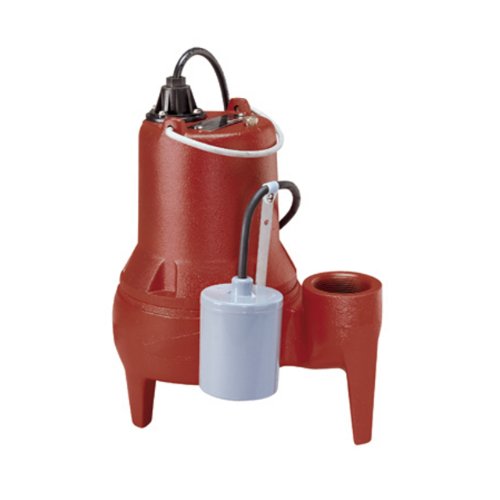
Liberty Pumps 404 1/2 HP Submersible Utility Pump
A cast iron and stainless build puts this in a different durability class from the plastic bodied pumps here, and the half horsepower motor keeps flow up against real head height. It is the pump to choose if water removal is a recurring problem rather than a one off. Weight is the trade for that construction.
Pros
- Serious build quality for repeat use
- Maintains flow against head
- Reliable seals over years
Cons
- Heavy to move around
- Needs a discharge adapter for garden hose

Zoeller 1073-0001 Model 105 Automatic Utility Pump
An integral float switch means this pump starts and stops on its own, which matters if you leave it in a pit that fills unpredictably. Zoeller’s cast iron construction is well regarded among plumbers. It is the pick for anywhere water arrives while you are not there to watch it.
Pros
- Runs unattended with float control
- Durable cast iron body
- Trusted plumbing trade brand
Cons
- Needs depth for the float to cycle
- Heavier than plastic pumps

Wayne WAPC250 Automatic Pool Cover Pump
Purpose built to sit on a pool cover and clear rainwater down to a very shallow depth, then shut off automatically. The wide flat base spreads load so it does not sink into the cover. Owners report it is the pump that finally stopped them siphoning by hand each autumn.
Pros
- Clears water almost completely
- Automatic cycling
- Stable on a flexible cover
Cons
- Lower flow than general purpose pumps
- Specialised for one job

Little Giant 5-MSP Submersible Utility Pump
A slim body lets this pump fit into narrow sumps, elevator pits and window wells where wider pumps will not sit flat. Despite the size it uses an oil filled motor for cooling and long life. It works best as a permanently placed pump rather than a portable one.
Pros
- Fits very narrow spaces
- Oil filled motor runs cool
- Quiet in operation
Cons
- Lower flow than larger pumps
- Discharge needs an adapter

Superior Pump 91570 1/2 HP Submersible Utility Pump
Stepping up to half a horsepower roughly doubles what the 91250 will move, which matters when draining a hot tub or a large flooded area. The thermoplastic housing keeps weight down compared with cast iron alternatives. It still needs a shallow residual layer removed by other means.
Pros
- Very high flow for the class
- Still light enough to carry
- Handles taller discharge lifts
Cons
- Overkill for small jobs
- Needs a larger discharge hose to reach rated flow

Wayne VIP50 1/2 HP Submersible Utility Pump
A half horsepower thermoplastic pump with a suction screen and a top mounted discharge that reduces clogging risk. It handles basement and crawl space flooding without the weight of a cast iron unit. Owners report it works well within its duty cycle and dislikes continuous running.
Pros
- Strong flow at a low outlay
- Lightweight for the power
- Screen protects the impeller
Cons
- Not intended for continuous duty
- Manual operation only
Compared at a glance
| # | Model | Motor | Best for | Score | Price |
|---|---|---|---|---|---|
| 1 | Superior Pump 91250 1/4 HP Thermoplastic Utility Pump | 1/4 HP submersible | Best overall | 9.4 | Check price |
| 2 | Liberty Pumps 404 1/2 HP Submersible Utility Pump | 1/2 HP submersible | Best heavy duty | 9.2 | Check price |
| 3 | Zoeller 1073-0001 Model 105 Automatic Utility Pump | 1/4 HP submersible | Best automatic | 9.0 | Check price |
| 4 | Wayne WAPC250 Automatic Pool Cover Pump | 1/4 HP | Best for pool covers | 8.7 | Check price |
| 5 | Little Giant 5-MSP Submersible Utility Pump | 1/6 HP oil filled | Best for tight spaces | 8.5 | Check price |
| 6 | Superior Pump 91570 1/2 HP Submersible Utility Pump | 1/2 HP submersible | Best for high volume | 8.2 | Check price |
| 7 | Wayne VIP50 1/2 HP Submersible Utility Pump | 1/2 HP | Best budget heavy duty | 8.0 | Check price |
What to look for
Draw down depth decides whether the job gets finished Every submersible pump leaves some water behind, and the difference between a quarter inch and two inches is the difference between a dry floor and a wet one. Pool cover pumps like the Wayne WAPC250 are engineered for very low draw down. General purpose pumps stop higher, so plan on a wet vacuum or a squeegee for the last layer unless the specification explicitly says otherwise.
Flow ratings assume ideal conditions The gallons per hour figure on the box is measured at zero lift with a short, wide discharge. Push the water up out of a basement through fifty feet of garden hose and real output can be less than half the rating. Check the pump curve if the manufacturer publishes one, and size up if you have significant vertical lift or a long run.
Automatic or manual is a real decision A float switch lets a pump sit in a pit and handle water as it arrives, which is what you want for a sump or a recurring leak. Manual pumps are better for a one off drain where you want full control and no risk of the float sticking. Automatic pumps also need enough water depth for the float to cycle, so they are poor choices for shallow puddles.
Match materials to how often you will use it Thermoplastic housings are light, corrosion proof and perfectly adequate for occasional household use. Cast iron pumps like the Liberty 404 and Zoeller 105 dissipate heat better and survive long duty cycles, which matters for anything running regularly. Also check whether the pump tolerates solids, since most utility pumps are clean water devices and grit destroys impellers quickly.
Questions worth asking
What is a utility pump used for?
Removing standing water from basements, crawl spaces, window wells, hot tubs, stock tanks, boats and pool covers. It is a general purpose water removal tool rather than a permanent sump or well pump.
How low can a utility pump drain water?
General purpose pumps typically stop somewhere between half an inch and two inches. Dedicated pool cover pumps go far lower, to roughly an eighth of an inch, which is why they exist as a separate category.
Can a utility pump handle dirty water?
Only lightly soiled water unless it is specifically rated for solids. Grit and debris wear impellers quickly. For muddy water or water with debris, look for a trash pump with a stated solids passing size.
Is a utility pump the same as a sump pump?
No. A sump pump is installed permanently in a basin with a float switch and a fixed discharge line. A utility pump is portable and usually manual, though automatic models like the Zoeller 105 blur the line.
What horsepower do I need?
A quarter horsepower pump handles most household drainage. Step up to half a horsepower if you are moving large volumes, pumping uphill, or draining something the size of a hot tub where time matters.
Can I run a utility pump dry?
Not for long. The water cools the motor and lubricates the seal, so dry running overheats the pump quickly. Automatic models with float switches prevent this, and manual pumps need watching.
What size hose should I use?
Use the largest hose the discharge will accept. A narrow garden hose throttles a half horsepower pump substantially, so a wider discharge hose is the cheapest way to get closer to the rated flow.
Do utility pumps need maintenance?
Rinse the pump and screen after use in dirty water, store it dry, and check the cord and plug for damage before each use. Seals are the usual eventual failure point, and a pump stored wet in a cold garage fails sooner.
Our take
For a pump that lives in the garage waiting for the next leak, the Superior Pump 91250 offers the most capability for the least outlay and is easy to store. Anyone dealing with water regularly should spend more on the Liberty Pumps 404 for its cast iron durability, or the Zoeller 105 if it needs to run unattended. Pool owners should treat the Wayne WAPC250 as a separate purchase entirely, since no general purpose pump clears a cover as completely.

