Top Variable Speed Wood Routers for Precision Cuts
For most woodworkers, the Bosch 1617EVSPK is the top choice because it combines power, smooth speed control, and a fixed and plunge base in one kit. Its main advantage is the versatile kit, while its limitation is that some users find the plunge base slightly less smooth than dedicated plunge routers.
Variable speed routers let you adjust RPM to match the bit and material, reducing tear-out and burning. This feature is essential for large bits and dense woods.
We analyzed specifications and owner feedback to pick routers that balance performance, value, and ease of use. Whether you need a compact trim router or a full-size model, this list covers top options.
What we recommend

Bosch 1617EVSPK Router
This 2.25 HP router kit includes both fixed and plunge bases, giving you flexibility for edge work and mortising. Variable speed dial ranges from 8,000 to 25,000 RPM, and the constant response circuitry maintains speed under load. Owners report smooth operation and easy bit changes thanks to the spindle lock.
Pros
- Includes two bases
- Constant speed control
- Soft start and micro-fine bit depth adjustment
Cons
- Plunge base can be stiff initially
- Heavier than some models

DeWalt DW618PK Router
The DeWalt DW618PK is another 2.25 HP kit with fixed and plunge bases. It features a through-the-table dust collection port and a clear sub-base for better visibility. The speed dial is conveniently located, and the electronic feedback keeps RPM steady. Users like the rugged build and accurate depth adjustment.
Pros
- Excellent dust collection
- Clear base for visibility
- Durable construction
Cons
- Plunge base depth stop can be finicky
- Bit changes require two wrenches

Makita RT0701C Trim Router
This 1.25 HP trim router is lightweight and easy to handle with one hand. Variable speed from 10,000 to 30,000 RPM lets you match speed to the task. It includes a fixed base and accepts optional plunge bases. Owners say it is ideal for laminate trimming and light edge work.
Pros
- Lightweight and compact
- Very high max speed
- Interchangeable bases
Cons
- Lower power for heavy cuts
- Dust collection is basic

Triton TRA001 Router
Triton TRA001 is a 3.25 HP router designed for table use, with a unique above-table height adjustment. It has a huge speed range from 8,000 to 21,000 RPM and accepts 1/2 inch collets. The electronic speed control maintains torque even under heavy loads. Owners praise its micro-adjustment and safety features.
Pros
- Powerful motor
- Above-table height adjustment
- Large speed range
Cons
- Very heavy
- Not ideal for handheld use

Porter-Cable 6902PK Router
This kit includes a 1.75 HP fixed base and a plunge base, offering flexibility at a budget-friendly price. Speed ranges from 10,000 to 26,000 RPM. The design is time-tested, and many owners have used theirs for decades. It is a solid choice for beginners or those needing a reliable second router.
Pros
- Affordable kit
- Proven design
- Smooth variable speed
Cons
- Plunge base depth stop less precise
- No soft start
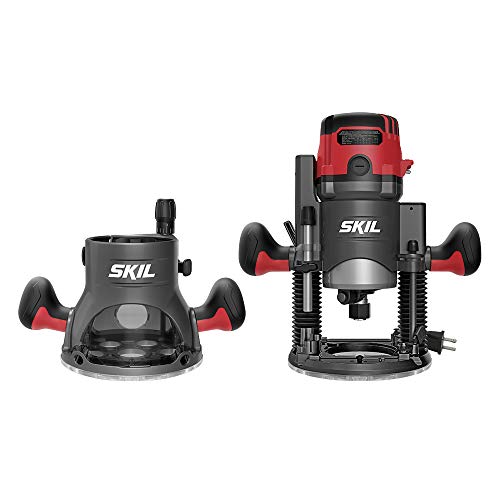
SKIL 1834 Router
The SKIL 1834 is a 1.75 HP fixed base router with variable speed and a micro-fine depth adjustment. It is a no-frills option that gets the job done for light to medium tasks. Owners say it is easy to set up and comfortable to use, though not as powerful as more expensive models.
Pros
- Very affordable
- Simple to use
- Micro-fine depth adjustment
Cons
- Only fixed base
- Less power for hardwoods

Hitachi KM12VC Router
The Hitachi KM12VC (now Metabo) is a 2.25 HP fixed base router with a soft start and variable speed from 8,000 to 24,000 RPM. It features a comfortable grip and a clear base for visibility. Owners like the smooth speed adjustment and the easy bit changes with the spindle lock.
Pros
- Soft start
- Smooth speed control
- Ergonomic handles
Cons
- No plunge base included
- Depth adjustment not as fine as some
How to pick the right one
How they compare
| # | Model | Motor | Best for | Score | Price |
|---|---|---|---|---|---|
| 1 | Bosch 1617EVSPK Router | 2.25 HP | Best overall for versatility with both fixed and plunge bases | 9.6 | Check price |
| 2 | DeWalt DW618PK Router | 2.25 HP | Best for dust collection and visibility | 9.3 | Check price |
| 3 | Makita RT0701C Trim Router | 1.25 HP | Best compact router for small trimming tasks | 9.1 | Check price |
| 4 | Triton TRA001 Router | 3.25 HP | Best for table mounting and large bits | 9.2 | Check price |
| 5 | Porter-Cable 6902PK Router | 1.75 HP | Best value for a classic reliable router | 8.8 | Check price |
| 6 | SKIL 1834 Router | 1.75 HP | Best budget pick for occasional use | 8.0 | Check price |
| 7 | Hitachi KM12VC Router | 2.25 HP | Best for smooth speed control and comfort | 8.7 | Check price |
Frequently asked questions
What is the advantage of a variable speed router?
Variable speed lets you adjust the RPM to match the bit diameter and material. Running large bits at high speed can cause burning and vibration. Lower speeds provide better control and extend bit life.
How do I choose the right speed for my router bit?
As a general rule, the larger the bit diameter, the slower the speed. For bits up to 1 inch, use 20,000-25,000 RPM. For 1 to 2 inches, reduce to 14,000-18,000 RPM. For over 2 inches, use 8,000-12,000 RPM. Always consult the bit manufacturer guidelines.
Is a plunge router better than a fixed base?
It depends on your work. Plunge routers are better for starting cuts in the middle of the wood, like mortises. Fixed base routers are lighter and easier for edge work. Many kits include both bases for versatility.
Can I use a router in a router table with a variable speed?
Yes, variable speed is useful in a table because you can set the speed for large panels or raised panel bits. Some routers are designed specifically for table use with features like above-table adjustment.
What is the difference between 1/4 inch and 1/2 inch collet?
A 1/2 inch collet accepts larger shank bits, which are more rigid and less likely to deflect. Most full-size routers have a 1/2 inch collet. Trim routers typically use 1/4 inch collets. Some routers have interchangeable collets.
How much horsepower do I need in a wood router?
For most tasks, a 1.5 to 2.25 HP router is adequate. If you do heavy work or use large bits, a 3 HP router provides more power and torque. For light trimming, a 1 HP trim router is sufficient.
What safety precautions should I take when using a router?
Always wear safety glasses and hearing protection. Ensure the bit is properly tightened and the router is unplugged when changing bits. Use a router table or guide for large cuts. Keep your hands away from the bit and use push sticks when appropriate.
How do I maintain my variable speed router?
Keep the router clean and free of dust. Lubricate the collet and depth adjustment threads periodically. Check the brushes for wear and replace them when needed. Store the router in a dry place.
Can a variable speed router be used with a router table?
Yes, many routers are designed for table use. Check if the base has standard mounting holes. Some routers have specific table-mounting features. Always use the appropriate safety accessories when using a router table.
What is the best speed for dovetail bits?
Dovetail bits are typically small, so a speed of around 15,000 to 20,000 RPM is suitable. However, the optimal speed depends on the wood and the specific bit. Start with a moderate speed and adjust based on the cut quality.
The bottom line
If you need a versatile router for various tasks, choose the Bosch 1617EVSPK for its excellent performance and two-base kit. For a compact option, the Makita RT0701C is unbeatable for light work. If you primarily work at a router table, invest in the Triton TRA001 for its power and convenience.