VR Headsets That Fit in Your Carry-On
For most travelers, the Meta Quest 3S is the best choice because it packs strong performance into a compact, lightweight design that works without a PC. Its main limitation is the shorter battery life, so pack a power bank. If you fly often and want the lightest option, consider the Bigscreen Beyond, but it requires a high-end PC and base stations.
Traveling with VR used to mean hauling a bulky PC and external sensors. Now compact standalone headsets fit in a backpack, letting you watch movies on a virtual theater screen or game in your hotel room.
We looked for headsets that are easy to pack, quick to set up, and comfortable for long sessions. The best options balance size with performance, so you don’t sacrifice immersion for portability.
The best picks, ranked

Meta Quest 3S
The Quest 3S delivers mixed reality and a vast game library in a lightweight, all-in-one design. It uses the same Snapdragon XR2 Gen 2 chip as the pricier Quest 3, making it a travel-friendly value.
Pros
- Excellent game and app library
- No PC required
- Adjustable IPD for comfort
Cons
- Battery life is modest
- Not as sleek as Quest 3
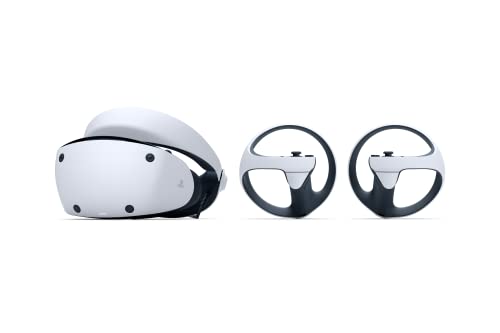
Sony PlayStation VR2
Though it requires a PS5 console, the PS VR2 offers stunning OLED displays and haptic feedback. It’s relatively compact, but you’ll need to pack the console and cables, making it better for road trips than flights.
Pros
- Gorgeous OLED visuals
- Immersive haptics and eye tracking
- Simple setup with PS5
Cons
- Requires PS5 to operate
- Wired connection limits mobility
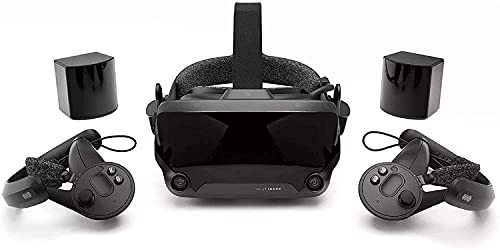
Valve Index
The Index is a wired PC VR headset with exceptional refresh rate and controllers. Its bulky design and need for base stations make it a challenge to travel with, but for stationary setups like hotel rooms, it offers unmatched precision.
Pros
- Superb tracking and controllers
- High refresh rate reduces motion blur
- Comfortable for long sessions
Cons
- Heavy and bulky for travel
- Requires external sensors and PC

HTC Vive XR Elite
The XR Elite is a modular headset that works standalone or tethered to a PC. Its compact form factor and flip-up visor make it easy to use in short bursts. However, its battery life is short, and the accessory ecosystem is pricey.
Pros
- Dual functionality standalone or PCVR
- Flip-up design for quick breaks
- Adjustable diopter for glasses
Cons
- Short battery life
- Expensive accessories

Pico 4
The Pico 4 offers a sharp display and comfortable fit, with a focus on fitness and media. It’s a standalone headset with a design similar to the Quest, but its app store is less extensive. Still, it’s a solid travel companion for watching movies.
Pros
- Good color passthrough
- Comfortable balance
- Longer battery than Quest 3S
Cons
- Smaller game library
- Limited availability in some regions

Bigscreen Beyond
The Bigscreen Beyond is the smallest PCVR headset, weighing only 127 grams. It requires a PC and base stations, but its size makes it packable. The custom face pad ensures a perfect fit, though setup is not for beginners.
Pros
- Incredibly light and compact
- High-resolution micro-OLED
- Custom fit via 3D face scan
Cons
- Requires expensive PC and base stations
- Not standalone; needs external tracking

Samsung HMD Odyssey+
This older Windows Mixed Reality headset offers a decent experience at a low price. It’s relatively lightweight and uses inside-out tracking, but it has been discontinued, so you must find it on Amazon. It’s a good entry point for casual PCVR users.
Pros
- Low cost for PCVR entry
- Built-in headphones
- No external sensors needed
Cons
- Discontinued product, limited support
- Lower resolution and refresh rate
How they stack up
| # | Model | Weight | Best for | Score | Price |
|---|---|---|---|---|---|
| 1 | Meta Quest 3S | 514 grams | Best overall for most travelers | 9.4 | Check price |
| 2 | Sony PlayStation VR2 | 560 grams | Best for PS5 owners who travel | 9.0 | Check price |
| 3 | Valve Index | 809 grams | Best for high-end PC VR enthusiasts | 8.8 | Check price |
| 4 | HTC Vive XR Elite | 625 grams | Best for business travelers | 8.5 | Check price |
| 5 | Pico 4 | 586 grams | Best for media streaming on the go | 8.3 | Check price |
| 6 | Bigscreen Beyond | 127 grams | Best for ultralight PCVR on the move | 8.2 | Check price |
| 7 | Samsung HMD Odyssey+ | 645 grams | Best budget option for PCVR travel | 8.0 | Check price |
What matters most
Frequently asked questions
Can I use a VR headset on an airplane?
Yes, but only standalone headsets that don’t require external sensors or a PC. The plane’s motion might cause discomfort, so it’s best for watching movies or playing seated games. Ensure the headset is in airplane mode to disable wireless features.
Do I need a PC for any of these headsets?
No, the Meta Quest 3S, Pico 4, and HTC Vive XR Elite are standalone. The Sony PS VR2 requires a PS5, while Valve Index, Bigscreen Beyond, and Samsung HMD Odyssey+ require a PC with compatible specs.
What is the lightest VR headset for travel?
The Bigscreen Beyond is the lightest at 127 grams, but it requires external base stations and a PC. The Meta Quest 3S is the lightest standalone at 514 grams.
How long does the battery last on standalone headsets?
Typically 2 to 3 hours. The Pico 4 lasts up to 3 hours, while the Quest 3S and Vive XR Elite last around 2 to 2.5 hours. You can extend this with a portable power bank.
Can I watch 3D movies on these headsets?
Yes, most support 3D movies through apps like Bigscreen or VLC. The OLED displays on PS VR2 and Samsung Odyssey+ offer deep blacks, which are great for movies.
Do any headsets have built-in storage for movies?
Yes, standalone headsets like Quest 3S and Pico 4 have internal storage. You can transfer files via USB-C. Some also support cloud streaming.
Are there any VR headsets that don’t need base stations?
Yes, all of the standalone headsets use inside-out tracking, so they don’t need external base stations. The Samsung Odyssey+ also uses inside-out tracking but is PCVR.
Which headset is best for gaming on the go?
The Meta Quest 3S offers the largest game library and is easy to pick up and play. For PCVR gamers, the Bigscreen Beyond provides high fidelity in a small size, but you’ll need to pack a gaming laptop.
Can I use a VR headset with glasses?
Most headsets have enough room for glasses, but it can be tight. The Vive XR Elite has adjustable diopters, while the Bigscreen Beyond is custom-fitted to your face, so it can accommodate glasses if you specify. The Quest 3S has a glasses spacer.
What should I look for in a travel VR headset?
Focus on weight, size, and whether it’s standalone. Check the battery life and storage. Also consider comfort features like adjustable straps and IPD. If you have a powerful laptop, you might opt for a PCVR headset, but standalone is more convenient.
The bottom line
If you want a travel VR headset that offers the best balance of portability and performance, get the Meta Quest 3S. It is lightweight, easy to set up anywhere, and has a huge game library. For those who prioritize watching media and want a slightly longer battery, the Pico 4 is a worthy alternative. But if you are a PCVR enthusiast who must pack top-tier visual fidelity, the Bigscreen Beyond is the most compact option, despite the need for external tracking. Avoid hauling a full PCVR setup like the Valve Index unless you have a dedicated travel case and a strong back.


