Contractor Grade Wall Repair Kits and Tools That Get the Job Done Fast
For most contractor work, the Red Devil One Time Lightweight Spackling is the top pick. It is ready to use straight from the tub, sands quickly, and resists shrinking and cracking. Its main limitation is that it is not for deep holes, so you will need a setting compound for those.
Contractors face a range of wall damage, from small nail holes to large gouges. The right supplies save time and prevent callbacks. This roundup covers the most reliable products based on contractor feedback and specifications.
We looked at ease of application, drying time, sanding effort, and final strength. Some products are ideal for quick fixes, others for deep fills. Every item listed is currently available on Amazon and widely used by professionals.
What we recommend

Red Devil One Time Lightweight Spackling
This ready to use spackle is a favorite among contractors for small to medium holes. It goes on pink so you can see it, then dries white. It sands effortlessly and rarely needs a second coat.
Pros
- Minimal shrinkage
- Easy sanding
- Dries fast
Cons
- Not for large gouges
- Requires primer for best adhesion

DAP Platinum Patch Advanced 4-in-1
A professional grade patching compound that can fill holes up to 1 inch deep. It is mold and mildew resistant, and it bonds to most surfaces including wood, drywall, and concrete. Available in a resealable tub.
Pros
- Strong adhesion
- Fills deep holes
- Paintable in 2 hours
Cons
- More difficult to sand than lightweight
- Higher cost per ounce

USG Sheetrock Brand Easy Sand 45
This is a drying type joint compound that sets in 45 minutes. Contractors use it for embedding tape and filling large holes. It hardens by chemical reaction, so it does not shrink like drying compounds.
Pros
- Fast setting
- Low shrinkage
- Strong, durable finish
Cons
- Requires mixing
- Sets quickly, less working time
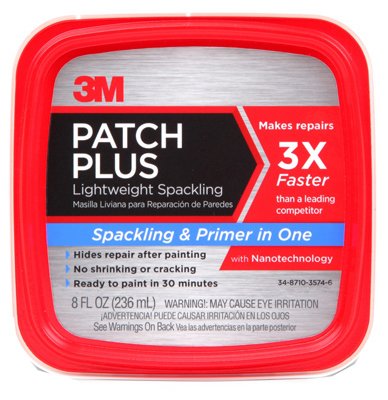
3M Patch Plus Primer 2-in-1
This patch and primer combination is perfect for nail holes and small dings. You apply it, let it dry, and then paint directly without a separate primer. It is flexible and helps prevent cracks from reappearing.
Pros
- Primer included
- Quick touch ups
- Little to no sanding
Cons
- Not for large repairs
- Can be harder to find in bulk

Fibatape Self Adhesive Fiberglass Tape
A roll of self adhesive fiberglass tape used to cover joints and cracks before applying compound. It is easy to apply and provides a strong base for patching. It is ideal for drywall repairs and preventing future cracks.
Pros
- Strong reinforcement
- Easy to apply
- Prevents cracking
Cons
- Needs compound over it
- Not for metal or wood

DAP 12328 Drydex 5 Minute Spackling
A pink to white spackle that dries in 1 to 5 hours depending on depth. It is ready to paint without sanding for small holes. The fast dry time speeds up the job so you can move on to other tasks.
Pros
- Fast dry
- No sanding needed for small holes
- Paint ready
Cons
- Can shrink on deep fills
- Not as durable as setting compound

Patching Compound by Fast ‘n Final
A lightweight patching compound that goes on smooth and dries quickly. It is designed to sand easily and produce minimal dust. It is a good choice for areas where you want to avoid dust contamination.
Pros
- Very smooth application
- Low dust sanding
- Dries white
Cons
- Not for deep holes
- Some users report shrinkage
Compared at a glance
| # | Model | Size | Best for | Score | Price |
|---|---|---|---|---|---|
| 1 | Red Devil One Time Lightweight Spackling | 16 oz, 32 oz, 1 gallon | Quick, painless touch ups on painted walls | 9.4 | Check price |
| 2 | DAP Platinum Patch Advanced 4-in-1 | 32 oz, 64 oz | Large holes and setting anchors | 9.2 | Check price |
| 3 | USG Sheetrock Brand Easy Sand 45 | 18 lb bag, 36 lb bag | Hot mud for quick setting and large patches | 9.0 | Check price |
| 4 | 3M Patch Plus Primer 2-in-1 | 4 oz, 8 oz, 32 oz | Small holes and cracks with built in primer | 8.9 | Check price |
| 5 | Fibatape Self Adhesive Fiberglass Tape | 2.5 in x 300 ft, 3.5 in x 300 ft | Reinforcing seams and cracks | 8.8 | Check price |
| 6 | DAP 12328 Drydex 5 Minute Spackling | 12 oz, 28 oz | Emergency fixes when you need to paint fast | 8.7 | Check price |
| 7 | Patching Compound by Fast ‘n Final | 16 oz, 32 oz, 64 oz | Smooth finish without sanding | 8.5 | Check price |
How to pick the right one
Frequently asked questions
What is the difference between spackle and joint compound?
Spackle is for small holes and dries quickly. Joint compound is for taping and finishing drywall. It takes longer to dry and requires more coats but is stronger for large areas.
Can I use wall repair supplies on plaster walls?
Yes, but you need to ensure compatibility. Some compounds are not meant for plaster. Use a product that adheres to plaster or use a bonding agent first.
How long does wall repair compound take to dry?
Drying times vary. Lightweight spackles dry in 1 to 2 hours. Setting compounds can dry in 45 minutes or up to 90 minutes depending on the type. Always check the label.
Do I need to sand after applying patching compound?
Usually yes, to achieve a smooth finish. Some products claim no sanding, but for a professional result, a quick sanding is recommended.
What is the best way to fill a large hole in drywall?
For holes larger than 6 inches, cut out the damaged area and insert a new piece of drywall. For smaller holes, use a patch kit or setting compound with tape.
Can I paint directly over patched areas?
Most compounds need to be primed before painting. Some products include primer, but for best results, apply a separate primer to seal the patch.
Are setting compounds better than ready mixed?
Setting compounds are more durable and shrink less, but they require mixing and have a limited working time. Ready mixed is more convenient for small jobs.
What tools do professionals use for wall repair?
Professionals use a variety of putty knives, taping knives, and sometimes a banjo for tape application. They also use sanding blocks and pole sanders for large areas.
How do I avoid cracks in my wall repair?
Use a setting compound for deep fills, apply thin layers, and use mesh tape over joints. Allow each layer to dry completely before adding the next.
Is it necessary to use a primer after patching?
Yes, priming helps the patch blend with the surrounding wall and prevents flashing. It also provides a good surface for paint adhesion.
Our take
For contractors, the Red Devil One Time Lightweight Spackling offers the best balance of speed and finish for most touch ups. For larger structural repairs, the USG Sheetrock Easy Sand 45 provides a strong, fast setting fill. Keep both on hand to handle any wall repair job efficiently.


