Ceramic vs Steel vs Melamine: Best Washable Cat Bowls
Necoichi’s Raised Cat Food Bowl leads this comparison with a built-in whisker-friendly stand and dishwasher-safe ceramic build. Van Ness Ecoware Non-Skid Cat Dish suits tight budgets with a rubber non-skid base. OurPets DuraPet Stainless Steel Bowl offers the best value in steel, resisting odor and tipping better than typical plastic dishes.
Necoichi’s Raised Cat Food Bowl stands out for cats prone to whisker fatigue, since its ceramic ripple design keeps whiskers off the sides entirely. Owners dealing with food left uneaten around a normal bowl benefit most from the wide, shallow shape. Its main limitation is a smaller capacity than a stainless double diner, so multi-cat homes may still need a second bowl style.
Bowl shopping gets confusing once material, tilt angle, stand height and non-skid bases all affect daily cleaning and eating comfort. We compared manufacturer listed materials, dishwasher safety claims, bowl dimensions and owner feedback on Amazon to sort these seven picks by real use case rather than price alone.
The top picks, ranked

Necoichi Raised Cat Food Bowl
Necoichi builds the elevation into the ceramic dish itself, so there is no separate stand to clean. A wide, shallow ripple pattern keeps whiskers from touching the sides while eating. The ceramic surface goes in the dishwasher and resists scratches from daily claw contact.
Pros
- Built-in raised base means one less part to wash
- Wide shallow shape reduces whisker fatigue
- Ceramic surface resists odor absorption and scratches
Cons
- Ceramic chips if dropped on hard flooring
- Holds only about 1.5 cups, tight for large breeds

Van Ness Ecoware Non-Skid Cat Dish
Van Ness molds this dish from Ecoware, a melamine based material that holds up better than thin plastic. A rubber ring on the underside stops the bowl from sliding on tile or hardwood. It ships in small, medium and large capacities for single or multi-cat households.
Pros
- Rubber ring base stops sliding during meals
- Sold in three sizes to match different cats
- Costs less than ceramic or stainless options
Cons
- Melamine stains over time from wet food
- Not as scratch-resistant as stainless steel

OurPets DuraPet Stainless Steel Bowl
OurPets bonds a stainless steel bowl to a rubber base ring, which adds weight and stops tipping. Steel resists bacteria buildup and odor better than plastic over repeated washes. It comes in mini through large capacities to match different cat sizes.
Pros
- Rubber base adds weight so cats can’t flip it
- Stainless steel never stains or holds odor
- Bonded base means no separate stand to lose
Cons
- Steel bowls turn noisy against tile floors
- Standard depth may not suit whisker-sensitive cats

Y YHY Whisker Friendly Cat Bowls Set
Y YHY pairs two wide, shallow ceramic bowls with a raised wood stand aimed at whisker relief. Bowls lift out of the stand for full dishwasher cleaning, while the wood base gets a quick wipe. The set covers food and water together for cats that scatter food from a deep dish.
Pros
- Bowls lift out for full dishwasher cleaning
- Wide shallow shape targets whisker fatigue directly
- Two bowl set covers food and water together
Cons
- Wood stand needs hand washing only
- Stand height may crowd cats against a wall

JASGOOD Elevated Cat Food Bowls
JASGOOD raises stainless steel bowls on a bamboo stand set at a height meant to ease neck strain in flat-faced breeds like Persians. The stand holds two removable bowls at a slight angle so food gathers toward the front. Bamboo needs a damp cloth rather than a dishwasher cycle.
Pros
- Raised angle eases neck strain for brachycephalic breeds
- Stainless bowls resist chin acne better than plastic
- Bowls pop out for easy dishwasher cleaning
Cons
- Bamboo stand requires hand drying to avoid warping
- Taller profile may not fit inside small crates
Mihuis Raised Cat Food Bowl
Mihuis tilts a single ceramic bowl to roughly 15 degrees inside a wood stand, letting food slide toward the front instead of piling at the back. The angle targets cats that eat too fast and regurgitate afterward. A silicone ring under the stand keeps it from sliding on smooth floors.
Pros
- Tilted angle helps fast eaters slow down and reduces mess
- Silicone ring keeps the stand planted during meals
- Ceramic bowl lifts out for dishwasher cleaning
Cons
- Single bowl only, needs a second one for water
- Wood stand shows water rings if left wet
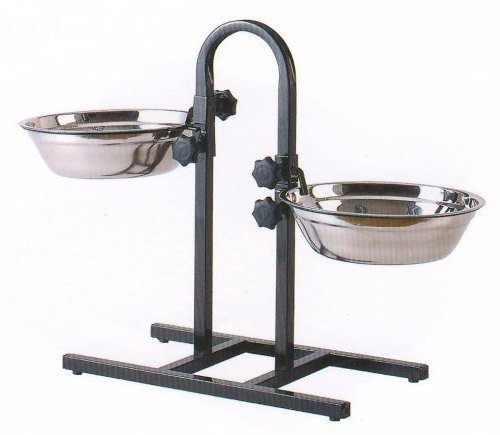
Basis Pet Elevated Stainless Steel Double Diner
Basis Pet sets two stainless steel bowls into a raised metal frame built for multi-cat households or bigger appetites. Each bowl holds enough capacity for dry and wet food side by side without refilling twice a day. Frame and bowls both go in the dishwasher since neither includes wood or foam parts.
Pros
- Full stainless build means the whole set is dishwasher safe
- Larger capacity suits multi-cat feeding or big appetites
- Raised frame keeps bowls off the floor for easier cleanup
Cons
- Larger footprint needs more counter or floor space
- Standard shape skips the whisker relief of a shallow bowl
How they compare
| # | Model | Material | Best for | Score | Price |
|---|---|---|---|---|---|
| 1 | Necoichi Raised Cat Food Bowl | Ceramic | Best overall | 9.4 | Check price |
| 2 | Van Ness Ecoware Non-Skid Cat Dish | Melamine (Ecoware) | Best budget | 9.2 | Check price |
| 3 | OurPets DuraPet Stainless Steel Bowl | Stainless steel with rubber base | Best value stainless steel | 8.9 | Check price |
| 4 | Y YHY Whisker Friendly Cat Bowls Set | Ceramic bowls, wood stand | Best for whisker-sensitive cats | 8.6 | Check price |
| 5 | JASGOOD Elevated Cat Food Bowls | Stainless steel bowls, bamboo stand | Best for flat-faced breeds | 8.4 | Check price |
| 6 | Mihuis Raised Cat Food Bowl | Ceramic bowl, wood stand | Best for messy eaters | 8.2 | Check price |
| 7 | Basis Pet Elevated Stainless Steel Double Diner | Stainless steel bowls and frame | Best for multi-cat households | 8.0 | Check price |
What to look for
Material Choice Drives Long-Term Cleanup Ceramic, stainless steel and melamine dominate the washable cat bowl market, and each wears differently over time. Stainless steel resists scratches and odor absorption better than the other two, which matters since scratched surfaces trap bacteria. Ceramic holds its shine longer and looks better on a counter, but it chips if dropped on tile. Melamine costs less upfront, yet it can stain from wet food and dull faster under repeated washing. Owners replacing a bowl every year often save money buying stainless steel once instead.
Why Whisker-Friendly Shapes Change Eating Behavior Cats register even light contact with a bowl’s rim through sensitive whiskers. A narrow, deep dish forces whiskers against the sides on every bite, and some cats respond by pulling food onto the floor to avoid it. Wide, shallow bowls like Necoichi’s or the Y YHY set remove that contact entirely. Owners of finicky eaters often see food scattered near a normal bowl disappear once switched to a shallow design. Not every cat shows whisker stress, so this upgrade matters most for cats that already scatter food outside the bowl.
Elevated Stands Suit Specific Cats, Not Every Household Raised stands help cats with neck or joint strain reach food without hunching down, which matters for flat-faced breeds like Persians and for senior cats with arthritis. JASGOOD’s bamboo stand and similar raised designs angle the bowl so a cat’s neck stays neutral while eating. Healthy adult cats without breed-related strain rarely need the extra height, and a flat non-slip bowl works just as well for them. Elevated stands also take up more counter or floor space, which matters in small kitchens.
Does a Non-Slip Base Actually Matter? Bowls sliding across tile or hardwood push food out from under a cat’s nose mid-bite, which frustrates fast eaters the most. Rubber rings, weighted bases and silicone feet all stop this in different ways, and none require replacing the whole bowl. A cheaper fix works too: setting any flat bowl on a rubber shelf liner or placemat achieves similar grip without buying a specialized base. Multi-cat households benefit most from non-slip designs, since shared feeding areas see more bumping and jostling.
Frequently asked questions
What is the best washable cat bowl for whisker fatigue?
Wide, shallow ceramic bowls like the Necoichi Raised Cat Food Bowl or the Y YHY set keep whiskers off the rim entirely, which reduces the pushing and pawing behavior tied to whisker stress.
Are ceramic or stainless steel cat bowls better?
Stainless steel resists scratches and odor longer, while ceramic holds its finish and looks better on a counter. Pick steel for heavy daily use and ceramic if appearance matters more than scratch resistance.
Can you put a cat bowl in the dishwasher?
Ceramic, stainless steel and melamine bowls are generally dishwasher safe on the top rack, but wood or bamboo stands attached to elevated designs need hand washing to avoid warping.
Is an elevated cat bowl worth it for flat-faced breeds?
Yes for breeds like Persians and Himalayans, since raising the bowl reduces the neck angle needed to reach food and can ease breathing while eating.
How often should you wash a cat’s food bowl?
Daily washing prevents the biofilm buildup that forms within 24 hours on any bowl material, and a dishwasher cycle removes it more thoroughly than a quick rinse.
Ceramic vs melamine cat bowls: which lasts longer?
Ceramic typically lasts longer if it survives drops, since it resists staining and scratching better than melamine, which can dull and discolor after repeated dishwasher cycles.
What size bowl does a cat actually need?
Most adult cats need one to one and a half cups of capacity per meal, so a bowl in that range covers a single feeding without frequent refills.
Do non-slip cat bowls actually stop sliding?
Rubber rings and weighted bases stop most sliding on tile and hardwood, though a bowl set on a placemat or rubber liner achieves similar grip without a specialized base.
How do you get rid of smell in a cat’s food bowl?
A dishwasher cycle on stainless steel or ceramic clears odor-causing residue better than hand rinsing, since heat breaks down the biofilm bacteria leave behind.
Are plastic cat bowls worse than ceramic or steel?
Plastic scratches faster than ceramic or stainless steel, and those scratches trap bacteria linked to chin acne, which is why washable ceramic and steel bowls hold up better long term.
The bottom line
Necoichi’s Raised Cat Food Bowl earns the top spot because its built-in stand solves whisker fatigue without adding a separate part to wash, and its ceramic build handles dishwasher cycles without staining. Households with more than two cats or larger breed cats should look at the Basis Pet Elevated Stainless Steel Double Diner instead, since its bigger capacity and full stainless build hold up better under heavier daily use.


