Horse Feed Tubs Built to Survive Chewing and Freezing Barns
Fortex Fortiflex’s rubber pan resists cracking through freezing winters and rinses clean in seconds, making it the top pick for most barns. Tuff Stuff’s flat-back tub saves space in tight stall corners. Little Giant’s plastic pan suits barns feeding several horses on a tighter budget.
Fortex Fortiflex’s rubber pan flexes under chewing and cold rather than cracking, and its smooth interior rinses clean in seconds, though it costs more than basic plastic pans.
Chewing damage and mold buildup top the complaint list in horse feeder reviews, so material, wall thickness and mounting style each factored into how we ranked these seven tubs.
The top picks, ranked
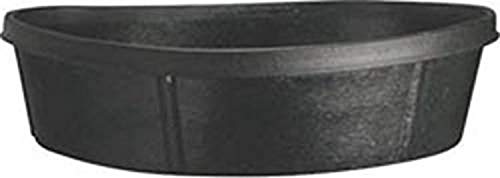
Fortex Fortiflex 3 Gallon Rubber Feed Pan
Flexible rubber molds this pan so it springs back from chewing instead of cracking. Winter cold does not turn the material brittle the way it does with rigid plastic. A smooth interior rinses out fast and dries within minutes after hosing.
Pros
- Resists cracking through freezing winters
- Smooth interior rinses clean in seconds
- Flexes under chewing instead of splitting
Cons
- Costs more than basic plastic pans
- Can tip in an active stall if unsecured

Tuff Stuff Flat Back Feed Tub
One flat side lets this tub sit flush against a stall wall instead of eating up floor space. Heavy-duty plastic wipes down fast after wet feed sticks to the sides. Molded handles make carrying it to a wash station easier than gripping a round tub.
Pros
- Flat back frees up stall floor space
- Molded handles simplify carrying to washing
- Smooth walls resist wet feed buildup
Cons
- Chews through faster than rubber tubs
- Holds less than round rubber pans

Little Giant Plastic Feed Pan
Polyethylene keeps this pan affordable for barns feeding several horses at once. A rounded shape skips the seams where feed and grime collect. Pans stack inside each other for storage between feedings.
Pros
- Lowest cost per unit for multi-horse barns
- Seamless shape hoses clean fast
- Stacks flat for compact storage
Cons
- Cracks sooner than rubber in freezing cold
- Light weight tips over more easily

Behlen Country Rubber Feed Tub
Thick rubber walls stand up to horses that chew on the tub between meals. A rolled rim smooths sharp edges that would otherwise wear on lips and gums. Owners in cold climates report no cracking through multiple winters.
Pros
- Rolled rim is gentle on lips and gums
- Holds up through repeated winter freezes
- Thick walls resist chew damage
Cons
- Heavier to carry when full
- Priced above plastic alternatives

Miller Manufacturing Wall-Mount Feed Tub
Mounting holes let this tub bolt straight to a stall wall, keeping feed off the ground and away from bedding. Heavy plastic construction wipes clean with a hose after each meal. Barns rotating horses through shared stalls can unbolt and swap it between animals.
Pros
- Keeps feed off the ground and bedding
- Bolts securely for shared or rotating stalls
- Removes easily for cleaning
Cons
- Needs drilling into the stall wall
- Poor fit for horses without a fixed stall
Horse Health Products EZ Feeder Rubber Pan
Sun and rain exposure will not warp this rubber pan, which suits pasture feeding stations better than an indoor stall. A wide, low profile resists tipping in gusty wind. Owners report it stays flexible even after years left outdoors.
Pros
- Resists UV damage and warping outside
- Wide base resists tipping in wind
- Large capacity for group pasture feeding
Cons
- Bulky size is harder to store indoors
- Heavier to carry when full of water
JFFCESTORE Corner Feed Tub
A smaller corner shape suits ponies, minis and foals that do not need a full-size portion. Standard fence or stall brackets accept the corner clips without extra hardware. Shallow depth makes hand scrubbing quick between feedings.
Pros
- Sized right for ponies and foals
- Shallow shape speeds up hand washing
- Clips into standard corner brackets
Cons
- Too small for full-size horse portions
- Wears faster under heavy chewing than rubber
Compared at a glance
| # | Model | Material | Best for | Score | Price |
|---|---|---|---|---|---|
| 1 | Fortex Fortiflex 3 Gallon Rubber Feed Pan | Flexible rubber | Best overall | 9.3 | Check price |
| 2 | Tuff Stuff Flat Back Feed Tub | Heavy-duty plastic | Best for tight stall corners | 9.0 | Check price |
| 3 | Little Giant Plastic Feed Pan | Polyethylene plastic | Best value | 8.6 | Check price |
| 4 | Behlen Country Rubber Feed Tub | Thick molded rubber | Best for aggressive chewers | 8.8 | Check price |
| 5 | Miller Manufacturing Wall-Mount Feed Tub | Heavy-duty plastic | Best for wall mounting | 8.5 | Check price |
| 6 | Horse Health Products EZ Feeder Rubber Pan | UV-resistant rubber | Best for outdoor and pasture use | 8.4 | Check price |
| 7 | JFFCESTORE Corner Feed Tub | Molded plastic | Best for small ponies and minis | 8.2 | Check price |
What to look for
What to look for in a washable horse feeder Material decides both cleaning speed and lifespan here. Rubber flexes under chewing and cold without cracking, while rigid plastic costs less but wears out faster in freezing barns. A seamless interior matters most for actual cleaning time, since grooves trap wet feed and grow mold.
Best feed tubs for stall setups Flat-back and wall-mount shapes save floor space inside a standard stall. Bolting a tub to the wall, like Miller’s design, also keeps an active horse from tipping it during feeding. Floor space stays clear for bedding and movement.
Best feed tubs for pasture and outdoor feeding Outdoor feeders need UV resistance plus a wide, stable base to handle wind and rain. Rubber pans built for pasture use, such as the Horse Health Products EZ Feeder, outlast indoor-style plastic tubs left outside year-round.
Best feed tubs for ponies, minis and foals Full-size feeders oversize both the portion and the footprint for smaller animals. A compact corner tub sized for ponies cuts down on wasted feed. Smaller stall corners stay less crowded with a right-sized tub instead.
Questions worth asking
What material works best for a washable horse feeder?
Rubber holds up best against chewing and freezing temperatures. Plastic costs less and works fine in milder climates or lighter use.
How often should a horse feed tub be washed?
Daily rinsing stops mold and bacteria from building up in wet feed, especially during warm weather when residue spoils fast.
Can horse feed tubs go in a dishwasher?
No, they are too large for a standard dishwasher. A hose, scrub brush and occasional mild soap handle the cleaning instead.
Rubber vs plastic horse feeder, which lasts longer?
Rubber generally outlasts plastic under chewing and cold exposure. Plastic stays lighter and cheaper for barns replacing tubs on a schedule.
Do wall-mounted feed tubs work in every stall?
Only if the wall allows drilling for mounting hardware. Freestanding rubber or plastic pans work in any stall without modification.
What size feed tub does a full-size horse need?
Most full-size horses use a 3 to 5 gallon tub. Ponies and minis do better with an 8 to 10 quart compact size.
Why does my horse chew on the feed tub?
Boredom or a habit formed during meals often causes it. Thicker rubber tubs resist this damage better than thin plastic.
Are washable horse feeders safe for wet feed and supplements?
Yes. Seamless rubber and plastic tubs handle soaked feed without absorbing odors, as long as they get rinsed after each use.
How long does a rubber horse feeder typically last?
Owners report years of daily use without cracking, especially with pans built for cold climates like Fortiflex or Behlen Country.
The bottom line
Fortex Fortiflex remains the strongest overall choice for most barns, pairing chew resistance with fast hosing and cold-weather durability. Barns with tight stall corners should pick the Tuff Stuff Flat Back Tub instead, since its shape reclaims floor space a round tub would waste. Owners feeding several horses on a tighter budget can rely on the Little Giant Plastic Feed Pan without overspending.


