Top Water Filters for Clean, Great-Tasting Water
The Epic Pure Water Filter Pitcher is our top pick for most households because it removes the broadest range of contaminants while being simple to use. Its main advantage is the high-capacity filter that lasts longer than typical pitcher filters, but its initial cost is higher than basic pitchers.
Clean water is essential. But tap water can carry lead, chlorine, and other impurities. Water filters help. They improve taste and safety.
Choosing the right filter can be tough. There are pitchers, faucet mounts, under sink models, and more. We compared top options to help you decide.
Our top picks

Epic Pure Water Filter Pitcher
The Epic Pure is a BPA-free pitcher that removes 200+ contaminants, including lead, mercury, and PFAS. It filters 100 gallons per filter, which is about 4 times longer than standard pitchers. Owners praise its sturdy build and easy pouring. The filter uses a coconut carbon core. It is certified by NSF/ANSI standards for many contaminants.
Pros
- Long-lasting filter saves money over time
- Removes a wide range of contaminants
- Sturdy, well-designed pitcher
Cons
- Filter replacement cost is high
- Large size may not fit in fridge door

Brita Longlast Plus Water Filter Pitcher
The Brita Longlast Plus is a classic pitcher with a filter that lasts 6 months or 120 gallons. It reduces chlorine taste and odor, and is certified for lead and other contaminants. It is easy to use and widely available. Owners appreciate the simple design and affordable replacement filters.
Pros
- Very affordable upfront cost
- Filter lasts longer than standard Brita
- Easy to fill and pour
Cons
- Does not remove as many contaminants as Epic Pure
- Plastic build feels less durable

Culligan FM-15A Faucet Mount Water Filter
The Culligan FM-15A attaches directly to your faucet and filters on demand. It uses a carbon filter to reduce chlorine, lead, and other impurities. The filter lasts up to 200 gallons or 3 months. It has a switch for filtered or unfiltered water. Owners like the easy installation and space-saving design.
Pros
- Compact and doesn’t take up counter space
- Switch between filtered and unfiltered
- Easy to install
Cons
- May not fit all faucet types
- Filter life is shorter than some pitchers

APEC Water Systems ROES-50 Under Sink Reverse Osmosis
The APEC ROES-50 is a 5-stage under sink reverse osmosis system that removes up to 99% of contaminants, including lead, fluoride, arsenic, and more. It comes with a holding tank and all necessary parts. Owners report clear improvement in taste and peace of mind. Installation requires some DIY skills, but many find it manageable.
Pros
- Exceptional contaminant removal
- Produces high-quality water
- Long-term value with replacement filters
Cons
- Requires installation under sink
- Wastes some water during filtration
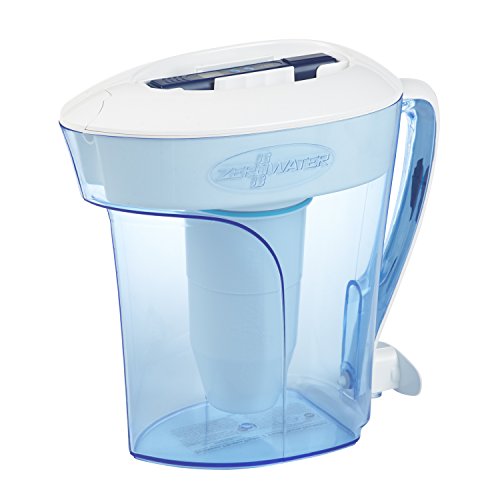
ZeroWater ZP-010 10 Cup Water Filter Pitcher
ZeroWater uses a 5-stage filtration system that removes dissolved solids, achieving 0 TDS (total dissolved solids). It includes a TDS meter to test water quality. Owners say it delivers the purest taste but filters need replacement more often if water is hard. The pitcher is BPA-free.
Pros
- Removes virtually all dissolved solids
- TDS meter verifies purity
- Great for areas with hard water
Cons
- Filter replacement is frequent and costly
- Slower filtration rate

Aquasana AQ-5300+ Max Flow Under Sink Water Filter
The Aquasana AQ-5300+ is a 3-stage under sink filter that uses coconut carbon and ion exchange to reduce 77 contaminants, including PFOA/PFOS, lead, and chloramine. It has a high flow rate and does not waste water. It mounts to the sink and includes a dedicated faucet. Owners like its solid construction and easy filter changes.
Pros
- High flow rate
- Easy to install and replace filters
- Does not waste water
Cons
- Does not remove dissolved solids like RO
- Requires under sink space

iSpring WGB32B 3-Stage Whole House Water Filter
The iSpring WGB32B provides whole house filtration with 3 stages: sediment, carbon, and carbon block. It reduces sediment, chlorine, and other contaminants to improve water for the entire home. It includes a mounting bracket and wrenches. Owners note that it protects appliances and improves bathing water.
Pros
- Filters all water entering the home
- Protects plumbing and appliances
- High flow rate
Cons
- Requires professional installation for many
- Filter replacements for multiple stages
Before you buy
How they compare
| # | Model | Filter Life | Best for | Score | Price |
|---|---|---|---|---|---|
| 1 | Epic Pure Water Filter Pitcher | 100 gallons (approx. 4 months) | Best Overall Pitcher | 9.4 | Check price |
| 2 | Brita Longlast Plus Water Filter Pitcher | 120 gallons (6 months) | Best Budget Pitcher | 8.6 | Check price |
| 3 | Culligan FM-15A Faucet Mount Water Filter | 200 gallons (3 months) | Best Faucet Mount | 8.3 | Check price |
| 4 | APEC Water Systems ROES-50 Under Sink Reverse Osmosis | 5-stage RO filtration | Best Under Sink RO System | 9.1 | Check price |
| 5 | ZeroWater ZP-010 10 Cup Water Filter Pitcher | Varies, typically 2-4 months | Best for TDS Reduction | 8.8 | Check price |
| 6 | Aquasana AQ-5300+ Max Flow Under Sink Water Filter | 3-stage filtration | Best Under Sink Carbon Filter | 8.9 | Check price |
| 7 | iSpring WGB32B 3-Stage Whole House Water Filter | 3-stage filtration | Best Whole House System | 8.4 | Check price |
Common questions
What is the best type of water filter for home use?
Under sink reverse osmosis systems offer the most thorough filtration, but pitchers are easier and cheaper. For general use, a quality carbon block pitcher or faucet mount is sufficient for many households.
How often should I replace my water filter?
It depends on the filter type and usage. Pitcher filters typically last 1-4 months, under sink carbon filters last 3-6 months, and RO membranes can last 2-3 years. Always follow the manufacturer’s guidelines.
Do water filters remove beneficial minerals?
Some methods, like reverse osmosis and distillation, can remove minerals. However, most people get minerals from food, so this is not a major concern. Some filters add minerals back or you can remineralize water.
Can I install an under sink water filter myself?
Yes, many under sink filters come with clear instructions and are DIY-friendly. You need to connect to the cold water line and faucet. If you are not comfortable, hire a plumber.
What is the difference between carbon filter and reverse osmosis?
Carbon filters use activated carbon to reduce chlorine, taste, and odor, and some heavy metals. Reverse osmosis uses a semipermeable membrane to remove a broader range of contaminants, including dissolved solids, fluoride, and arsenic.
How do I know if my water needs filtering?
You can check your municipal water quality report or get a home water test. Signs like chlorine taste, cloudy water, or scale may indicate the need for filtration.
Are water filter pitchers worth it?
Yes, they improve taste and reduce certain contaminants, and they are affordable. However, if you have serious water quality issues, a more robust system may be necessary.
What is NSF certification?
NSF certification means that a filter has been independently tested to meet standards for contaminant reduction. Look for NSF/ANSI 42 for aesthetic effects and NSF/ANSI 53 for health-related contaminants.
Can water filters remove bacteria and viruses?
Most carbon filters do not remove bacteria or viruses. Reverse osmosis with a UV light or ultrafiltration can. If you have biological contaminants, consider a system rated for that.
How much do water filters cost?
Pitchers start around current price faucet mounts around current price under sink systems from current price to current price and whole house systems from current price to current price. Replacement filters add ongoing cost.
Our take
For most people, the Epic Pure Water Filter Pitcher is the best choice because it balances contaminant removal, filter longevity, and ease of use. If you want the highest purity, choose the APEC ROES-50 under sink RO system. For whole house filtration, the iSpring WGB32B is a solid investment.