Roll-Top or Zippered: Choosing a Truly Waterproof Dry Bag
Earth Pak Dry Bag pairs a rugged 500D PVC shell with an IPX8 rating across multiple sizes, fitting a wide range of trips. Sea to Summit Big River Dry Bag trims weight with TPU-laminated nylon at the same protection level. Yeti Panga 75 handles full submersion for expedition trips.
Earth Pak Dry Bag spans the widest range of trip types, with an IPX8-rated 500D PVC shell sold from 10 to 40 liters. Weight is the tradeoff, since tarpaulin material carries more heft than ultralight nylon alternatives.
Roll-top seals and submersible zippers handle water differently, and shell material changes how a bag survives rocks or UV exposure over years of use. We compared published waterproof ratings, denier counts, closure types and owner feedback on seam durability across current listings.
The top picks, ranked

Earth Pak Dry Bag
A 500D PVC tarpaulin shell holds an IPX8 rating through a triple-stitched roll-top seal. Sizes span 10 to 40 liters, covering a day hike through a multi-day pack. Side compression buckles and an adjustable shoulder strap keep the load steady on the move.
Pros
- Size range covers day trips through multi-day packs
- Triple-stitched seams resist tearing under load
- Compression buckles stop the roll-top from loosening
Cons
- Heavier than nylon-shell alternatives
- Stiff material needs time to break in

Sea to Summit Big River Dry Bag
A 420D nylon shell with TPU lamination trims weight compared to PVC tarpaulin bags while keeping every seam taped. A wide buckle strap secures the roll-top closure. Sizes from 5 to 35 liters fit a camera pouch as easily as a full pack liner.
Pros
- Lighter shell than PVC tarpaulin competitors
- Taped seams add protection beyond the roll-top seal
- Size range fits many pack configurations
Cons
- Nylon shell scuffs more visibly than PVC over time
- Smaller sizes skip an external attachment loop

Yeti Panga 75 Submersible Duffel
A HydroLok zipper seals against full submersion instead of relying on a roll-top fold. An 840D nylon shell with a TPU-coated interior resists punctures on rocky put-ins. Backpack straps and haul handles support the 75-liter capacity across long portages.
Pros
- Zipper seals for full submersion, not just splashes
- Puncture-resistant shell suits rocky river put-ins
- Backpack straps ease long portages with a full load
Cons
- Only one size, 75 liters, is offered
- Noticeably heavier than roll-top alternatives

Osprey Ultralight Dry Sack
A Cordura shell with a polyurethane coating keeps weight low for backpackers counting every ounce. Roll-top sealing blocks rain and stream crossings rather than full submersion. Sizes from 3 to 30 liters let hikers split electronics, food and clothing across several bags.
Pros
- Lightest shell material in this comparison
- Small sizes suit organizing gear inside a pack
- Compresses down small when empty
Cons
- Not rated for full submersion like heavier bags
- Thinner fabric punctures more easily on sharp rocks
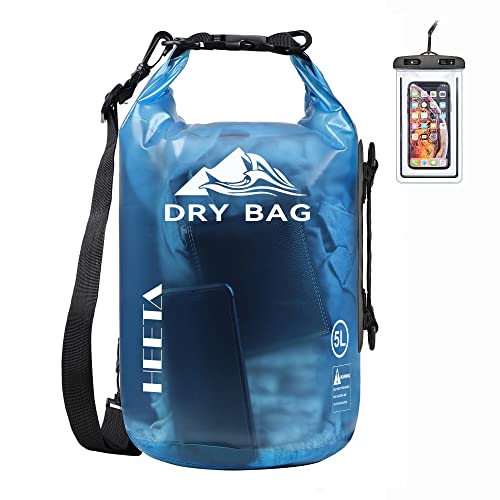
TRIWONDER Waterproof Dry Bag Backpack
Padded, adjustable straps turn the roll-top main compartment into a hands-free carry for the hike to the put-in point. A 500D PVC shell matches the durability of larger tarpaulin bags. External mesh pockets hold a water bottle or map without opening the main roll-top.
Pros
- Padded straps ease the hike to the water
- External pockets keep small items within reach
- Shares the same durable shell as larger PVC bags
Cons
- Bulkier profile than a simple duffel-style bag
- Only two larger sizes are available

IDRY Dry Bag
A PVC tarpaulin shell delivers an IPX8 rating at a lower cost than premium brand alternatives. Multi-packs bundle several sizes for sorting gear by category. A simple roll-top and clip closure keeps setup quick at the trailhead.
Pros
- Multi-pack covers several gear categories at once
- IPX8 rating matches pricier single bags
- Clip closure is quick to use
Cons
- Seams feel less reinforced than premium brands
- Thinner material shows wear faster under heavy use
Airhead Dry Bag
A reinforced clip attaches directly to kayak deck rigging or a paddleboard bungee. PVC construction handles the constant splash exposure typical of on-water paddling. Sizes from 10 to 30 liters fit a day’s gear without crowding a kayak cockpit.
Pros
- Clip attaches securely to kayak or paddleboard rigging
- Sized to fit inside a kayak cockpit without crowding
- Handles constant splash exposure on the water
Cons
- Fewer size options than general-purpose dry bags
- No backpack-style straps for carrying to shore
Before you buy
What to look for Shell material and closure type decide how a dry bag handles rocks, splashes or full submersion. PVC tarpaulin resists punctures better, while TPU-laminated nylon saves weight at a similar protection level. Roll-top seals block rain and splashes, but a submersible zipper is what full dunking really needs.
Best for river rafting and rocky put-ins Rocky riverbanks call for a puncture-resistant shell, like the Yeti Panga’s 840D nylon or Earth Pak’s 500D PVC. A submersible zipper matters most on whitewater trips where a full flip is possible. Backpack-style straps also help once a portage separates the water from the parking area.
Best for backpacking and thru-hiking Weight matters more than submersion rating on the trail, which makes the Osprey Ultralight Dry Sack a better fit than a heavier PVC bag. Smaller 3 to 10 liter sizes work well for separating electronics from clothing inside a larger pack. Roll-top sealing handles rain and stream crossings without adding bulk.
Best for kayaking, paddleboarding and day trips On-water paddling exposes gear to constant splash rather than full submersion, so a clip-mountable bag like the Airhead fits the need better than a duffel. Mid-size 10 to 30 liter bags keep a cockpit uncluttered while holding a change of clothes and a phone. A budget multi-pack from IDRY works well for sorting smaller items separately.
How they compare
| # | Model | Material | Best for | Score | Price |
|---|---|---|---|---|---|
| 1 | Earth Pak Dry Bag | 500D PVC tarpaulin | Best overall | 9.4 | Check price |
| 2 | Sea to Summit Big River Dry Bag | 420D nylon, TPU laminate | Best value | 9.1 | Check price |
| 3 | Yeti Panga 75 Submersible Duffel | 840D nylon, TPU coating | Best for extreme and expedition use | 8.8 | Check price |
| 4 | Osprey Ultralight Dry Sack | Cordura nylon, PU coating | Best for lightweight backpacking | 8.6 | Check price |
| 5 | TRIWONDER Waterproof Dry Bag Backpack | 500D PVC tarpaulin | Best for hands-free carry | 8.4 | Check price |
| 6 | IDRY Dry Bag | PVC tarpaulin | Best budget | 8.2 | Check price |
| 7 | Airhead Dry Bag | PVC | Best for kayaking and watersports | 8.0 | Check price |
Questions worth asking
What does an IPX8 rating mean on a dry bag?
IPX8 means the shell resists water intrusion beyond simple splashing, though the roll-top seal still depends on proper folding for full protection.
Are PVC or nylon dry bags better?
PVC tarpaulin resists punctures better on rocky terrain. TPU-laminated nylon saves weight for backpacking and hiking trips.
Can a roll-top dry bag survive full submersion?
A properly folded roll-top can survive brief submersion, but a submersible zipper design like the Yeti Panga handles sustained dunking more reliably.
What size dry bag fits a single day trip?
A 10 to 20 liter bag typically holds a phone, wallet, snacks and a light layer for one day out.
Dry bag vs waterproof backpack, which should I choose?
A dedicated dry bag protects contents better during full submersion. A waterproof backpack adds organization and comfort for longer hikes.
How do I seal a roll-top dry bag properly?
Squeeze out excess air, fold the top down at least three times, then clip the buckle before the bag touches water.
Can dry bags work for kayaking and paddleboarding?
Bags with a deck-mountable clip, like the Airhead Dry Bag, attach directly to rigging so gear stays secured while paddling.
How long do dry bags typically last with regular use?
A well-maintained PVC or laminated nylon bag usually lasts several seasons before seams or the closure show wear.
Is a heavier PVC bag worth it over a lighter nylon one?
A heavier PVC bag adds puncture resistance for rocky rivers, while lighter nylon suits backpackers prioritizing pack weight over rugged terrain.
The bottom line
Earth Pak Dry Bag suits the widest range of trips with its size options and IPX8-rated shell, making it the safest first purchase. Whitewater rafters and expedition paddlers facing real submersion risk should choose the Yeti Panga 75 for its sealed zipper instead. Backpackers counting ounces are better served by the Osprey Ultralight Dry Sack, which trades some ruggedness for a lighter pack.


