Weeder Tools That Pull Taproots Without Back Strain
Most yards do best with the Fiskars Deluxe Stand-Up Weeder, which pulls dandelions and thistles without kneeling. Tight spots between perennials favor the CobraHead Original Weeder, while the Radius Garden Root Slayer’s serrated blade handles compacted clay soil and thick taproots.
Homeowners with large lawns should start with the Fiskars Deluxe Stand-Up Weeder, since its four-claw steel head and foot pedal pull dandelions without bending, though the long handle gets awkward in tight garden beds.
Weed removal splits into two different jobs, standing tools for open lawns and hand tools for precision work near seedlings, so claw design, handle material, blade steel, and owner feedback on grip comfort shaped this ranking.
The shortlist, ranked

Fiskars Deluxe Stand-Up Weeder
Four tempered-steel claws driven by a foot pedal grip taproots below the surface. A spring-loaded ejector button pushes the weed off the claws so hands never touch soil. At 39 inches, the handle lets most adults work fully upright.
Pros
- Foot pedal cuts down on hand and wrist strain
- Ejector button keeps hands clean
- Claws reach roots up to 5 inches deep
Cons
- Heavier than single-hand weeders at 2.5 lbs
- Not built for weeding between closely spaced plants

Grampa’s Weeder Original Stand-Up Weed Remover
Instead of a pedal, Grampa’s Weeder uses a rocking foot lever, so users never bend or kneel to pull a weed. A hardwood dowel handle and cast-metal claw head add leverage close to the ground. Balancing on one leg while rocking the tool with the other foot takes a bit of practice.
Pros
- No kneeling or bending required at any step
- Simple mechanical design has few parts to break
- Handle length suits users with limited mobility
Cons
- Rocking motion takes practice to balance
- Wooden handle needs occasional oiling to prevent cracking

Radius Garden Root Slayer Weeder
A serrated stainless steel blade saws through compacted soil and thick taproots that bend softer hand weeders. Palm pressure spreads out through a soft NexGrip rubber handle during repeated digging motions. Its pointed tip also works as a planting tool in raised beds.
Pros
- Serrated edge cuts through clay and thick roots
- Soft-grip handle eases palm pressure
- Doubles as a small trowel for planting
Cons
- Requires kneeling or bending to use
- Blade can dull faster in rocky soil
CobraHead Original Weeder
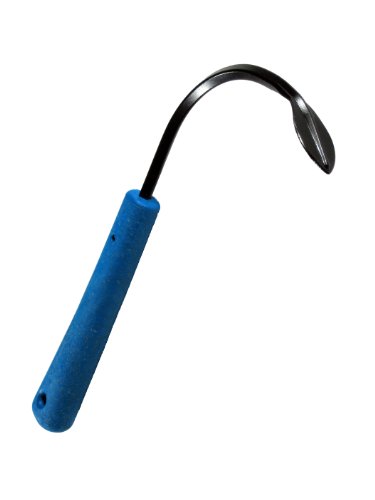
A single curved steel tine slips between seedlings without disturbing neighboring roots. Recycled tempered steel holds an edge for slicing small weeds right at the soil line. Precise control over row crops and flower beds comes from the 13-inch ash handle.
Pros
- Curved tine fits tight spaces between plants
- Tempered steel edge stays sharp with use
- Compact size stores easily in a garden bag
Cons
- Short handle requires kneeling for extended use
- Not effective on deep taproots

Garden Weasel Stand-Up Weeder
A foot pedal pairs with a twist motion that loosens soil around the root before lifting it out. Stainless steel tines resist rust after repeated contact with wet soil. A thumb-operated ejector drops the weed without any bending over.
Pros
- Twist action loosens compacted soil before pulling
- Stainless steel resists corrosion
- Costs less than most stand-up competitors
Cons
- Twist motion adds an extra step versus a straight pull
- Plastic ejector button feels less durable than metal
Yard Butler Dandelion Weeder
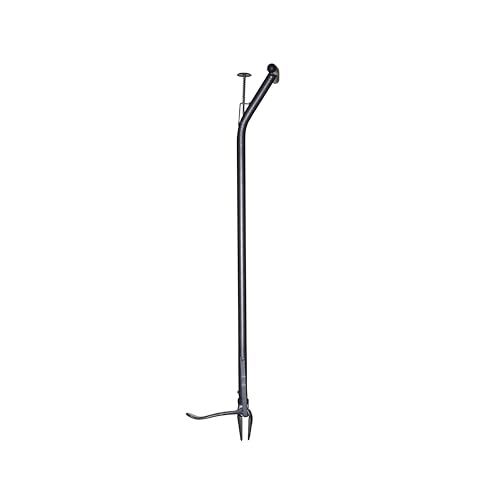
A forked steel tip and a step-down tab let a boot add leverage while prying. Weight stays low thanks to a short hardwood handle built for one-handed use. Single dandelions in lawns are its target, not large weed patches.
Pros
- Low cost compared to stand-up models
- Steel tip pries taproots without snapping them
- Compact enough for a tool belt or back pocket
Cons
- Requires bending or kneeling for each weed
- Hardwood handle can splinter after years of outdoor storage

Corona Hand Weeder CG3944
This Cape Cod-style weeder pairs a forged high-carbon steel blade with beveled edges on both sides, cutting weeds on push and pull strokes alike. A cushioned grip resists slipping in wet conditions. Its compact 12.75-inch length fits between crowded container plants and raised-bed rows.
Pros
- Dual beveled edges cut in both push and pull strokes
- Cushioned grip stays comfortable during long sessions
- Compact size suits containers and raised beds
Cons
- Blade requires kneeling or a garden stool to use
- Not designed for deep taproot removal
Side by side
| # | Model | Claw material | Best for | Score | Price |
|---|---|---|---|---|---|
| 1 | Fiskars Deluxe Stand-Up Weeder | Tempered steel | Best overall | 9.4 | Check price |
| 2 | Grampa’s Weeder Original Stand-Up Weed Remover | Hardwood dowel | Best for bad backs and knees | 9.2 | Check price |
| 3 | Radius Garden Root Slayer Weeder | Serrated stainless steel | Best for taproot removal | 8.9 | Check price |
| 4 | CobraHead Original Weeder | Recycled tempered steel | Best for precision hand-weeding between plants | 8.7 | Check price |
| 5 | Garden Weasel Stand-Up Weeder | Rotating claw tines | Best value | 8.5 | Check price |
| 6 | Yard Butler Dandelion Weeder | Forked steel tip | Best budget | 8.2 | Check price |
| 7 | Corona Hand Weeder CG3944 | Forged high-carbon steel | Best for containers and raised beds | 8.0 | Check price |
What to look for
Stand-up vs hand weeders A foot pedal or lever keeps gardeners upright while pulling weeds from lawns with stand-up weeders. Hand weeders trade that convenience for closer control near delicate plants. Scattered dandelions across a lawn usually call for a stand-up tool. Flower beds and vegetable rows favor a hand tool with a narrow tip instead.
Taproot removal for dandelions and thistles Any taproot fragment left behind lets dandelions and thistles regrow. Reaching 4 to 6 inches deep with a claw or serrated blade pulls more of the root intact. The Radius Garden Root Slayer’s serrated edge cuts through clay so the whole root comes up. Stand-up claw weeders like the Fiskars work well in looser lawn soil but struggle against compacted clay.
Precision weeding between plants and seedlings Slipping between stems without disturbing nearby roots takes a narrow tool in vegetable rows and flower beds. A curved single tine, like the CobraHead’s, targets one weed at a time. Wider claw heads risk snagging neighboring plants. Container gardens benefit from a shorter blade, such as the Corona CG3944, for working in tight soil pockets.
Choosing for bad backs, knees, or small budgets A stand-up design with a foot pedal or rocking lever matters most for gardeners with back or knee pain. Bending is removed entirely by Grampa’s Weeder through its foot-rock motion. Budget shoppers can start with the Yard Butler Dandelion Weeder, a hand tool priced below most stand-up models. Daily weeding across a large lawn gets more value from a stand-up tool despite the higher cost.
Questions worth asking
What is the best weeder for dandelions?
The Radius Garden Root Slayer Weeder cuts through compacted soil with a serrated blade, pulling dandelion taproots intact. The Fiskars Deluxe Stand-Up Weeder also works well for lawns without kneeling, using four claws and a foot pedal.
Which weeder works best for bad backs and knees?
Bending is removed entirely by Grampa’s Weeder Original Stand-Up Weed Remover through its foot-rock lever action. A close alternative is the Fiskars Deluxe Stand-Up Weeder, which uses a foot pedal instead of a rocking motion.
Can a stand-up weeder remove the entire taproot?
In loose lawn soil, stand-up claw weeders remove most of a taproot, but compacted clay can snap the root and leave a fragment behind. A serrated blade tool like the Root Slayer improves the odds of pulling the root whole.
Is a hand weeder or stand-up weeder better for flower beds?
Narrow tips on hand weeders work around stems without disturbing nearby roots, making them the better fit for flower beds. Stand-up tools carry wider claw heads that can catch on closely planted flowers.
How deep do garden weeder claws need to reach?
Sitting 4 to 6 inches below the surface, most taproot weeds need claws or blades that reach that depth. Shallow tools under 3 inches only remove surface growth and leave the root to regrow.
What is the best budget weeder tool?
Costing less than any stand-up model, the Yard Butler Dandelion Weeder still pries taproots with its forked steel tip. Kneeling is the main tradeoff for the lower price.
CobraHead vs Fiskars: which is better for tight garden spaces?
A curved single tine on the CobraHead fits tighter spaces between seedlings than the Fiskars’ four-claw head does. Open lawn areas suit the Fiskars better, where reach and leverage matter more than precision.
Can these weeders be used in rocky or clay soil?
Clay and rocky soil cut more reliably with serrated blades like the Root Slayer’s than with smooth claw tines. Standard claw weeders can bend or slip in dense, unbroken clay.
How do I stop dandelions from regrowing after weeding?
Pulling the taproot intact, rather than snapping it at a few inches down, is what prevents regrowth. Tools rated for 5 to 6 inches of reach, like the Fiskars or Root Slayer, do this more consistently than shallow forks.
Is a foot-pedal weeder worth it over a hand trowel for a large lawn?
Yes, for repeated use across many square feet. A foot-pedal design like the Fiskars or Garden Weasel spares the knees and back that a hand trowel puts under strain over dozens of weeds.
Our pick
Most lawns are best served by the Fiskars Deluxe Stand-Up Weeder, which combines a foot pedal and four-claw head to pull dandelions without kneeling. Thick clay or persistent taproots call for the Radius Garden Root Slayer’s serrated blade instead. Anyone weeding tightly spaced flower beds will get more precise results from the CobraHead Original Weeder.