Lifting Belts for Squats, Deadlifts and Heavy Days
The Dark Iron Fitness Leather Weightlifting Belt is our top pick for its suede lined leather and simple prong buckle. The Gymreapers 10mm Lever Belt is the choice for serious powerlifting, and the Element 26 Self-Locking Belt suits nylon fans who train mixed sessions.
The Dark Iron Fitness Leather Weightlifting Belt leads this roundup because it gives genuine leather stiffness for bracing without the long, punishing break in period of a thick powerlifting belt, and the suede lining stops it sliding up your ribs mid set. The Gymreapers 10mm Lever Belt is the pick if your training is squat and deadlift focused and you want maximum rigidity with a one motion closure, while the Element 26 Self-Locking Belt is the nylon option that suits mixed sessions with conditioning work in them.
Belt buying is confusing because marketing focuses on the wrong things. A belt does not support your back like a brace, it gives your abdominal wall something to push against so intra abdominal pressure rises and your spine stays stiff under load. That means a uniform width all the way around matters more than a wide tapered back panel, and thickness matters more than padding. We compared leather grade and thickness, width consistency, buckle mechanism and how quickly it can be tightened between sets, break in behaviour and whether the dimensions meet common federation rules, then weighed those against what owners report about hip digging, buckle wear and how belts hold shape after a year of use.
The shortlist, ranked
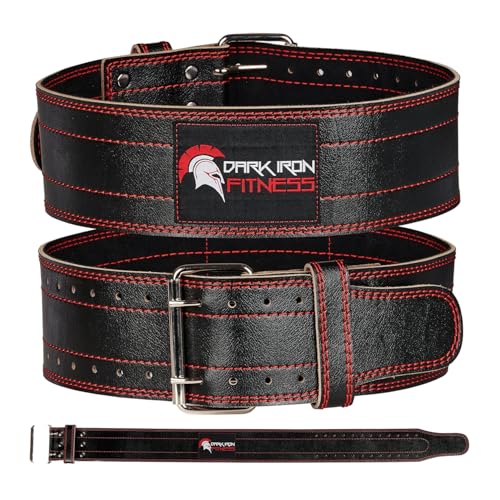
Dark Iron Fitness Genuine Leather Weightlifting Belt
This hits the balance most lifters actually want, offering real leather stiffness for bracing while remaining flexible enough to wear straight out of the box without weeks of misery. The suede lining grips your shirt so the belt stays where you set it rather than riding up into your ribs on a heavy squat. The prong buckle means adjusting between exercises takes a moment longer than a lever.
Pros
- Usable immediately without a long break in
- Suede lining stops the belt riding up
- Uniform width supports bracing all the way round
Cons
- Prong buckle is slower to adjust than a lever
- Thinner than dedicated powerlifting belts

Gymreapers 10mm Lever Weightlifting Belt
Ten millimetres of stiff leather gives you a wall to brace against under a maximal squat, and the lever closes at the same tension every time with a single motion. That repeatability is the real argument for a lever belt. The trade off is that changing tension means unscrewing and repositioning the lever plate, so it suits training where you set one notch and stay there.
Pros
- Very rigid for maximal squats and deadlifts
- Lever closes at identical tension every set
- Meets common federation dimension rules
Cons
- Adjusting tension needs a screwdriver
- Needs a break in period before it is comfortable

Element 26 Self-Locking Weightlifting Belt
Nylon belts suit sessions that mix heavy lifting with conditioning, because you can loosen and tighten them instantly and the belt does not dig when you are moving fast. The self locking buckle holds tension without the slippage that plagues cheap velcro belts. It cannot match stiff leather for absolute bracing under maximal loads, which is the expected compromise.
Pros
- Adjusts instantly between exercises
- Buckle holds tension without slipping
- Comfortable during metabolic work
Cons
- Less rigid than leather for maximal lifts
- Nylon softens over time with heavy use
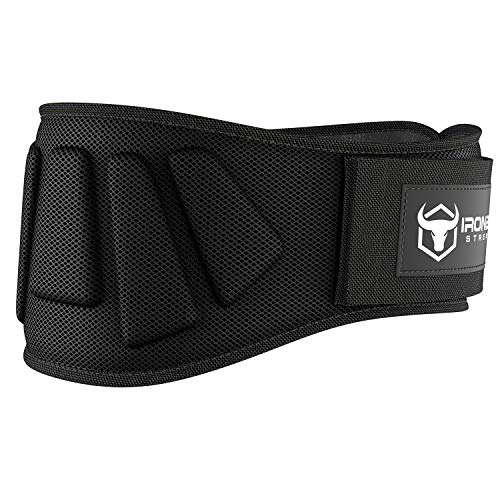
Iron Bull Strength 6-Inch Nylon Weightlifting Belt
The wider back panel spreads pressure across a larger area, which many lifters find more comfortable during higher rep work and general gym training. Double closure with velcro plus a buckle keeps it from popping open under load. Purists point out that a tapered belt gives less to brace the front against, and for maximal squats they have a point.
Pros
- Wide back panel spreads pressure comfortably
- Double closure resists popping open
- Good for higher rep training sessions
Cons
- Tapered front gives less to brace against
- Not permitted in some competition rules

Harbinger 4-Inch Padded Nylon Weightlifting Belt
Harbinger has sold this pattern for years and it remains a sensible first belt, with a padded panel that stays comfortable and a straightforward buckle. It suits general training where you want some bracing feedback rather than maximal rigidity. The padding compresses over time, so it becomes noticeably softer after a year of frequent use.
Pros
- Comfortable straight away with no break in
- Light enough to forget you are wearing it
- Sensible outlay for a first belt
Cons
- Padding compresses and softens over time
- Not stiff enough for maximal attempts

Schiek Sports Model 2004 Weightlifting Belt
Schiek contours this belt to follow the shape of the torso rather than sitting as a flat band, which reduces the digging into the hips that makes many belts unpleasant on long sessions. The nylon construction is light and the velcro closure is quick. Anyone chasing maximum rigidity for a one rep max will find it too forgiving.
Pros
- Contoured shape avoids digging into hips
- Very quick to put on and take off
- Light for long training sessions
Cons
- Too flexible for maximal bracing
- Velcro loses grip as it collects lint

RDX Weight Lifting Belt with Leather Construction
RDX gets you into a leather belt at a modest outlay, with a double prong buckle and reinforced stitching at the tension points. It is stiffer than any nylon option here and does the bracing job for most training loads. Leather quality is a step below the premium belts, so expect more variation in finish and a slightly longer break in.
Pros
- Real leather stiffness at a low outlay
- Double prong buckle spreads load evenly
- Reinforced stitching at stress points
Cons
- Finish quality varies between units
- Needs breaking in before it is comfortable
How to pick the right one
What a belt actually does A lifting belt does not hold your spine together. It gives your abdominal muscles a surface to press outward against, which raises intra abdominal pressure and stiffens the trunk so force transfers efficiently from legs to bar. That mechanism explains most of the buying advice that follows. It also means a belt only helps if you know how to brace, so learn to breathe into your stomach and push out against the belt before assuming a purchase will fix your lifts.
Width, thickness and uniform sizing For bracing, a belt of uniform width all the way round is more useful than one with a wide padded back and a narrow front, because your abs need something to push against at the front. Four inches is the standard and suits most people. Ten millimetre thickness is the powerlifting norm, while six or seven millimetres is easier to live with for general training. If you are shorter through the torso, a four inch belt can dig into the ribs and hips, and some brands offer three inch options for exactly this reason.
Prong, lever or self locking Prong buckles are adjustable across many holes and reliable, but take a few seconds to fasten. Lever buckles close at the same tension in one motion, which is excellent for repeat heavy sets, though changing tension requires unscrewing the plate. Self locking nylon buckles are infinitely adjustable and fast, which suits mixed sessions. Avoid velcro only closures for heavy work, since they can peel open under load and lose grip as they collect lint.
When to wear it and when not to Most lifters use a belt for heavy compound work above roughly eighty percent of a maximum, and train lighter sets unbelted so the trunk musculature still does its job. Wearing a belt for every warm up set and accessory exercise is unnecessary. Size it by measuring around your waist at navel height rather than using your trouser size, and buy so your working notch sits in the middle of the range, leaving room to tighten or loosen as your bracing improves.
Side by side
| # | Model | Material | Best for | Score | Price |
|---|---|---|---|---|---|
| 1 | Dark Iron Fitness Genuine Leather Weightlifting Belt | Genuine leather, suede lined | Best overall | 9.4 | Check price |
| 2 | Gymreapers 10mm Lever Weightlifting Belt | Leather | Best for powerlifting | 9.2 | Check price |
| 3 | Element 26 Self-Locking Weightlifting Belt | Nylon | Best for mixed training | 9.0 | Check price |
| 4 | Iron Bull Strength 6-Inch Nylon Weightlifting Belt | Nylon with padded back | Best for back coverage | 8.8 | Check price |
| 5 | Harbinger 4-Inch Padded Nylon Weightlifting Belt | Nylon with foam padding | Best value | 8.6 | Check price |
| 6 | Schiek Sports Model 2004 Weightlifting Belt | Nylon composite | Best for comfort | 8.3 | Check price |
| 7 | RDX Weight Lifting Belt with Leather Construction | Leather | Best budget leather | 8.0 | Check price |
Questions worth asking
Do weightlifting belts actually help?
For heavy compound lifts they do, by giving the abdominal wall something to brace against so intra abdominal pressure rises and the trunk stays rigid. They do not replace core strength, and most lifters train lighter sets without one deliberately.
What thickness lifting belt should I buy?
Ten millimetres is the powerlifting standard and gives maximum rigidity, at the cost of a break in period. Six or seven millimetres is more comfortable for general training and still noticeably stiffer than nylon. Beginners usually get on better with the thinner option.
Leather or nylon lifting belt?
Leather is stiffer and better for maximal squats and deadlifts. Nylon adjusts instantly and stays comfortable during conditioning work, which suits mixed sessions. If your training is mostly heavy barbell work, choose leather.
How tight should a lifting belt be?
Tight enough that you can only just slide a hand between belt and stomach, but loose enough to take a full breath into your abdomen and push out against it. If you cannot breathe in properly, it is too tight to be useful.
Where should the belt sit on my torso?
Generally across the middle of the abdomen, covering the area between the bottom of the ribs and the top of the hips. Exact placement varies by torso length and by lift, so adjust until you can brace hard without the edges digging in.
What size lifting belt do I need?
Measure around your waist at navel height with a tape and match that to the manufacturer size chart. Do not use your trouser size, since belts sit higher than trousers do and the numbers rarely correspond.
Are lever belts better than prong belts?
Lever belts close at identical tension every time in one motion, which is convenient for repeat heavy sets. Prong belts adjust more easily across holes without tools. Neither is stronger, it is a matter of how you train.
Should beginners use a lifting belt?
It is generally better to learn to brace without one first, so the trunk musculature develops and technique is sound. Once you are handling loads that genuinely challenge your bracing, adding a belt makes sense.
Our pick
For most people training seriously but not competing, the Dark Iron Fitness Leather Weightlifting Belt is the right buy, offering real leather stiffness with a suede lining and no punishing break in. Committed powerlifters should choose the Gymreapers 10mm Lever Belt for its rigidity and repeatable closure tension. If your sessions mix heavy lifts with conditioning, the Element 26 Self-Locking Belt is the more practical companion.