Window and Door Alarms That Actually Keep You Safe
The Ring Alarm Contact Sensor is our top pick for most households because it pairs with a full security system and offers smartphone alerts. Its main limitation is the need for a Ring bridge or hub. For a standalone option, the GE Personal Security Window and Door Alarm provides loud protection without any subscription or hub.
A window or door alarm adds an essential layer of security to your home. Whether you want a simple siren or a smart sensor that sends alerts to your phone, there is a model for you.
We looked at customer reviews and product specifications to bring you a list of reliable alarms. These devices help deter intruders and alert you to unexpected openings.
What matters most
The shortlist, ranked

Ring Alarm Contact Sensor (2nd Gen)
This sensor works with Ring Alarm systems and Alexa. It detects open and close events and triggers the siren if the system is armed. Owners report easy setup and reliable performance.
Pros
- Seamless Alexa integration
- Small and unobtrusive
- Long battery life
Cons
- Requires Ring hub
- Not standalone

GE Personal Security Window and Door Alarm
This classic two-piece alarm uses a magnetic switch to trigger a loud 120 dB siren. It is easy to install with adhesive tape or screws. Users appreciate its simplicity and affordability.
Pros
- No wiring or hub needed
- Very loud siren
- Batteries included
Cons
- No smartphone alerts
- Adhesive may weaken over time
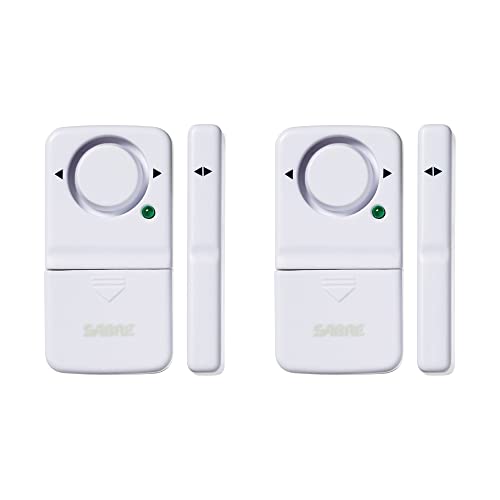
SABRE Wireless Garage Door Security Alarm
Designed specifically for garage doors, this alarm has a wider gap tolerance and a loud siren. It comes with a keypad for arming and disarming. Homeowners report it works well for workshop doors too.
Pros
- Wide gap tolerance
- Includes keypad
- Loud alarm
Cons
- Not weatherproof
- Battery not long-lasting

Aqara Door and Window Sensor
This compact sensor works with Apple HomeKit and other smart platforms via the Aqara Hub. It tracks open/close status and can trigger automations. Users like its accuracy and small design.
Pros
- HomeKit support
- Compact size
- Works with Aqara ecosystem
Cons
- Requires Aqara hub
- No built-in siren

Ecolink Z-Wave Plus Garage Door Tilt Sensor
A tilt sensor designed for garage doors, compatible with Z-Wave hubs. It mounts on the door panel and detects tilt angle. It is reliable and integrates with systems like SmartThings and Wink.
Pros
- Works with many smart hubs
- Easy to install
- Weather resistant
Cons
- No siren
- Requires hub

Doberman Security Door Window Alarm
This standalone alarm emits a powerful 130 dB siren when the magnetic contact is broken. It features a built-in chime mode. Users say it is effective at scaring off intruders.
Pros
- Extremely loud
- Chime mode for entry alerts
- No hub required
Cons
- Batteries not included
- Can be set off accidentally
Smane Wireless Door Alarm
This set includes four sensors with a remote control, offering basic security for multiple windows and doors. Each sensor has a 100 dB siren and a low-battery indicator. It is a cost-effective solution for renters.
Pros
- Covers multiple entry points
- Remote control operation
- Simple installation
Cons
- Lower volume than others
- No smart features
The lineup, side by side
| # | Model | Connectivity | Best for | Score | Price |
|---|---|---|---|---|---|
| 1 | Ring Alarm Contact Sensor (2nd Gen) | Z-Wave and Ring Bridge required | Smart home integration with Alexa | 9.4 | Check price |
| 2 | GE Personal Security Window and Door Alarm | 120 dB | Budget-friendly standalone protection | 9.0 | Check price |
| 3 | SABRE Wireless Garage Door Security Alarm | 120 dB | Garage and larger gaps | 8.8 | Check price |
| 4 | Aqara Door and Window Sensor | Zigbee via Aqara Hub | Apple HomeKit users | 8.7 | Check price |
| 5 | Ecolink Z-Wave Plus Garage Door Tilt Sensor | Z-Wave Plus | Z-Wave smart home systems | 8.6 | Check price |
| 6 | Doberman Security Door Window Alarm | 130 dB | Loud alarm with instant response | 8.3 | Check price |
| 7 | Smane Wireless Door Alarm | 100 dB | Multi-pack coverage | 8.0 | Check price |
Common questions
How do window and door alarms work?
They use a magnetic switch. When the door or window opens, the magnet separates from the sensor, triggering an alarm or notification.
Do these alarms require a subscription?
Standalone alarms do not. Smart sensors may require a hub, but many do not have monthly fees. Subscription plans are optional for professional monitoring.
Can I install them myself?
Yes, most are DIY with peel-and-stick tape or screws. No wiring is needed for battery-powered models.
Will they work on metal doors?
Metal can interfere with magnetic sensors. Some models are designed for metal, but you may need to adjust placement or choose a different type.
How loud is loud enough?
Aim for at least 100 dB. Louder alarms (120 dB) are more likely to scare off intruders and alert neighbors.
What is the range for smart sensors?
It depends on the protocol. Z-Wave and Zigbee typically have a range of 100-300 feet indoors, but walls reduce it. Your hub’s location matters.
Can I use them on windows that are open sometimes?
Yes, but if you want to open a window while armed, you may need to bypass that sensor or use a chime mode.
Do these alarms have a delay before sounding?
Some smart sensors allow you to set an entry delay. Standalone alarms usually sound immediately.
Our take
For the best overall protection with smart features, choose the Ring Alarm Contact Sensor. If you prefer a simple, budget-friendly option that requires no hub, the GE Personal Security Alarm is the way to go. For garage doors, the SABRE Garage Door Alarm is a reliable pick.