Wireless Mice That Actually Hold Up to a Full Workday
The Logitech MX Master 3S balances precision, quiet clicks, and three-device pairing better than most office mice. Anyone on a tighter budget gets similar day-to-day reliability from the Logitech M185. Wrist strain or early RSI symptoms point toward the Anker 2.4G Vertical Ergonomic Mouse instead.
Anyone switching between browser tabs, spreadsheets, and documents all day needs a mouse that keeps up without noise complaints. The Logitech MX Master 3S leads this comparison with an 8K DPI sensor that tracks reliably on glass desks and a MagSpeed wheel that speeds through long sheets in one spin. Battery life runs close to 70 days per charge, though it costs more than simpler office mice.
Click noise, battery type, and device pairing count vary more between office mice than price alone suggests. Shared offices often need silent clicks, while some desks need a vertical grip for wrist comfort instead. Listed specifications, manufacturer battery ratings, and feedback from verified owners were compared across these seven models.
The top picks, ranked

Logitech MX Master 3S
An 8K DPI Darkfield sensor pairs with clicks rated 90 percent quieter than earlier MX models here. Owners report smooth tracking on glass and other glossy surfaces. A USB-C charge lasts close to 70 days, and Logitech Flow lets the mouse control up to three paired devices.
Pros
- Near-silent clicks suit shared offices
- MagSpeed wheel scrolls fast through spreadsheets
- Works on glass and glossy desks
Cons
- Higher price than basic office mice
- Larger body may not suit small hands
Logitech Signature M650 L
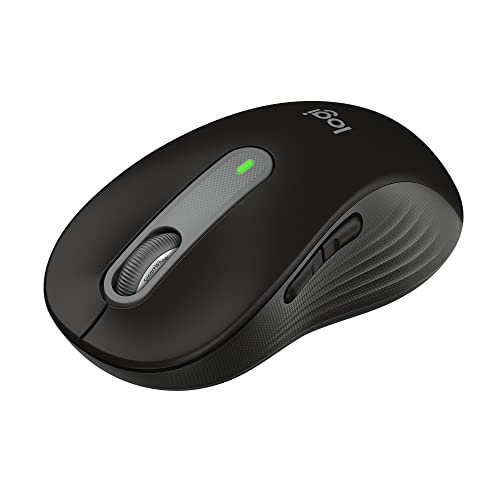
SilentTouch technology cuts click noise while preserving tactile feedback for typing-heavy days. A single AA battery reportedly runs up to 24 months, according to the listing. Larger hands generally find its rounded shape more comfortable than compact travel mice.
Pros
- Long battery life from one AA cell
- Comfortable for larger hands
- Quiet clicks for open offices
Cons
- Pairs only two devices at once
- Bulkier than compact wireless mice

Logitech M185
Basic navigation and document work suit this model’s 1000 DPI sensor well. Setup takes seconds, since a 2.4GHz nano receiver plugs into any open USB port. One AA battery lasts around 12 months based on manufacturer estimates.
Pros
- Low cost for everyday office use
- Ambidextrous shape fits either hand
- Quick plug and play setup
Cons
- No Bluetooth option available
- Single device pairing only

Logitech MX Anywhere 3S
Compact dimensions let this mouse slide into a laptop bag between meetings without adding bulk. The same 8K DPI sensor found in the MX Master 3S works across glass and fabric surfaces alike. USB-C charging delivers roughly 70 days of runtime per session.
Pros
- Small enough for a laptop bag
- Tracks well on glass surfaces
- Pairs with up to three devices
Cons
- Smaller shape may tire larger hands
- Costs more than basic travel mice

Microsoft Bluetooth Ergonomic Mouse
An angled palm rest and thumb scoop hold the wrist at a more neutral angle during long sessions. Bluetooth Low Energy connects directly without a USB receiver, freeing up a port for other peripherals. Battery life is rated near 12 months per set of batteries.
Pros
- Angled shape reduces wrist twisting
- No USB receiver needed to connect
- Thumb scoop adds grip stability
Cons
- Bluetooth only, no receiver backup
- Limited to a single paired device
Razer Pro Click Mini
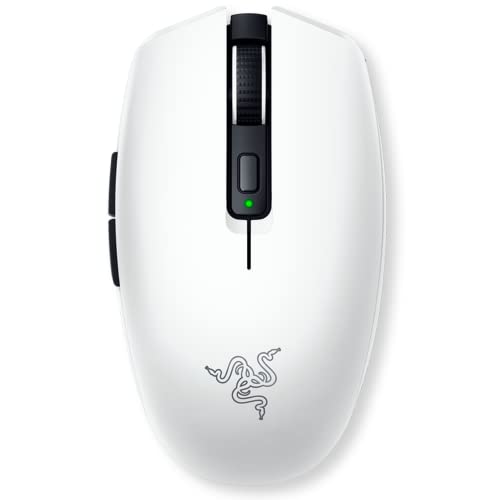
Tighter desk setups fit this mouse better than Razer’s standard Pro Click, without giving up precision. A 12000 DPI optical sensor exceeds what most office tasks require. HyperSpeed 2.4GHz wireless and Bluetooth let it switch between up to four paired devices.
Pros
- Switches between four paired devices
- Small footprint suits tight desks
- Battery rated for hundreds of hours
Cons
- Premium price for office use
- DPI far exceeds typical work needs

Anker 2.4G Vertical Ergonomic Mouse
A vertical, handshake style grip keeps the forearm in a more natural rotation than flat mice allow. DPI adjusts up to 2400 across multiple settings for different tasks. Several weeks reportedly pass between charges on the rechargeable battery.
Pros
- Vertical grip may ease wrist strain
- Adjustable DPI suits varied tasks
- Rechargeable battery avoids AA waste
Cons
- No Bluetooth connectivity option
- Single device pairing limits flexibility
Compared at a glance
| # | Model | Sensor | Best for | Score | Price |
|---|---|---|---|---|---|
| 1 | Logitech MX Master 3S | 8K DPI Darkfield | Best overall | 9.4 | Check price |
| 2 | Logitech Signature M650 L | SilentTouch quiet clicks | Best value | 9.2 | Check price |
| 3 | Logitech M185 | 1000 DPI optical | Best budget | 9.0 | Check price |
| 4 | Logitech MX Anywhere 3S | 8K DPI | Best for travel | 8.9 | Check price |
| 5 | Microsoft Bluetooth Ergonomic Mouse | Angled palm rest with thumb scoop | Best for wrist comfort | 8.7 | Check price |
| 6 | Razer Pro Click Mini | 12000 DPI optical | Best for compact desks | 8.5 | Check price |
| 7 | Anker 2.4G Vertical Ergonomic Mouse | Vertical handshake position | Best for RSI prevention | 8.3 | Check price |
What to look for
What actually changes between wireless office mice Price alone rarely explains why one mouse feels better at a desk than another. Battery type, click noise, and sensor precision matter more for daily comfort. Some models run on replaceable AA batteries, others recharge via USB-C every few weeks. Sensor DPI affects how far the cursor travels per inch of hand movement, though most office tasks need far less precision than gaming.
Bluetooth vs USB receivers vs 2.4GHz dongles Bluetooth connects directly to a laptop without occupying a USB port, which suits ultrabooks with limited ports. A dedicated 2.4GHz receiver, like Logitech’s nano dongle, often responds faster with less input lag. Some mice, including the MX Master 3S and MX Anywhere 3S, support both options and switch between them. Devices without Bluetooth, such as the M185 and Anker vertical mouse, depend entirely on their bundled receiver.
Best for wrist comfort and long work sessions Flat mice like the M185 suit short sessions but can strain wrists over a full workday. Angled designs, such as the Microsoft Bluetooth Ergonomic Mouse, rotate the palm into a more neutral position. Vertical mice go further, holding the hand in a handshake position to reduce forearm twisting. Larger hands often prefer the rounded body of the Signature M650 L over compact travel shapes.
Best for switching between a laptop and desktop Anyone switching between a laptop and a desktop benefits from multi-device pairing, which the MX Master 3S and Razer Pro Click Mini both support. Single-device mice like the M185 work fine for one dedicated workstation. Compact desks favor smaller bodies, including the MX Anywhere 3S and Pro Click Mini. Shared offices may prioritize quieter clicks over raw sensor specs, favoring the M650 L or MX Master 3S.
Good to know
What is the best wireless mouse for office use?
Based on specifications and owner feedback, the Logitech MX Master 3S offers the strongest all-around mix of precision, quiet clicks, and multi-device support for most office work.
How long do wireless mouse batteries usually last?
Battery life varies by connection type and design. AA-powered models like the Signature M650 L can run up to 24 months, while rechargeable options like the MX Master 3S last around 70 days per charge.
Is Bluetooth or a USB receiver better for a work mouse?
Neither option is universally better. A USB receiver often responds with less lag, while Bluetooth frees up a port, which matters more on laptops with limited connections.
Can one wireless mouse pair with multiple computers?
Yes, several models support this. The MX Master 3S and MX Anywhere 3S pair with up to three devices, and the Razer Pro Click Mini pairs with up to four.
Which mouse is best for wrist pain or RSI?
The Anker 2.4G Vertical Ergonomic Mouse uses a handshake grip that keeps the forearm in a more natural rotation, which may help reduce strain during long sessions.
Logitech MX Master 3S vs MX Anywhere 3S, which is better for travel?
The MX Anywhere 3S has a smaller, more compact body designed for portability, while the MX Master 3S offers a larger shape better suited to a stationary desk.
Do cheaper wireless mice like the Logitech M185 work well for typing-heavy jobs?
For basic navigation and document editing, yes. Its 1000 DPI sensor and single-device 2.4GHz connection handle everyday office tasks without added cost.
What DPI is good enough for spreadsheet and document work?
Most office tasks feel comfortable between 1000 and 4000 DPI. Higher ratings, like the Razer Pro Click Mini’s 12000 DPI, exceed what typical work requires.
Are quiet click mice worth it for shared offices?
Yes, for anyone in an open floor plan or shared workspace. The MX Master 3S and Signature M650 L both use quieter click mechanisms that cut noise without losing tactile feedback.
Which wireless mouse works without a USB receiver?
The Microsoft Bluetooth Ergonomic Mouse connects entirely through Bluetooth Low Energy, so it needs no receiver and frees up a USB port for other accessories.
The verdict
The Logitech MX Master 3S remains the strongest pick for anyone working across multiple tabs and documents daily, given its quiet clicks, three-device pairing, and roughly 70-day battery life. A tighter budget points toward the Logitech M185 instead, since it covers basic office tasks without the added cost. Wrist strain during long sessions is better served by the Anker 2.4G Vertical Ergonomic Mouse’s handshake grip.