Top Wireless Solar RV Inverters for Off-Grid Living
The Renogy 2000W Pure Sine Wave Inverter is the top pick for most RVers, offering reliable power conversion and a wireless remote that simplifies monitoring. Its main advantage is the high surge capacity that handles starting loads of small appliances. The main limitation is that the wireless remote requires a separate purchase, adding to the overall cost.
Wireless solar RV inverters have transformed how you manage power on the road. They allow you to monitor and control your inverter from your smartphone or a remote panel, eliminating the need to be physically near the unit. This convenience is essential for RVers who want real-time data on battery levels and power consumption.
When choosing the best wireless solar RV inverter, you need to consider your power needs, the type of appliances you’ll run, and how you prefer to monitor your system. We’ve analyzed specifications and owner reports to bring you the top seven models that offer a blend of performance, reliability, and wireless convenience.
The top picks, ranked

Renogy 2000W Pure Sine Wave Inverter
Renogy’s 2000W inverter delivers pure sine wave power with a high surge capacity of 4000W, making it suitable for running sensitive electronics and small appliances. Its wireless remote (sold separately) allows easy monitoring, and the unit features multiple protections for safe operation.
Pros
- High surge capacity for starting motors
- Pure sine wave output protects electronics
- Multiple safety protections (overload, overheat)
Cons
- Wireless remote sold separately
- Fans can be audible under load

Victron Energy Phoenix 1200VA Inverter
Victron’s Phoenix 1200VA inverter offers pure sine wave output and built-in Bluetooth for wireless monitoring via the VictronConnect app. It is known for its high efficiency and low idle power consumption, making it ideal for those who prioritize energy savings.
Pros
- Built-in Bluetooth monitoring
- High efficiency up to 93%
- Low standby power draw
Cons
- Lower continuous power compared to others
- Requires additional equipment for full system integration

Go Power! GP-1000HD Inverter
The Go Power! GP-1000HD is a compact pure sine wave inverter that provides 1000W continuous power and can surge to 2000W. It features a remote on/off capability and is designed for easy installation in tight spaces, making it a favorite among van lifers.
Pros
- Small footprint fits in tight spaces
- Reliable performance from a trusted brand
- Quiet operation at low loads
Cons
- Limited continuous power for larger appliances
- Wireless monitoring requires separate accessory

AIMS Power 2000W Pure Sine Inverter
AIMS Power offers a 2000W pure sine wave inverter with a remote control included in the package. It provides reliable power for most RV appliances and features a rugged design suitable for mobile environments.
Pros
- Remote control included
- High power output at a competitive price
- Good surge capacity for motor loads
Cons
- Wired remote, not truly wireless
- Some users report fan noise

Xantrex Freedom X 2000 Inverter
The Xantrex Freedom X 2000 is a pure sine wave inverter/charger that offers 2000W of power and includes a remote panel with wireless capabilities via an optional Bluetooth module. It can charge batteries and provide pass-through power, making it ideal for full-time RVers.
Pros
- Integrated battery charger
- High surge capacity
- User-friendly remote panel
Cons
- Bluetooth module requires extra purchase
- Heavier than standalone inverters
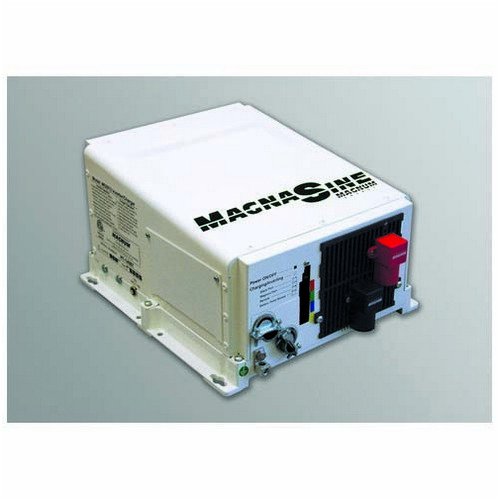
Magnum Energy MS2000 Inverter/Charger
Magnum Energy’s MS2000 is a high-quality pure sine wave inverter/charger that delivers 2000W continuous power. It features a remote control with an optional wireless interface, allowing RVers to manage power from their phones. Known for its durability and advanced battery charging profiles.
Pros
- Exceptional surge capacity
- Advanced battery charging options
- Built to last in demanding environments
Cons
- Wireless remote is expensive
- Larger and heavier than some competitors

WZRELB 3000W Pure Sine Wave Inverter
WZRELB offers a 3000W pure sine wave inverter with a remote control, providing ample power for larger RVs. It includes a digital display and supports parallel operation for even higher output. While not a top brand, it offers substantial power at an affordable price.
Pros
- High continuous power output
- Digital display for monitoring
- Parallel capability for expansion
Cons
- Wired remote not wireless
- Some users report reliability issues
What to look for
Understanding Inverter Power Ratings The continuous power rating indicates the watts an inverter can supply steadily. The surge rating is the temporary boost for starting motors or compressors. For an RV, calculate the total wattage of devices you may run simultaneously. Choose an inverter with a continuous rating at least 20% higher than your typical load.
Pure Sine Wave vs. Modified Sine Wave Pure sine wave inverters produce clean power similar to grid electricity. This is essential for sensitive electronics like laptops, CPAP machines, and some refrigerators. Modified sine wave inverters are cheaper but may cause humming or damage over time. For wireless monitoring, pure sine wave models are often preferred for compatibility with smart devices.
Wireless Monitoring Options True wireless inverters use Bluetooth or Wi-Fi to connect to a smartphone app. Others offer a wired remote with an optional wireless adapter. Consider the range and ease of use. Apps provide real-time voltage, power draw, and fault alerts, which are valuable for RVers who want to manage power from inside the cabin.
Installation and Safety Considerations Proper installation is crucial. Use appropriate gauge cables, fuses, and ventilation. Ensure the inverter is grounded and placed away from flammable materials. Some models have built-in safety features like overload protection and temperature control. Check the user manual for clearance requirements.
Compared at a glance
| # | Model | Continuous Power | Best for | Score | Price |
|---|---|---|---|---|---|
| 1 | Renogy 2000W Pure Sine Wave Inverter | 2000W | Most RVers seeking reliable performance | 9.4 | Check price |
| 2 | Victron Energy Phoenix 1200VA Inverter | 1200VA (approx. 1000W) | Tech-savvy RVers wanting advanced monitoring | 9.2 | Check price |
| 3 | Go Power! GP-1000HD Inverter | 1000W | RVers with limited space needing compact size | 8.8 | Check price |
| 4 | AIMS Power 2000W Pure Sine Inverter | 2000W | Budget-conscious buyers wanting high power | 8.7 | Check price |
| 5 | Xantrex Freedom X 2000 Inverter | 2000W | RVers needing both inverter and charger | 9.0 | Check price |
| 6 | Magnum Energy MS2000 Inverter/Charger | 2000W | Off-grid RVers needing robust power management | 9.1 | Check price |
| 7 | WZRELB 3000W Pure Sine Wave Inverter | 3000W | High power demands from multiple appliances | 8.4 | Check price |
Common questions
What is a wireless solar RV inverter?
A wireless solar RV inverter is an inverter that converts DC battery power to AC power and offers wireless remote monitoring and control via Bluetooth or Wi-Fi. This allows you to check status and adjust settings from your smartphone or tablet.
Why do I need a pure sine wave inverter?
Pure sine wave inverters produce electricity that closely matches utility power. This is essential for running sensitive electronics without interference or damage. They also ensure appliances operate efficiently and quietly.
How many watts do I need for my RV?
Calculate the total watts of the appliances you plan to run at the same time. For most RVs, a 2000W inverter is sufficient for typical loads like a microwave, TV, and small refrigerator. Larger units may need 3000W or more.
Can I use a wireless inverter without solar panels?
Yes, inverters work with any DC power source, such as batteries charged by your vehicle alternator or shore power. Solar panels are just one way to keep batteries charged.
What is surge capacity and why is it important?
Surge capacity is the maximum wattage an inverter can deliver for a short time to start appliances with motors, like a refrigerator compressor. It’s important because starting loads can be several times the running wattage.
Are wireless inverters safe to use in an RV?
Yes, when installed correctly. Follow manufacturer guidelines for ventilation, wiring, and grounding. Many models have built-in protections against overload, overheating, and short circuits.
How do I install a wireless solar RV inverter?
Installation involves connecting the inverter to your battery bank and AC wiring. Some models are simple plug-and-play, while others require professional installation. Always disconnect power before wiring and use proper fuses.
Can I monitor battery voltage remotely?
Yes, most wireless inverters display battery voltage, power consumption, and fault codes on a smartphone app. Some also allow you to turn the inverter on or off remotely.
What is the difference between a wireless inverter and one with a remote panel?
A wireless inverter uses Bluetooth or Wi-Fi to communicate with a mobile app. A remote panel is a wired device mounted on a wall that shows status and controls the inverter. Some inverters offer both options.
Do all wireless inverters come with a remote?
No, some include a wired remote, while others have wireless monitoring built-in or as an optional accessory. Check the product specifications to see what is included.
Final word
After comparing these seven wireless solar RV inverters, the Renogy 2000W Pure Sine Wave Inverter stands out as the best choice for most RVers due to its balance of power, efficiency, and brand reliability. If you prefer integrated Bluetooth monitoring and higher efficiency, the Victron Energy Phoenix is a solid alternative, but at a higher cost. For those on a budget, the AIMS Power provides good value with a remote included, though it’s not truly wireless. Ultimately, prioritize your power needs and feature preferences to make the final decision.