Woodworking Benches Built to Hold Up Under Real Work
The Sjoberg Elite 1500 is the best overall bench for serious hand-tool work thanks to its twin vises and beech top. The Kreg Mobile Project Center is the best value for versatility, and the WEN WB4723 is the budget pick that still offers a solid clamping surface.
The Sjoberg Elite 1500 is the bench most dedicated woodworkers should aim for, with its dense beech top and dual vises built for planing and joinery. The Kreg Mobile Project Center offers the most flexible value, and the WEN WB4723 is a capable budget starter.
Woodworking benches differ in ways that decide whether a project is a pleasure or a fight: worktop hardness, vise quality, sheer weight, and whether the bench stays put or wanders. We compared seven well-known benches on those points using their construction specifications and what owners report, so you can pick one suited to your space and the work you do.
The best picks, ranked

Sjoberg Elite 1500 Workbench
The Sjoberg Elite 1500 is a European-style hardwood bench built around a thick, dense beech top and twin vises that grip stock firmly for planing and joinery. Its solid mass keeps it planted when you push a hand plane hard. Owners describe it as a lifetime bench that handles serious hand-tool work without flexing or creeping.
Pros
- Dense, durable beech worktop
- Two capable hardwood vises
- Heavy and rock steady
Cons
- Premium price
- Heavy and hard to relocate

Kreg Mobile Project Center KWS1000
The Kreg Mobile Project Center folds flat, rolls where you need it, and doubles as a clamping table with Kreg’s clamp-friendly top. It is not a traditional joiner’s bench but earns its keep as a versatile work surface for cutting, assembly, and finishing. Owners with tight garages value how it stores away and adapts to many tasks.
Pros
- Folds and stores easily
- Very versatile work surface
- Great value for the features
Cons
- Lighter than a hardwood bench
- Not built for heavy planing
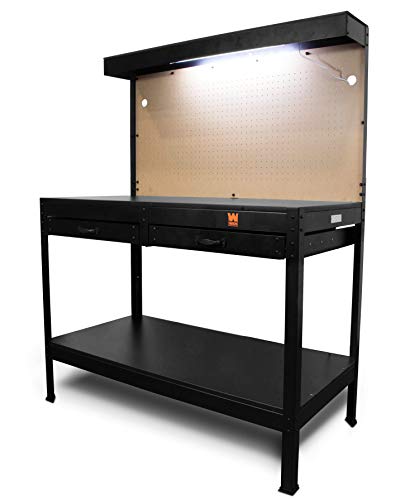
WEN WB4723 Workbench
WEN’s WB4723 gives beginners a solid entry bench with a work surface, built-in vise, and a lower shelf for storage, all at a wallet-friendly price. It handles light joinery and general shop tasks without wobble when loaded. Owners setting up a first shop appreciate getting a usable bench without a big outlay.
Pros
- Affordable starter bench
- Includes a working vise
- Handy lower storage shelf
Cons
- Lighter duty than pro benches
- Vise less refined than hardwood models

Sjoberg Nordic Plus 1450 Workbench
The Nordic Plus 1450 brings Sjoberg’s hardwood quality in a more compact, shop-friendly footprint with a front vise and dog holes for holding stock. It suits woodworkers who want a real joiner’s bench but lack room for a full-size model. Owners praise the balance of quality and manageable size.
Pros
- Real hardwood bench in less space
- Solid front vise and dogs
- Sturdy for its size
Cons
- One vise rather than two
- Still a notable investment

Seville Classics UltraHD Wood Top Workbench
The Seville UltraHD pairs a thick solid-wood top with a stout steel frame rated for heavy loads, making it a rugged general shop bench. It is aimed more at tool work and assembly than fine hand-tool joinery, but the surface takes abuse well. Owners like the industrial stability and high weight capacity.
Pros
- Very high load capacity
- Rugged steel frame
- Thick, durable wood top
Cons
- No traditional woodworking vise
- Heavy to assemble and move

Olympia Tools Multi-Purpose Workbench
Olympia’s multi-purpose workbench offers a wide work surface, a built-in vise, and storage below, serving as an affordable do-everything bench for mixed shop tasks. It is a jack of all trades rather than a specialist joiner’s bench. Owners use it as a dependable general station for repairs, assembly, and light woodworking.
Pros
- Flexible for many jobs
- Includes vise and storage
- Reasonable price
Cons
- Jack of all trades, master of none
- Less refined for fine joinery

Grizzly Industrial Hardwood Workbench
Grizzly’s hardwood workbench delivers a classic joiner’s layout with a solid top, front and end vises, and dog holes at a price below the European premium brands. It gives hand-tool woodworkers the holding options they need without the top-tier cost. Owners see it as a strong value entry into traditional bench work.
Pros
- Traditional twin-vise layout
- Good value for hardwood
- Proper dog-hole holding
Cons
- Fit and finish trails premium brands
- Vises may need tuning
How they compare
| # | Model | Top | Best for | Score | Price |
|---|---|---|---|---|---|
| 1 | Sjoberg Elite 1500 Workbench | Solid beech | Best overall | 9.4 | Check price |
| 2 | Kreg Mobile Project Center KWS1000 | Composite clamping surface | Best value | 9.0 | Check price |
| 3 | WEN WB4723 Workbench | Solid wood surface | Best budget | 8.8 | Check price |
| 4 | Sjoberg Nordic Plus 1450 Workbench | Solid birch | Best for small shops | 8.7 | Check price |
| 5 | Seville Classics UltraHD Wood Top Workbench | Solid wood over steel frame | Best heavy-duty top | 8.5 | Check price |
| 6 | Olympia Tools Multi-Purpose Workbench | Wood work surface | Best all-purpose bench | 8.3 | Check price |
| 7 | Grizzly Industrial Hardwood Workbench | Solid hardwood | Best traditional value | 8.0 | Check price |
How to choose
Start with the worktop The top is the heart of a bench. Dense hardwoods like beech and birch, used on the Sjoberg models, resist dents and take the pounding of chisel and mallet work. Composite or thinner tops suit assembly and tool tasks but flex under heavy planing. Match the surface to whether you do fine joinery or general shop work.
Weigh the vises carefully Vises are how a bench holds your stock, and a good front and end vise combination, with dog holes between them, lets you clamp boards for planing, sawing, and joinery. Benches like the Sjoberg Elite and Grizzly offer twin vises, while lighter tables rely on a single vise or clamp-based holding. Decide how much you need to grip long boards.
Mass keeps a bench honest A heavy bench stays put when you push a plane or saw, while a light one skates across the floor and fights you. Solid hardwood benches win here through sheer weight, whereas folding or mobile units trade stability for portability. If you do a lot of hand-tool work, favor mass over convenience.
Consider space and mobility A full European bench is a permanent fixture, so measure your shop before committing. If space is tight or you need to move the bench aside, a compact model like the Nordic Plus 1450 or a folding Kreg Project Center makes sense. Be honest about your room and how often you will need to relocate the bench.
Frequently asked questions
What is the best wood for a workbench top?
Dense hardwoods like beech, birch, and maple are favored because they resist denting and stand up to mallet and chisel work. Benches such as the Sjoberg Elite use solid beech for exactly this reason. Softer or composite tops suit assembly more than heavy hand-tool use.
Do I need both a front and end vise?
For hand-tool woodworking, a front and end vise paired with dog holes gives you the most holding options, letting you clamp boards flat for planing. If you mostly do assembly or power-tool work, a single vise or clamp-based system like the Kreg setup may be enough.
How heavy should a woodworking bench be?
Heavier is generally better for hand work, since mass keeps the bench from sliding when you plane or saw. Solid hardwood benches can weigh well over a hundred pounds by design. If you need to move the bench often, you will trade some of that stability for portability.
Are folding workbenches good for woodworking?
They are good for assembly, cutting, and finishing, and they save space, but they are not built for heavy planing or joinery. A folding unit like the Kreg Mobile Project Center is a versatile companion rather than a replacement for a solid joiner’s bench.
What height should a workbench be?
A common guideline is a top height around your wrist when standing, which suits general work, though hand-tool users often prefer a slightly lower bench for planing leverage. Many quality benches sit in a comfortable standing range; confirm the listed height fits your build.
Can a beginner start with a budget bench?
Yes. A budget bench like the WEN WB4723 gives newcomers a usable surface and vise to learn on without a big outlay. You can upgrade to a hardwood joiner’s bench later once you know what kind of work you do most.
What are dog holes used for?
Dog holes hold bench dogs or clamps that, combined with a vise, pin a workpiece flat against the top for planing or sanding. Benches with dog holes and a matching end vise, like the Sjoberg models, give you far more holding flexibility.
Should I get a steel-frame or all-wood bench?
Steel-frame benches like the Seville UltraHD offer high load capacity and rugged stability for general shop and tool work, while all-wood joiner’s benches excel at hand-tool woodworking with proper vises. Choose based on whether you do assembly and heavy tasks or fine joinery.
Final word
If you are serious about hand-tool woodworking, the Sjoberg Elite 1500 is the bench to build a shop around, with its dense beech top and twin vises earning their keep for years. Space-conscious makers get flexible value from the folding Kreg Mobile Project Center, while beginners can start confidently on the affordable WEN WB4723 and upgrade later.


