Workshop Upgrades That Make a Small Shop Work Better
The Milwaukee PACKOUT rolling tool box is our top pick because storage that moves solves the biggest problem in a shared garage. The DEWALT DXV10P wet dry vacuum handles the dust every other tool creates, and Bessey KRE3550 parallel clamps are the accessory woodworkers wish they had bought sooner.
The Milwaukee PACKOUT rolling tool box leads this roundup because in most home workshops the limiting factor is not tools but where they live, and a stackable system that rolls out of the way changes how a shared garage works. The DEWALT DXV10P wet dry vacuum is the next thing to buy since every other tool in the shop creates mess, and Bessey KRE3550 parallel clamps are the item woodworkers most consistently say they should have bought earlier.
Accessories are where a workshop actually becomes usable, and the ones worth buying are those that solve a recurring irritation rather than adding another capability. A shop where every tool has a home, dust gets collected at source and heavy machines roll aside gets more done in an hour than a better equipped one that has to be excavated first. We compared time saved, floor space freed, air quality improvement and build quality, then weighed those against what owners report after a year of regular use.
What we recommend
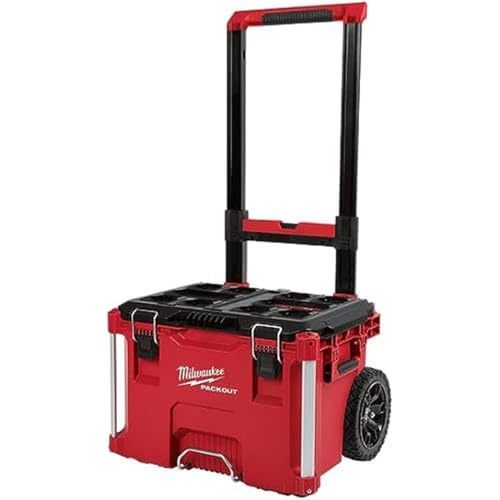
Milwaukee PACKOUT Rolling Tool Box
This is the base of a modular system, so it starts as a rolling box and grows into a stack of cases that lock together and move as one unit. In a garage that doubles as a car space, being able to wheel the entire tool collection to a wall is worth more than any single tool upgrade. The system is not cheap once you add boxes, and the components are heavy before you put anything in them.
Pros
- Whole tool collection moves in one trip
- Expands as the tool collection grows
- Handles rough ground and job site abuse
Cons
- System cost adds up quickly with extra boxes
- Cases are heavy before tools go in

DEWALT DXV10P 10 Gallon Wet Dry Vacuum
A wet dry vacuum does two jobs, namely collecting dust at the tool through a hose and cleaning up everything that escapes, which is why it earns permanent floor space. Ten gallons is a sensible capacity for a home shop, big enough to avoid constant emptying without being awkward to move. It is loud in use, as all shop vacuums are, and hose adapters for various tool ports are usually a separate purchase.
Pros
- Collects dust at source and cleans up after
- Capacity suits a home shop without constant emptying
- Handles wet spills that a dust extractor cannot
Cons
- Loud enough to need ear protection
- Tool port adapters usually cost extra

Bessey KRE3550 K Body REVO Parallel Clamp
Parallel clamps keep their jaws square to the bar under pressure, which is the difference between a glued panel that comes out flat and one that comes out twisted. Bessey’s K Body design is the reference point, with a wide jaw face that spreads pressure and a handle that applies real force without slipping. They cost several times what a basic F clamp does, and you always need more than you bought.
Pros
- Jaws stay square so glue ups come out flat
- Wide faces spread pressure without denting
- Stand upright which speeds up assembly
Cons
- Several times the cost of basic clamps
- Heavy to hold in one hand during setup
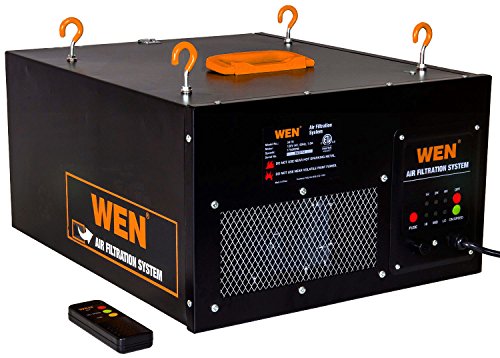
WEN 3410 3-Speed Remote-Controlled Air Filtration System
The dust that matters most is the fine airborne fraction you cannot see, which hangs in a shop for hours after the tools stop and settles on everything overnight. A ceiling mounted air filter cycles the room volume repeatedly and the timer lets it run after you leave. It is not a substitute for extraction at the tool, and the hanging unit needs solid ceiling joists and clear headroom.
Pros
- Removes the fine dust that lingers in the air
- Timer keeps it running after you leave
- Remote saves climbing to change speed
Cons
- Needs solid ceiling mounting and headroom
- Does not replace extraction at the tool

DEWALT DWX726 Rolling Miter Saw Stand
A mitre saw on a rolling stand with extension arms turns an awkward machine into something you wheel out, use and put away, which is exactly what a shared garage needs. The material supports and stops make repeat cuts accurate without measuring each one. It is heavy, and mounting brackets need setting up for your particular saw before the first use.
Pros
- Wheels a heavy saw out of the way after use
- Stops make repeat cuts fast and accurate
- Material supports handle long stock
Cons
- Heavy to lift into a vehicle
- Bracket setup takes time initially

Bora Portamate PM-4000 Heavy Duty Mobile Base
A mobile base under a table saw, band saw or planer means a small shop can have full sized machines and still park a car, because everything rolls to a wall when the work stops. The adjustable frame fits a wide range of machine footprints and locks solidly so the tool does not wander during use. Assembly is fiddly and getting a heavy machine onto the base for the first time needs two people.
Pros
- Full sized machines in a shop that also parks a car
- Adjusts to fit most machine footprints
- Locks firmly so the machine stays put in use
Cons
- Assembly is fiddly and time consuming
- Loading a heavy machine needs two people

Rockler Bench Cookie Work Grippers
These small grippy pucks lift a workpiece off the bench so you can sand, rout or finish edges without clamping, and they stop the piece sliding while you work. For the outlay they solve a daily irritation better than almost anything else in a shop. They will not hold against heavy lateral force, so they complement clamps rather than replacing them.
Pros
- Lifts work clear for finishing and sanding edges
- Stops pieces sliding without clamping
- Very low cost for the time saved
Cons
- Will not hold against heavy sideways force
- Grip surface collects dust and needs cleaning
Side by side
| # | Model | Type | Best for | Score | Price |
|---|---|---|---|---|---|
| 1 | Milwaukee PACKOUT Rolling Tool Box | Rolling modular tool box base | Best overall | 9.4 | Check price |
| 2 | DEWALT DXV10P 10 Gallon Wet Dry Vacuum | 10 gallon | Best dust control | 9.2 | Check price |
| 3 | Bessey KRE3550 K Body REVO Parallel Clamp | Parallel jaw bar clamp | Best clamps | 9.0 | Check price |
| 4 | WEN 3410 3-Speed Remote-Controlled Air Filtration System | Three speed settings | Best air quality upgrade | 8.8 | Check price |
| 5 | DEWALT DWX726 Rolling Miter Saw Stand | Rolling mitre saw stand | Best for saw setup | 8.6 | Check price |
| 6 | Bora Portamate PM-4000 Heavy Duty Mobile Base | Adjustable mobile machine base | Best for moving machines | 8.3 | Check price |
| 7 | Rockler Bench Cookie Work Grippers | Non slip work support pucks | Best budget upgrade | 8.0 | Check price |
Before you buy
Fix storage before buying more tools The most common reason a home shop feels cramped is not a shortage of space but tools with no home, so every project starts with clearing the bench. Modular boxes, wall systems and shadow boards all solve this, and the specific system matters less than committing to one and putting everything away in it. Owners consistently report that organised storage changes how often they start a short project, which is where most workshop time is actually spent.
Deal with dust at three levels Effective dust control works in layers. Capture at the tool with a vacuum or extractor catches the bulk, a shop vacuum handles what falls to the floor, and an air filter removes the fine airborne fraction that neither catches. Fine dust is the part that matters for health, since it stays airborne for hours. Add a decent respirator to the setup, because no amount of extraction makes a shop dust free during heavy sanding.
Mobility is what makes a small shop viable A garage that also holds a car cannot dedicate floor space to fixed machines, so mobile bases and rolling stands are what make full sized tools possible at all. Put the heaviest machines on bases first, keep a clear route to the door, and arrange the layout so the two tools you use together can be positioned near each other. Locking casters matter, since a machine that shifts during a cut is dangerous as well as inaccurate.
Clamps and workholding repay themselves Every woodworker underestimates how many clamps they need and how much time poor workholding wastes. Parallel clamps for panel glue ups, F clamps for general work, and non slip supports for sanding and finishing between them cover most situations. Buying clamps in pairs as projects require them spreads the outlay, and good clamps last decades so they are rarely a purchase you repeat.
Common questions
What workshop accessory makes the biggest difference?
Storage that keeps tools accessible, followed by dust collection. Both change how often you actually start work, which matters more than any individual capability. Beyond that, clamps and workholding save the most time on a typical project.
Do I need a dust extractor and a shop vacuum?
Not necessarily both. A shop vacuum with the right adapters handles tool port extraction and floor cleanup in a home shop. A dedicated dust extractor moves more air at lower pressure, which suits large machines like planers and table saws, so it becomes worthwhile once you own those.
Are air filtration systems worth it?
In an enclosed shop, yes. Fine dust stays airborne long after work stops and settles on every surface. An air filter running during and after a session noticeably reduces that. It supplements extraction and a respirator rather than replacing either.
How many clamps do I need?
More than you think. A reasonable starting point for panel work is four parallel clamps and a handful of F clamps, then add pairs as projects demand. Buying in pairs matters because clamps almost always work opposite each other to balance pressure.
Are mobile bases safe for heavy machines?
Yes when the base is rated for the machine weight and the casters lock. Check the load rating against the machine, keep the base adjusted so the machine sits centred, and lock all casters before switching on. A machine that rocks during a cut needs the base checked before use.
What is the best way to organise hand tools?
Whichever system you will actually use. Wall mounted holders keep frequently used tools visible and quick to grab, drawers protect edges from dust, and modular boxes travel to a job. Most shops end up combining them, keeping daily tools on the wall and everything else in cases.
Should I buy a workbench or build one?
Building one is a good early project and lets you match the height and layout to your work. Buying makes sense if you need it immediately. Either way, prioritise mass and flatness over features, since a bench that racks or flexes undermines every operation performed on it.
How do I improve workshop lighting cheaply?
Linked LED shop lights are inexpensive and transform a garage, particularly at a colour temperature around 4000 to 5000 kelvin. Add a task light at the bench and at any machine where you need to see a cut line, since overhead light alone always leaves shadows where your body blocks it.
Our take
If you buy one thing, make it the Milwaukee PACKOUT rolling box, because tools with a home and a way to move them changes how often the shop gets used at all. The DEWALT DXV10P is the next purchase, since dust is what every other tool leaves behind. Add Bessey KRE3550 parallel clamps in pairs as projects demand and the shop will feel meaningfully better equipped without another machine.