Workshop Table Saws That Earn Their Space
The SawStop PCS175-TGP236 tops our list for its flesh sensing safety and reliable performance, ideal for serious woodworkers who prioritize protection. Its main limitation is the higher cost compared to other saws.
A workshop table saw is the centerpiece of any serious woodworking shop. It handles rip cuts, crosscuts, and sheet goods with speed and accuracy. Choosing the right one can be overwhelming with so many options.
We analyzed specifications and owner feedback to bring you a curated list of the best workshop table saws. From hybrid to cabinet models, these saws offer the power and precision needed for demanding projects.
The top picks, ranked

SawStop PCS175-TGP236 1.75 HP Professional Cabinet Saw
This 1.75 HP cabinet saw features SawStop’s patented flesh sensing technology that stops the blade within milliseconds upon contact. Owners report excellent cut quality and a robust fence system. It is a heavy, stable machine that handles demanding work. The dust collection is above average for a cabinet saw. It comes with a 36 inch T glide fence system and a cast iron table.
Pros
- Flesh sensing safety technology
- Accurate and smooth cutting
- Excellent fence system
Cons
- Premium price
- Requires dedicated 220V for full power
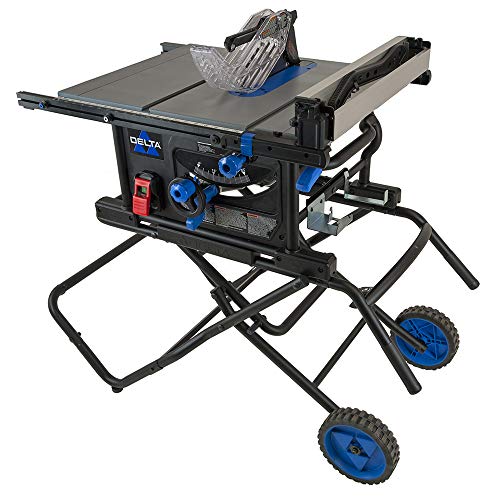
Delta 36-725T2 15 Amp 10 In. Professional Saw
This hybrid saw offers a cast iron table and a powerful 15 amp motor. It has a 30 inch fence system with rack and pinion for easy adjustments. Owners appreciate its smooth cuts and the ability to handle sheet goods. It includes a mobile base for portability. Dust collection is decent with a 2.5 inch port.
Pros
- Great value for hybrid saw
- Cast iron table
- Rack and pinion fence
Cons
- Dust collection could be better
- Some users report blade alignment issues
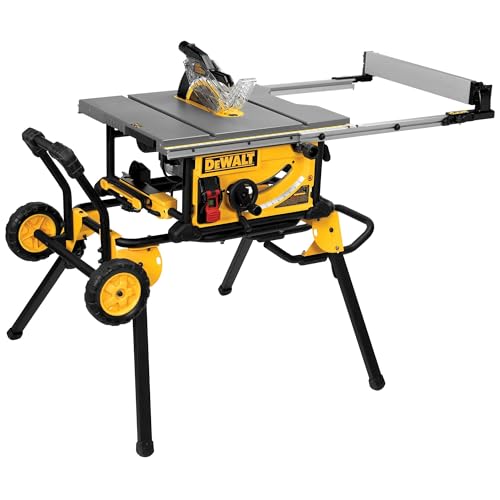
DEWALT 7491X 10 In. Jobsite Table Saw
This jobsite saw from DEWALT is known for its portability and accuracy. It features a 15 amp motor and a rack and pinion fence system that stays square. The telescoping fence rails allow for quick adjustments. Owners report that it can handle most workshop tasks. It has a rolling stand with a wheel for easy transport.
Pros
- Highly portable with stand
- Accurate fence
- Easy to set up and use
Cons
- Smaller table limits large sheet cuts
- Dust collection is basic
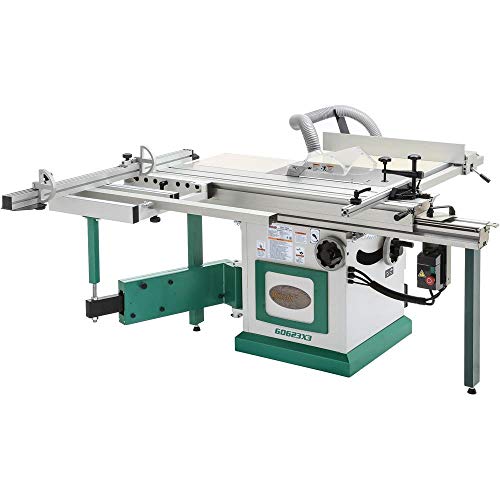
Grizzly G0771Z 10 In. 3 HP Hybrid Saw
This Grizzly hybrid saw offers a 3 HP motor that runs on 220V. It has a cast iron table and a T square fence system. Owners report strong, smooth cutting and good dust collection with the included 4 inch port. It is a heavy machine that requires assembly. The price is attractive for the power offered.
Pros
- Powerful 3 HP motor
- Large cast iron table
- Good dust collection
Cons
- Requires 220V outlet
- Heavy and requires assembly

Shop Fox W1837 10 In. 2 HP Hybrid Table Saw
This Shop Fox hybrid saw runs on 110V and features a 2 HP motor. It has a cast iron table and a cam lock fence. Owners note that it is relatively quiet and produces accurate cuts. The dust collection is adequate with a 4 inch port. It includes a mobile base.
Pros
- Quieter than many comparable saws
- Runs on standard 110V
- Mobile base included
Cons
- Fence may need adjustment
- Some plastic parts on blade guard
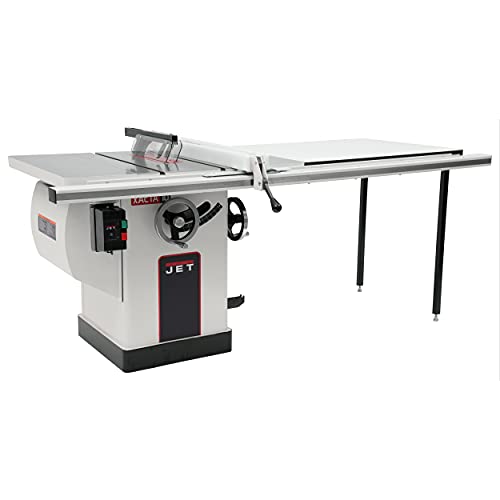
Jet JWTS-10 10 In. 1.5 HP Table Saw with XACTA Fence
This Jet saw is known for its XACTA fence system that locks parallel and stays square. It has a 1.5 HP motor and a cast iron table. Owners report good cut quality and easy adjustments. It is a contractor style saw with a steel stand. Dust collection is decent with a 4 inch port.
Pros
- Excellent XACTA fence
- Stable and precise
- Easy to adjust
Cons
- Motor is less powerful than others
- Stand may require reinforcement

Bosch 4100-09 10 In. Worksite Table Saw
This Bosch jobsite saw features a gravity rise stand that folds and unfolds easily. It has a 15 amp motor and a square lock rip fence. Owners appreciate the portable design and accurate cuts. It includes a smart guard system. Dust collection is basic but functional.
Pros
- Gravity rise stand is convenient
- Accurate fence
- Compact and portable
Cons
- Smaller table size
- Not as powerful as hybrid saws
The lineup, side by side
| # | Model | Motor | Best for | Score | Price |
|---|---|---|---|---|---|
| 1 | SawStop PCS175-TGP236 1.75 HP Professional Cabinet Saw | 1.75 HP, 110V/220V | Best overall for safety and precision | 9.4 | Check price |
| 2 | Delta 36-725T2 15 Amp 10 In. Professional Saw | 15 Amp, 120V | Best value hybrid saw | 9.0 | Check price |
| 3 | DEWALT 7491X 10 In. Jobsite Table Saw | 15 Amp, 120V | Best portable workshop saw | 8.8 | Check price |
| 4 | Grizzly G0771Z 10 In. 3 HP Hybrid Saw | 3 HP, 220V | Best for power and affordability | 8.7 | Check price |
| 5 | Shop Fox W1837 10 In. 2 HP Hybrid Table Saw | 2 HP, 110V | Best for quiet operation | 8.5 | Check price |
| 6 | Jet JWTS-10 10 In. 1.5 HP Table Saw with XACTA Fence | 1.5 HP, 110V | Best for accurate fence system | 8.4 | Check price |
| 7 | Bosch 4100-09 10 In. Worksite Table Saw | 15 Amp, 120V | Best for gravity rise stand | 8.2 | Check price |
How to choose
Motor Power and Voltage Consider the motor’s horsepower and voltage. A 1.5 to 2 HP motor on 110V is sufficient for most hobbyists. A 3 HP motor on 220V provides more power for demanding cuts but requires an outlet. Choose based on your electrical setup and cutting needs.
Table Size and Material A cast iron table offers stability and vibration dampening. Larger tables support bigger workpieces and sheet goods. Measure your workshop space and typical project sizes to determine the appropriate table dimensions.
Fence System Quality The fence is crucial for rip cut accuracy. Look for a fence that locks parallel and stays square. Rack and pinion or T glide systems are reliable. Test the fence adjustment mechanism for smoothness.
Safety Features Blade guards and riving knives are standard. Some saws offer flesh sensing technology that stops the blade on contact, which adds significant safety. Consider these features, especially if you are a beginner or work with distractions.
Common questions
What is the difference between a contractor saw and a cabinet saw?
A contractor saw has a motor that hangs off the back and an open stand. A cabinet saw has an enclosed cabinet and a heavier motor mounted inside. Cabinet saws are more stable and have better dust collection.
How much power do I need for a workshop table saw?
For general woodworking, 1.5 to 2 HP on 110V is adequate. For heavy ripping or thick hardwoods, 3 HP or more on 220V is better. Consider your typical projects and electrical availability.
Can I use a jobsite table saw as a stationary saw?
Yes, but jobsite saws have smaller tables and less power. They are less stable for large panels. For a dedicated workshop, a hybrid or cabinet saw is better.
How important is dust collection?
Good dust collection keeps your shop clean and reduces health risks. Cabinet saws with 4 inch ports are better. You can also add a dust collector or cyclone separator.
What is a riving knife and why is it important?
A riving knife is a metal plate behind the blade that prevents kickback by keeping the kerf open. It is a crucial safety feature and should be used on all cuts.
Are SawStop saws worth the extra cost?
If you value injury prevention, SawStop’s technology is worth it. Many users report peace of mind. For budget conscious, other saws with safety features are available but lack the flesh sensing.
Can I cut sheet goods with a table saw?
Yes, but you may need an outfeed table or support. A larger table and a good fence help. For large sheets, a track saw might be more convenient.
How often should I align my table saw?
Check alignment every few months or after moving the saw. Misalignment can cause binding and inaccurate cuts. Follow the manufacturer’s instructions for adjusting the blade and fence.
Our take
For a safe and precise workshop saw, invest in the SawStop PCS175-TGP236. If your budget is tighter, the Delta 36-725T2 offers great value. For portability, the DEWALT 7491X is the best choice.