Workshop Wood Routers That Earn Their Space
For most workshop woodworkers, the Bosch 1617EVSPK tops the list because it combines a powerful 2.25 HP motor with smooth variable speed and both fixed and plunge bases. Its main limitation is that the plunge base can feel a bit bulky for some users. Owners report it excels in router tables and handheld use, making it a versatile workhorse.
A workshop router is a cornerstone tool for joinery, edge profiling, and decorative work. With so many models available, choosing one can be overwhelming. We compared the most popular routers that serious hobbyists and professionals use.
Our focus is on routers that deliver clean cuts, offer reliable depth adjustment, and have enough power for demanding tasks like raised panel bits. We also considered ergonomics and dust collection, because those affect how often you reach for the tool.
What we recommend

Bosch 1617EVSPK
This kit includes both fixed and plunge bases, along with a 2.25 HP motor that delivers smooth power. The variable speed dial lets you match RPM to bit size, and the soft start prevents kickback. Owners praise the precision of the micro-adjustable depth ring.
Pros
- Two bases for different tasks
- Smooth variable speed with soft start
- Precise depth adjustments
Cons
- Plunge base is somewhat heavy
- Wrench storage is inconvenient
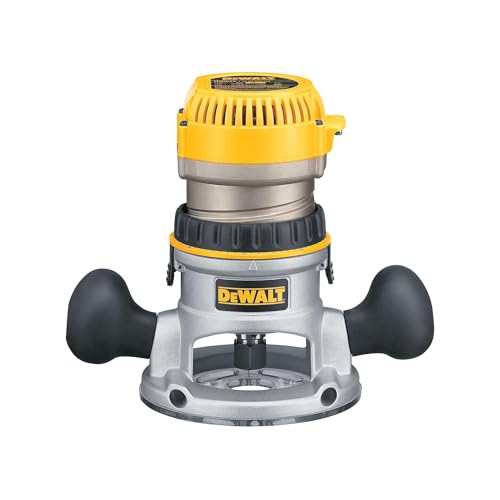
DEWALT Fixed Base Router DW616
The DW616 is a compact fixed base router that excels at edge work and light joinery. Its 1.75 HP motor is enough for most bits, and the micro-fine depth adjustment is accurate. Users like the clear sub-base for visibility.
Pros
- Lightweight and easy to control
- Accurate depth adjustment
- Clear base for visibility
Cons
- Not for heavy table use
- No variable speed

PORTER-CABLE 6902PK
This is a classic combo kit that has been a workshop staple for years. The 2 HP motor is suitable for most tasks, and the fixed and plunge bases offer flexibility. While it lacks variable speed, many users run it at one speed successfully.
Pros
- Affordable combo kit
- Durable construction
- Both bases included
Cons
- No variable speed
- Bit changes require two wrenches
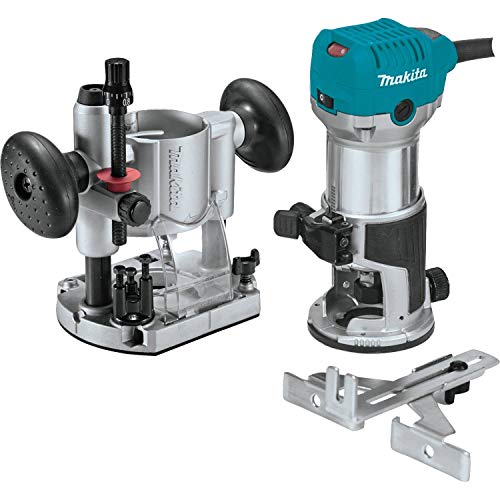
Makita RT0701CX7
If you need a router for laminate trimming and light work, this compact unit is excellent. It has a 1.25 HP motor that spins up to 30,000 RPM, and it comes with a fixed base and plunge base. Its small size allows for easy one-handed use.
Pros
- Very lightweight and compact
- Variable speed control
- Interchangeable bases
Cons
- Not enough power for large bits
- Only 1/4 inch collet

Triton TRA001
The Triton TRA001 is a 3.25 HP monster designed for table mounting. It features a unique above-table height adjustment, so you can fine-tune without reaching under the table. The electronic speed control maintains torque even under load.
Pros
- Powerful motor for large bits
- Convenient above-table adjust
- Built-in dust extraction port
Cons
- Very heavy and bulky
- Not suitable for handheld use

Milwaukee 5616-20
This fixed base router is designed with a powerful 2.25 HP motor and a unique dust management system that captures debris effectively. It has a variable speed dial and a clear sub-base. Owners report that it stays clean and cuts smoothly.
Pros
- Excellent dust collection
- Smooth variable speed
- LED light illuminates work area
Cons
- Only fixed base included
- Pricey for the features
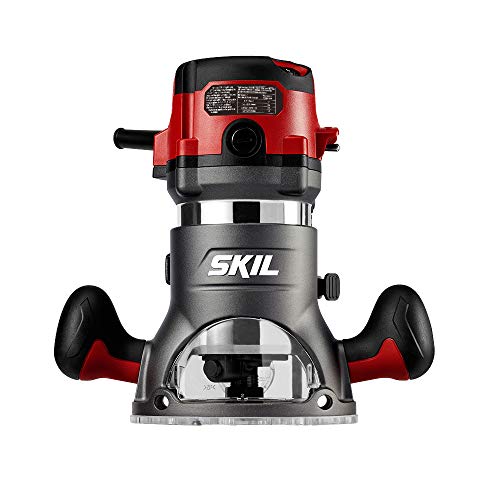
SKIL RT1323-10
The SKIL RT1323 is a beginner-friendly router with a 2 HP motor and a unique LED light ring that illuminates the cut. It has a fixed base with a micro depth adjustment that is easy to read. The dust extraction adapts to a shop vac.
Pros
- Very affordable
- Easy depth adjustment
- LED light is helpful
Cons
- Only 1/4 inch collet
- No plunge base option
The lineup, side by side
| # | Model | Motor Power | Best for | Score | Price |
|---|---|---|---|---|---|
| 1 | Bosch 1617EVSPK | 2.25 HP | Best overall for versatility | 9.4 | Check price |
| 2 | DEWALT Fixed Base Router DW616 | 1.75 HP | Best for handheld use | 9.1 | Check price |
| 3 | PORTER-CABLE 6902PK | 2 HP | Best budget combo | 8.7 | Check price |
| 4 | Makita RT0701CX7 | 1.25 HP | Best compact trim router | 9.0 | Check price |
| 5 | Triton TRA001 | 3.25 HP | Best for router tables | 9.2 | Check price |
| 6 | Milwaukee 5616-20 | 2.25 HP | Best for dust collection | 8.9 | Check price |
| 7 | SKIL RT1323-10 | 2 HP | Best for beginners | 8.4 | Check price |
How to choose
Common questions
What is the difference between a fixed base and a plunge router?
A fixed base router has a set depth that you adjust before routing. It is simpler and often more accurate for edge work. A plunge router has springs that allow you to lower the bit into the workpiece while the motor is running, which is necessary for cuts that start in the middle, like mortises. Many routers come with both bases.
Do I need variable speed on my router?
Variable speed is important when you use bits larger than 1 inch in diameter. Large bits need slower speeds to prevent overheating and burning. If you only use small bits, a fixed speed router might be fine, but variable speed adds versatility and is a standard feature on many quality routers.
What is the most common collet size?
The most common collet sizes are 1/4 inch and 1/2 inch. Most routers that take 1/2 inch shank bits also come with a 1/4 inch collet adapter. For heavy routing, 1/2 inch shanks are preferred because they are more rigid and less likely to break. Trim routers typically use only 1/4 inch collets.
Can I use a router without a router table?
Yes, many routing tasks can be done handheld, such as edge profiling, trimming laminates, and cutting grooves. Router tables are helpful for precision work and for using large bits, but they are not mandatory. Handheld routers give you more flexibility and control for many projects.
What is the advantage of a plunge base over a fixed base?
A plunge base allows you to start a cut in the middle of a workpiece, which is essential for making mortises, grooves, and stopped cuts. It also lets you control the depth of cut gradually. Fixed bases are easier to adjust and generally more stable for edge work, but they cannot perform plunge cuts.
How do I choose the right router bit for my project?
Choose a bit based on the profile you want to create. Straight bits are for grooves and dadoes, flush trim bits for trimming edges, and round over bits for decorative edges. Consider the shank size and the material you are cutting. Always use sharp bits and feed the router against the rotation.
Is a 2 HP router enough for most woodworking?
Yes, a 2 HP router is enough for most woodworking tasks, including routing dovetails, cutting grooves, and edge profiling. For large raised panel bits or heavy table use, you might want more power, but 2 HP is a good balance of power and manageability for handheld use.
What safety precautions should I take when using a router?
Always wear safety glasses and hearing protection. Use a router bit that is sharp and properly secured. Never force the router; let it cut at its own pace. Keep your hands away from the bit and use a push stick when routing small pieces. Unplug the router when changing bits.
Can I use a router to cut dovetails?
Yes, routers are commonly used to cut dovetails, especially with a dovetail jig. A router with a dovetail bit and a jig can produce precise dovetail joints. Some routers have a plunge base, which is helpful for this task. Practice on scrap wood to get the settings right.
What is the ideal speed for routing?
The ideal speed depends on the bit size. Small bits (up to 1 inch) can run at high speeds (20,000 to 25,000 RPM). Larger bits need slower speeds (8,000 to 12,000 RPM) to prevent burning. Check the router’s settings and the bit manufacturer’s recommendations for best results.
Final word
If you want a single router that does almost everything, the Bosch 1617EVSPK is the best choice. It has the power, precision, and two bases to handle both handheld and table work. For dedicated table use, the Triton TRA001 is unmatched for its above-table adjustment and raw power. Beginners on a budget will appreciate the SKIL RT1323-10 for its ease of use and LED light.


