Yoga Mat Grip and Cushioning Compared Across Seven Brands
For most practitioners, the Manduka PRO is the strongest overall yoga mat, pairing a dense closed-cell surface with a lifetime guarantee. The Liforme Original leads on alignment grip. Need a budget option for a new home practice? The BalanceFrom GoYoga covers the basics for less.
The Manduka PRO stands out as the best all-around yoga mat here, thanks to dense support and a lifetime guarantee, with the Liforme Original close behind for grip-focused practice.
Picking a mat is trickier than it looks, since grip, thickness, weight and eco-materials all pull in different directions, and a mat that feels great for restorative flow can feel too soft for standing balance work. We compared published specifications, material construction and long-term owner reports across price ranges, then matched each mat to the practice style it actually suits.
Our top picks

Manduka PRO
Long-term practitioners often settle on this mat and stop shopping. Owners consistently report that the dense 6mm closed-cell surface stays flat and supportive for years, and the lifetime guarantee reflects that confidence. Real weight and a slick out-of-box surface are the trade-offs.
Pros
- Dense cushioning that resists denting over years of use
- Backed by a lifetime guarantee
- Closed-cell surface blocks sweat and bacteria
Cons
- Heavy and less travel-friendly
- Needs a break-in period to reach full grip

Liforme Original
Grip drives the design here, built on a grooved natural-rubber base and a printed alignment system that guides hand and foot placement. Owners who sweat heavily report it stays planted where PVC mats slide. It runs heavier than most travel mats and, like most natural rubber, wears sooner than dense PVC.
Pros
- Exceptional grip even in sweaty sessions
- Alignment markers help refine posture
- Made from natural and eco materials
Cons
- Heavier than typical travel mats
- Rubber surface wears faster than dense PVC

Lululemon The Mat 5mm
A polyurethane top layer gets grippier as it absorbs moisture, which is why hot-yoga practitioners favor this mat. Owners report reliable traction without a towel in heated rooms. Its porous top can stain without regular cleaning, and it weighs more than a dedicated travel mat.
Pros
- Grip improves as you sweat
- Comfortable 5mm cushioning
- Antimicrobial additive resists odor
Cons
- Porous top can stain without regular cleaning
- Heavier than dedicated travel mats

JadeYoga Harmony
Natural rubber gives this mat an open, tacky grip that many practitioners prefer for barefoot traction. JadeYoga states a tree is planted for each mat sold. Expect a distinct rubber smell out of the box, and skip it entirely if you have a latex sensitivity.
Pros
- Strong natural tackiness underfoot
- Made from renewable natural rubber
- Comfortable middle-ground thickness
Cons
- Noticeable rubber odor when new
- Not suitable for latex-sensitive users

Gaiam Premium
Printed designs and a 6mm cushion make this an approachable everyday mat for new practitioners easing into a routine. Owners like the comfort and light weight for the outlay. Its textured PVC surface can feel slick once you sweat, so pair it with a towel for hot classes.
Pros
- Comfortable 6mm cushioning for the outlay
- Light and easy to roll and carry
- Wide choice of printed designs
Cons
- Grip fades once you start sweating
- Less durable than dense premium mats

BalanceFrom GoYoga
A thick, forgiving mat ships with a carry strap, making it an easy entry point for home practice. Owners appreciate the extra cushioning for joints during floor work. Soft foam compresses under standing poses and wears faster than premium builds, so treat it as a starter mat.
Pros
- Thick cushioning is kind to knees and wrists
- Very light and includes a carry strap
- Approachable entry-level choice
Cons
- Foam compresses under standing balance poses
- Wears faster than premium mats
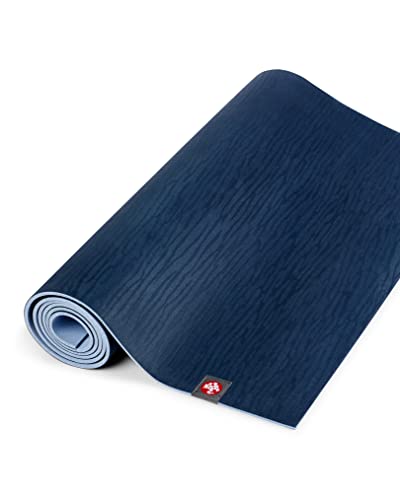
Manduka eKO
Natural tree rubber combines with a grippy top texture built to withstand heavy use. Owners report it resists the surface flaking that plagues cheaper rubber mats. It runs heavier and pricier than foam options, and the initial rubber odor fades over the first couple of weeks.
Pros
- Durable rubber build resists flaking
- Strong grip for dynamic flows
- Made from natural tree rubber
Cons
- Heavy for regular transport
- Initial rubber odor takes weeks to fade
What to look for
How thick should a yoga mat be? Most all-purpose mats land between 4mm and 6mm. Thinner mats near 4mm give a stable, grounded feel for standing balance and travel easier, while 6mm and above cushions knees and wrists during floor and restorative work. Joint sensitivity favors thicker mats, and stability-focused practice favors thinner ones.
Grip and material, explained Grip comes from both texture and material. Closed-cell PVC like the Manduka PRO blocks moisture and needs a short break-in, natural rubber offers immediate tackiness, and polyurethane tops actually grip better as they absorb sweat, which suits hot yoga. Heavy sweaters should prioritize rubber or polyurethane over smooth PVC.
Durability and long-term value A mat that lasts years often costs less over time than replacing cheap foam every season. Dense PVC mats resist denting and can carry lifetime guarantees, while natural-rubber mats grip beautifully but wear sooner. Foam budget mats feel comfortable at first but compress and flake under heavy use.
Matching a mat to your practice There is no single best mat, only the best mat for a given style. Hot and vinyasa practitioners should prioritize sweat-activated grip, restorative and beginner practitioners benefit from extra cushioning, and travelers want a light, foldable design. Deciding your primary practice first simplifies the rest of the choice.
How they stack up
| # | Model | Thickness | Best for | Score | Price |
|---|---|---|---|---|---|
| 1 | Manduka PRO | 6mm | Best overall | 9.4 | Check price |
| 2 | Liforme Original | 4.2mm | Best for grip | 9.1 | Check price |
| 3 | Lululemon The Mat 5mm | 5mm | Best for hot yoga | 8.9 | Check price |
| 4 | JadeYoga Harmony | 4.8mm | Best eco option | 8.6 | Check price |
| 5 | Gaiam Premium | 6mm | Best for beginners | 8.4 | Check price |
| 6 | BalanceFrom GoYoga | 6.35mm | Best budget pick | 8.2 | Check price |
| 7 | Manduka eKO | 5mm | Best for durability | 8.0 | Check price |
Common questions
What is the best yoga mat overall?
Based on specifications and long-term owner reports, the Manduka PRO is the best overall yoga mat. Its dense closed-cell cushioning stays supportive for years, and its lifetime guarantee is why so many long-term practitioners choose it and stop shopping.
What is the best yoga mat for hot yoga?
Look for a moisture-activated top layer. The Lululemon The Mat 5mm and other polyurethane-topped mats grip better as they absorb sweat, holding traction in heated rooms where smooth PVC surfaces tend to slide.
How thick should my yoga mat be?
Most practitioners are well served by 4mm to 6mm. Choose closer to 4mm for stability in standing and balance poses, and 6mm or thicker for extra cushioning on sensitive knees and wrists during floor work.
Are expensive yoga mats worth it?
Often yes, for regular practice. Premium mats hold their cushioning and grip much longer, so cost per year can end up lower than repeatedly replacing cheap foam mats. Occasional practice suits a budget mat like the BalanceFrom GoYoga just fine.
What is the best eco-friendly yoga mat?
Natural-rubber mats are the greener choice. Both the JadeYoga Harmony and Manduka eKO use natural rubber, and JadeYoga plants a tree with each mat sold. Natural rubber is unsuitable for anyone with a latex sensitivity.
Why is my new yoga mat slippery?
New closed-cell mats like the Manduka PRO need a short break-in period before reaching full grip. Wiping the surface with a damp cloth and using it for a few sessions helps. A mat that stays slick even while sweating likely lacks a moisture-activated surface.
How do I clean a yoga mat?
Wipe it with a damp cloth and a mild solution after sweaty sessions, then let it air-dry flat or hanging out of direct sunlight. Harsh chemicals can degrade natural rubber and porous polyurethane tops over time, so avoid them.
Which yoga mat is best for beginners?
New practitioners tend to appreciate comfort and forgiveness. The Gaiam Premium offers a cushioned 6mm surface at an approachable outlay, and the BalanceFrom GoYoga adds even more padding plus a carry strap.
Do I need a mat towel?
Only if your mat lacks sweat-activated grip. Hot-yoga mats with polyurethane or rubber tops usually grip well on their own, while smooth PVC and foam mats benefit from a towel once sweat starts.
PVC vs natural rubber yoga mats: which grips better?
Natural rubber grips immediately and suits barefoot traction from the first use. Closed-cell PVC needs a short break-in period but then resists moisture and bacteria better over the mat’s life.
Our pick
The Manduka PRO remains the mat we point most practitioners toward, combining dense long-lasting support with a lifetime guarantee that few rivals match. If grip is your priority, the Liforme Original is the stronger pick, and the BalanceFrom GoYoga proves you can start a solid home practice without overspending.


