How to Choose a Coffee Maker That Fits Your Routine
To choose a coffee maker, match the type to how you drink coffee: a drip machine for daily pots, a single-serve brewer for speed, or a French press for hands-on control. Then weigh carafe size, brew temperature, ease of cleaning, and whether you want a built-in grinder or a programmable timer.
Buying a coffee maker seems simple until you see how many types there are, from basic drip machines to pod brewers, pour-over kits and full espresso stations. The right one depends far more on your morning routine than on any spec sheet.
This guide walks through the choices that actually change your daily cup, so you can spend on what you will use and skip the features that sit unused. If you would rather jump straight to specific models, see our roundup of the best coffee makers.
Start with how you actually drink coffee
Before comparing brands, be honest about your habits. A machine that suits a household brewing a full pot every morning is the wrong tool for one person who wants a single cup on the way out the door. Decide this first and the rest gets easier.
- One or two cups on your own schedule points to a single-serve brewer or a French press.
- A shared pot for a household or guests points to a classic drip machine with a carafe.
- Milk drinks like lattes and cappuccinos point toward an espresso machine instead.
- Black coffee you sip slowly is well served by a thermal carafe that holds heat for hours.
The main types explained
Each style trades convenience against control, and knowing the trade-offs saves you from buyer’s remorse.
- Drip: the everyday workhorse. Fill the reservoir, add grounds, and it brews a pot with almost no effort.
- Single-serve pod: fast and tidy, brewing one cup at a time with little cleanup, though pods add ongoing cost.
- Pour-over: a manual method that gives you full control over the brew for a clean, bright cup.
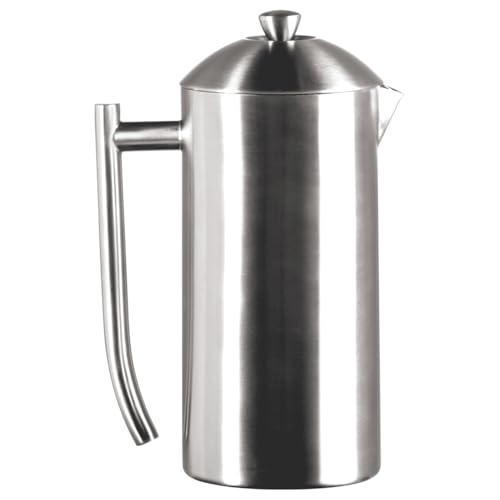
- French press: simple, cheap and rich, with no paper filter, though it leaves a little sediment.
- Espresso: concentrated shots and the base for milk drinks, with the steepest learning curve.
If you are torn between a daily drip machine and a proper espresso setup, our comparison of drip vs espresso machines lays out the real differences in cost, effort and results.
Carafe size and capacity
Capacity is easy to overlook and annoying to get wrong. Drip carafes are usually measured in cups, and those cups are smaller than a mug, so read the numbers with that in mind.
- A four to five cup machine suits singles and couples who want a small fresh pot.
- A ten to twelve cup machine covers families and anyone who entertains or refills through the morning.
- A thermal carafe keeps coffee hot without a warming plate, which avoids the stewed, bitter taste that builds up on a hot glass pot.
When you are unsure, size up slightly. A larger machine can brew a small batch, but a small one cannot stretch to a crowd.
Brew temperature and cup quality
Temperature is where cheap and capable machines separate. Good extraction happens when water hits the grounds at roughly 195 to 205 degrees Fahrenheit. Budget brewers often run cooler, which leaves coffee weak and sour no matter how much you use.
If flavour matters to you, look for a machine that mentions this temperature range or carries a certification for correct brewing. A built-in grinder helps too, since coffee is at its best within minutes of grinding, though it does add parts to clean.
Features worth paying for, and ones to skip
A handful of extras genuinely improve daily life, while others just pad the box.
- Worth it: a programmable timer so coffee is ready when you wake, a thermal carafe, an auto shut-off for safety, and a removable water reservoir for easy filling.
- Nice but not essential: a built-in grinder, a small and bold strength setting, and a pause-and-serve feature.
- Easy to skip: app connectivity, voice control, and a wall of one-touch programs you will never use.
Cleaning and long-term upkeep
Every coffee maker needs regular attention, so factor it into the decision. Machines with a removable brew basket and a dishwasher-safe carafe are far easier to live with. Descaling to remove mineral buildup is unavoidable in hard water areas, and a simpler design makes it quicker.
Before you commit, it helps to know the routine you are signing up for, covered in how to clean a coffee maker and how to descale a coffee maker. You can also browse our full range of Home & Kitchen guides for related buying help.
Ready to pick one?
Compare types, capacity and brew quality across our current top-rated machines.
Frequently asked questions
What type of coffee maker is best for beginners?
A basic drip machine is the easiest place to start. You add water and grounds, press a button, and it brews a full pot with no technique to learn. Single-serve pod machines are just as simple if you only want one cup at a time.
How many cups should my coffee maker make?
Match it to your household. A four to five cup machine suits one or two people, while a ten to twelve cup model covers a family or guests. Remember that a carafe cup is smaller than a mug, so the headline number brews less than it sounds.
Is a built-in grinder worth it?
It can be, since coffee tastes best soon after grinding and an all-in-one machine is convenient. The trade-off is more parts to clean and a higher price. Many people prefer a separate grinder they can control and clean on its own.
Does brew temperature really matter?
Yes. Water around 195 to 205 degrees Fahrenheit extracts coffee properly, while cooler machines leave it weak and sour. If flavour is a priority, look for a model that mentions this range or carries a brewing certification.
Glass or thermal carafe, which is better?
A thermal carafe keeps coffee hot without a warming plate, so it avoids the stewed, bitter taste a glass pot develops after sitting on heat. Glass carafes are cheaper and let you see the level, but the coffee cools or overcooks faster.
How much should I spend on a coffee maker?
Enough to get correct brew temperature, a carafe size that fits your household, and easy cleaning. Beyond that, extra spending mostly buys convenience features like grinders and timers, which are worth it only if you will actually use them.