Vintage Film Cameras That Still Deliver Stunning Shots
For most shooters, the Canon AE-1 Program stands out as the top pick: it blends classic 70s design with easy automation, making it ideal for beginners and enthusiasts who want great results without fussing over manual settings. Its main limitation is that it’s so popular that prices are often higher than comparable vintage cameras.
Film photography is enjoying a major revival, and vintage cameras offer a tactile, rewarding experience that digital just can’t match. Whether you’re a seasoned shooter or new to film, there’s a classic camera that fits your style.
We’ve sifted through the most beloved models to bring you a curated list of vintage film cameras that are still widely available and reliable. From fully manual workhorses to automated point-and-shoots, these cameras have stood the test of time.
What matters most
The shortlist, ranked

Canon AE-1 Program
The Canon AE-1 Program is a legendary 35mm SLR from the late 1970s. It offers a Program mode that sets both shutter speed and aperture, making it easy to pick up and shoot. It also has aperture-priority and full manual modes for creative control. Its bright viewfinder and wide range of FD lenses make it a versatile choice.
Pros
- Program mode is great for beginners
- Wide selection of affordable FD lenses
- Bright viewfinder with clear display
Cons
- Prone to light seal deterioration
- Popularity drives up prices
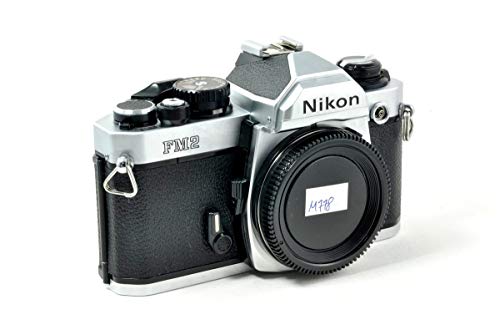
Nikon FM2
The Nikon FM2 is a fully mechanical SLR beloved for its rugged build and top shutter speed of 1/4000s. It doesn’t rely on batteries for shutter operation, so it works even when the battery dies. It’s a favorite among photojournalists and street shooters for its reliability and superb Nikon F-mount lenses.
Pros
- Fully mechanical shutter
- Titanium shutter is durable
- Accepts all Nikon F-mount lenses (with caveats)
Cons
- No built-in light meter (FM2n has one, but earlier models don’t)
- Manual only, not for beginners

Olympus OM-1
The Olympus OM-1 is a compact 35mm SLR that revolutionized camera design in the 1970s. It’s small, light, and quiet, making it a perfect travel companion. It features a bright viewfinder and a complete system of Zuiko lenses known for their sharpness.
Pros
- Extremely compact and light
- Quiet shutter
- Zuiko lenses are excellent
Cons
- Meter uses obsolete mercury battery (adapters available)
- Light seals often need replacement

Pentax K1000
The Pentax K1000 is a simple, mechanical 35mm SLR that was the standard camera for photography classes for decades. It offers a no-frills manual exposure experience with a match-needle meter. It’s built like a tank and is often the cheapest entry point into film photography.
Pros
- Very affordable
- Simple and durable
- Accepts inexpensive K-mount lenses
Cons
- Meter is not as sensitive in low light
- Basic features, no aperture priority

Minolta X-700
The Minolta X-700 is a 35mm SLR that offers aperture-priority and program modes, making it ahead of its time in the early 1980s. It’s compatible with a wide range of Minolta MD lenses, many of which are affordable. It also has a bright viewfinder and a sleek design.
Pros
- Program and aperture-priority modes
- Great lens selection
- Lightweight
Cons
- Electronics can fail (capacitor issue)
- Plastic body feels less robust

Olympus Mju II (Stylus Epic)
The Olympus Mju II, also known as the Stylus Epic in the US, is a compact 35mm point-and-shoot camera that’s famous for its high-quality 35mm f/2.8 lens. It’s weather-resistant, easy to use, and produces surprisingly sharp images. It’s a great everyday carry for film enthusiasts.
Pros
- Sharp f/2.8 lens
- Weather resistant
- Extremely portable
Cons
- Auto only, no manual control
- Prices have skyrocketed in recent years

Canon Sure Shot AF-35M
The Canon Sure Shot AF-35M is a classic autofocus compact from the early 1980s. It features a distinctive pop-up flash and a sharp 38mm f/2.8 lens. It’s a fun and reliable camera that gives you the vintage look with modern autofocus and auto exposure.
Pros
- Autofocus works well
- Built-in pop-up flash
- Unique vintage design
Cons
- Plastic body may crack
- Battery type is harder to find
The lineup, side by side
| # | Model | Type | Best for | Score | Price |
|---|---|---|---|---|---|
| 1 | Canon AE-1 Program | 35mm SLR | Best for beginners and enthusiasts who want automatic exposure | 9.4 | Check price |
| 2 | Nikon FM2 | 35mm SLR | Best for purists who want a fully mechanical metal body | 9.2 | Check price |
| 3 | Olympus OM-1 | 35mm SLR | Best for compact and lightweight travel shooting | 9.0 | Check price |
| 4 | Pentax K1000 | 35mm SLR | Best for students and those on a strict budget | 8.7 | Check price |
| 5 | Minolta X-700 | 35mm SLR | Best for those wanting advanced features on a budget | 8.6 | Check price |
| 6 | Olympus Mju II (Stylus Epic) | 35mm compact point-and-shoot | Best for pocketable point-and-shoot with a sharp lens | 8.4 | Check price |
| 7 | Canon Sure Shot AF-35M | 35mm compact point-and-shoot | Best for retro styling with autofocus convenience | 8.2 | Check price |
Frequently asked questions
What is the best vintage film camera for a beginner?
The Canon AE-1 Program is often recommended for beginners because it offers a Program mode that automatically sets shutter speed and aperture, making it easy to get properly exposed photos without knowing manual settings. It also has a fully manual mode for learning. Its user-friendly design and abundant FD lenses make it a great choice.
Are vintage film cameras reliable?
Reliability depends on the camera’s condition and maintenance. Mechanical cameras like the Nikon FM2 or Pentax K1000 can last decades if well cared for. Electronic cameras may have issues with aging capacitors, but many are still working. It’s wise to have a camera serviced by a professional if you plan to use it regularly.
Do I need to know how to develop film?
No, you don’t need to develop film yourself. Many local photo labs and mail-in services develop and scan film. However, learning to develop black and white film at home is part of the fun for some enthusiasts. It’s not required to enjoy shooting film.
Can I use modern lenses on vintage film cameras?
Some vintage cameras can accept modern lenses with adapters, but it depends on the lens mount. For example, Nikon F-mount lenses from the 1970s are compatible with many modern Nikon digital cameras, and vice versa. However, using modern lenses on vintage cameras often requires manual focus and aperture control. It’s usually easier to stick with vintage lenses designed for the camera.
What type of film should I use?
For general photography, 35mm ISO 400 film is a versatile choice. It works well in various lighting conditions. For bright daylight, ISO 100 film offers finer grain. For low light, ISO 800 or 1600 can be used. Different films have different color or black and white characteristics, so experiment to find your favorite.
How do I know if a vintage camera has a light meter issue?
If the camera has a light meter, compare its readings with a known good light meter or a digital camera. If the readings are significantly off, the meter may need adjustment or the battery may be dead. Many vintage cameras rely on old mercury batteries that are no longer sold, but you can use modern alternatives with voltage regulators.
What are common problems with vintage film cameras?
Common issues include deteriorated light seals, sticky or slow shutter speeds, haze or fungus on lenses, and malfunctioning electronics. Light seals can be replaced with kits, and shutters can be serviced. Fungus can often be cleaned from lenses, but it may leave etching. Always inspect a camera before buying if possible.
Is it worth buying a vintage film camera in 2026?
Absolutely. Film photography is enjoying a renaissance, and vintage cameras offer a unique shooting experience that many find more engaging than digital. They are also relatively affordable compared to modern digital cameras, and film costs are manageable if you shoot selectively. Plus, the look of film is unmatched.
How do I focus a manual SLR?
Manual SLRs use a split-image or microprism focusing screen. Look through the viewfinder and turn the focus ring until the split image aligns or the image appears sharp. Some cameras also have a focus aid in the form of a circle that ‘winks’ when in focus. Practice makes perfect.
What is the difference between a rangefinder and an SLR?
A rangefinder camera uses a separate viewfinder window that shows the frame lines and a focusing patch. An SLR shows exactly what the lens sees through a mirror. Rangefinders are typically quieter and more compact, but SLRs allow accurate framing for close-ups and macro. Vintage rangefinders like the Leica M are legendary but expensive.
The verdict
If you’re ready to dive into film photography, we recommend starting with the Canon AE-1 Program because its automatic modes make the transition smooth, and it has a huge selection of affordable lenses. For those who want a purely mechanical camera that will last a lifetime, the Nikon FM2 is an outstanding investment. If you prefer a compact point-and-shoot, the Olympus Mju II is a top contender, though you’ll pay a premium for its reputation. Whichever you choose, you’ll enjoy the timeless craft of shooting film.


