How to Choose a 12 Inch Pie Plate That Bakes Evenly
Emile Henry’s Modern Classics Pie Dish wins overall. Glazed ceramic colors the sides evenly and moves straight to the table. Pyrex Easy Grab Glass Pie Plate is the value pick, since you can watch the base brown. USA Pan’s aluminized steel pan crisps a bottom crust fastest.
Emile Henry Modern Classics Pie Dish takes the top spot. Dense glazed ceramic holds a steady heat, so the sides color before the crimped edge burns, and the dish looks like serveware rather than bakeware. Watching the base matters more to newer bakers, which puts Pyrex Easy Grab Glass Pie Plate second. For the crispest bottom crust, USA Pan’s aluminized steel pan wins outright.
Shopping at this diameter is awkward because 9 and 9.5 inches dominate the shelves, and larger sizes hide inside professional bakeware ranges. Material decides more than most buyers expect: a soggy bottom is a heat transfer problem, not a recipe problem. We compared stated diameters listing by listing, plus depth, base browning behavior, rim design, oven to table looks and care instructions. Owner feedback about cracking, fruit staining and bases that never crisp shaped the final order.
What matters most
What should you look for in a 12 inch pie plate? Start with the stated diameter on the individual listing. Brands sell several sizes under one product name, and 9 to 9.5 inches remains the default. Next comes material, which decides base browning more than any other factor. Depth affects bake time, and rim width decides how easily you can crimp a decorative edge. Finally, check care instructions: nonstick and bare aluminum usually want hand washing, while glass and glazed ceramic handle a dishwasher.
Glass vs ceramic vs metal: which browns a crust best? Metal conducts fastest and delivers the crispest base, which is why bakeries use it. Glass heats gently and shows you the underside, a genuine advantage while you learn a recipe. Ceramic sits between them, banks heat well and looks best on a table. Switching material fixes more soggy bottoms than switching recipes. Dark metal browns faster still, so start checking a few minutes earlier than a light pan would need.
Which pie plate suits deep dish and wet fruit fillings? Depth drives volume, and volume drives bake time. Deeper plates hold more filling but need longer at a slightly lower temperature so the center sets before the edge overcooks. Scale by area rather than diameter when you upsize a recipe. Wide flat rims support a thick crimped edge over a heavy filling. Glazed ceramic and enameled stoneware resist the staining that acidic cherry and rhubarb fillings leave on bare aluminum.
How do you stop a soggy bottom crust? Bake low in the oven on a preheated sheet or baking steel, so heat hits the base directly. Blind bake the shell for custard, pumpkin and juicy fruit, using weights over a docked base. Metal pans help most, glass lets you monitor progress, and ceramic needs a properly preheated oven. Brushing the blind baked shell with egg white seals the surface before a wet filling goes in.
The top picks, ranked
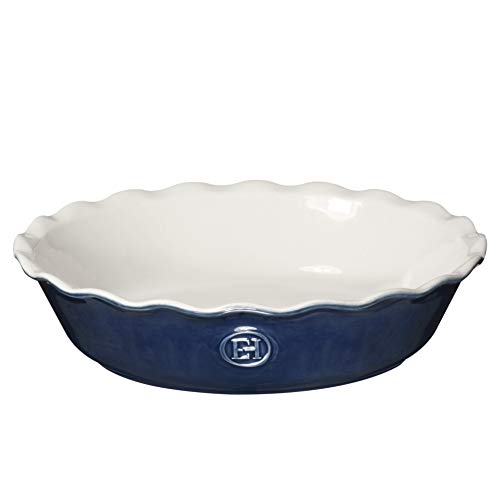
Emile Henry Modern Classics Pie Dish
Burgundy clay fired to a high density radiates gentle, steady heat, so pastry sides color without the crimped edge scorching first. Glaze wipes clean after cherry or blueberry filling bubbles over. Ceramic warms slower than steel, so preheat fully and allow a few extra minutes versus a metal tin.
Pros
- Colors the sides and edge evenly
- Presentable enough to serve from directly
- Glaze shrugs off fruit filling stains
Cons
- Warms slower than metal, so bakes run longer
- Heavier than glass or aluminum plates

Pyrex Easy Grab Glass Pie Plate
Tempered glass turns guesswork into a visual check: tilt the plate and read the bottom crust color before you commit to pulling it out. Molded handles give oven mitts something solid to hold. Rapid temperature swings crack tempered glass, so keep a hot plate off cold stone and wet counters.
Pros
- Base browning is visible through the wall
- Handles work with bulky oven mitts
- Freezer and microwave safe as well as oven safe
Cons
- Thermal shock can crack it
- Browns the base slower than steel

USA Pan Bakeware Pie Pan
Aluminized steel moves heat quickly, and corrugated fluting lifts the pastry so air circulates underneath. Bottom crusts crisp faster here than in any glass or ceramic dish on this list. Silicone based nonstick releases cleanly, though the plain finish belongs in the kitchen rather than on the table.
Pros
- Crispest bottom crust in this group
- Corrugation releases slices without tearing
- Light body heats up in minutes
Cons
- Plain looks, so slice and plate instead
- Dishwasher detergent shortens coating life

OXO Good Grips Glass Pie Plate
Grip width is the real story: broad tabs let you carry a loaded pie with thick mitts and no wobble. A flat, defined rim gives your thumbs a firm edge to crimp against. Standard glass limits still apply, including slower base browning and no move from fridge to hot oven.
Pros
- Easiest plate here to lift when full
- Flat rim supports a neat crimped edge
- Thick walls resist chipping in storage
Cons
- Shares the thermal shock limits of all glass
- Larger diameters are hard to source
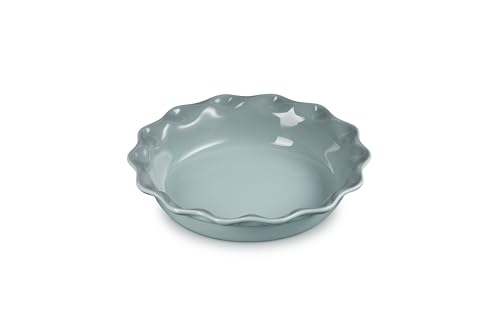
Le Creuset Stoneware Pie Dish
Enameled stoneware banks heat, so a pie stays warm through second helpings and a long dessert course. Baking behavior tracks other quality ceramics, with even sides and a forgiving edge. Colors match the wider Le Creuset range, which is most of the reason people choose it over plainer stoneware.
Pros
- Keeps the last slice warm at the table
- Enamel resists staining and lingering odors
- Color options match other Le Creuset pieces
Cons
- Priciest choice in this roundup
- Awkwardly heavy once filled

Fat Daddio’s ProSeries Anodized Aluminum Pie Pan
Professional bakeries buy from Fat Daddio’s, which is why the size range runs past the diameters consumer brands stop at. Anodized aluminum heats fast and evenly, with no sprayed coating to flake off in year three. Nothing releases on its own, so grease the pan or line the base with parchment.
Pros
- Stocks diameters other brands skip entirely
- No coating to chip, scratch or wear away
- Even heating from a light, quick body
Cons
- Greasing or parchment is mandatory
- Utility appearance, not a serving dish

Anchor Hocking Fire-King Glass Pie Plate
Fire-King glass bakes much like pricier tempered dishes, minus the handles and the styling. Flat rims stack neatly, which helps when cabinet space is tight. Lifting a full, hot pie takes two mitts and a deliberate grip, because there is nothing to hold beyond the rim itself.
Pros
- Bakes on par with costlier glass plates
- Stacks flat in a crowded cupboard
- Widely stocked and easy to replace
Cons
- No handles for a two mitt lift
- Rarely offered in larger diameters
How they stack up
| # | Model | Material | Best for | Score | Price |
|---|---|---|---|---|---|
| 1 | Emile Henry Modern Classics Pie Dish | Glazed ceramic | Best overall | 9.4 | Check price |
| 2 | Pyrex Easy Grab Glass Pie Plate | Tempered glass | Best value | 9.2 | Check price |
| 3 | USA Pan Bakeware Pie Pan | Aluminized steel | Best for crisp bases | 9.0 | Check price |
| 4 | OXO Good Grips Glass Pie Plate | Tempered glass | Best handles | 8.8 | Check price |
| 5 | Le Creuset Stoneware Pie Dish | Enameled stoneware | Best for presentation | 8.6 | Check price |
| 6 | Fat Daddio’s ProSeries Anodized Aluminum Pie Pan | Anodized aluminum | Best for larger sizes | 8.3 | Check price |
| 7 | Anchor Hocking Fire-King Glass Pie Plate | Tempered glass | Best budget | 8.0 | Check price |
Good to know
Are 12 inch pie plates easy to find?
Not particularly. Consumer lines center on 9 and 9.5 inches, while larger diameters cluster in professional bakeware ranges such as Fat Daddio’s. Read the stated dimensions on the specific listing, because one product name often covers several sizes.
How much filling does a 12 inch pie plate need?
Scale by area, not diameter. A 12 inch plate holds roughly one and three quarter times the volume of a 9 inch one, so increase filling and pastry together. Bake time stretches as well, since the center takes longer to reach temperature.
Is glass or metal better for baking pie?
Metal browns the base fastest and gives the crispest crust. Glass bakes gently and lets you judge doneness by sight. Neither wins outright, though bakers fighting soggy bottoms almost always improve by moving to aluminized steel or anodized aluminum.
Can a glass pie plate go from the fridge to a hot oven?
No. Tempered glass handles oven heat but not sudden change, and a cold plate meeting a hot oven risks cracking. Let it sit at room temperature first, then avoid setting the hot dish on a cold or wet countertop afterward.
What is the best pie plate for a beginner baker?
Glass, because you can see the bottom crust and learn what done actually looks like. Pyrex Easy Grab and the OXO Good Grips plate both add handles, which removes the other common beginner problem of moving a heavy pie safely.
How do you keep the crust edge from burning?
Fit a pie shield or a foil ring once the rim reaches the color you want, usually partway through the bake. Ceramic dishes forgive more here, since the rim heats less aggressively than exposed metal does.
Do you need to blind bake the base?
Yes for custard, pumpkin and very wet fruit. Line the shell, add weights or dried beans, bake until set, then remove the weights and bake a little longer to dry the surface. Long, high heat bakes often manage without it.
Are ceramic pie dishes worth it?
If you serve straight from the dish, yes. Emile Henry and Le Creuset both hold heat so the last slice stays warm, and they look like tableware. On pure baking performance the gap over glass is small, and metal beats both for base crispness.
Which pie plates are dishwasher safe?
Glass and glazed ceramic generally are. Nonstick coated steel lasts longer with hand washing, since detergent degrades the coating over repeated cycles. Bare anodized aluminum should be washed by hand to avoid discoloration.
The verdict
Emile Henry Modern Classics Pie Dish suits most households, browning evenly and going from oven to table without a transfer. Newer bakers get more practical help from the Pyrex Easy Grab Glass Pie Plate, which shows the base as it colors. Chase a genuinely crisp bottom crust or an unusual diameter and the metal pans from USA Pan and Fat Daddio’s are the ones to order.


