2 Quart Saucepans for Sauces, Grains and Reheating
For even heat and sauce work, the All-Clad D3 2 quart saucepan leads. Watching the budget? The Tramontina Gourmet Tri-Ply Clad 2 quart shares the same construction for less. For dependable weeknight cooking, the Cuisinart 719-18 Chef’s Classic covers it.
A small pan worth the money is the All-Clad D3 2 quart saucepan, whose fully clad walls stop a custard or reduction catching. Spending less? The Tramontina Gourmet Tri-Ply Clad pan offers the same layered build. Everyday jobs suit the Cuisinart 719-18.
Two quart saucepans look identical on a shelf, yet a disc base and a fully clad body behave differently the moment something scorches, and a badly balanced handle makes pouring hot liquid unpleasant. We compared base and wall construction, handle design, lid fit, induction support and oven ratings, then weighed owner reports on hot spots and cleaning.
Our top picks
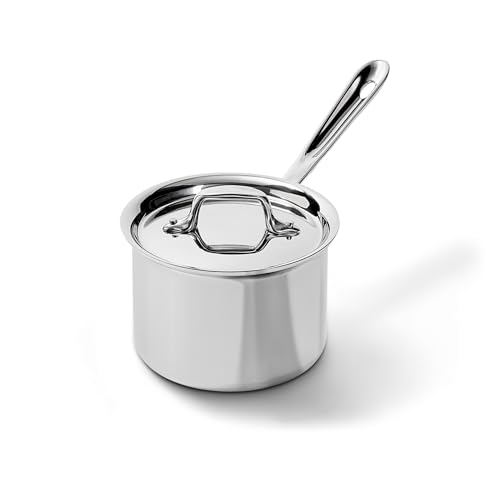
All-Clad D3 Stainless 2-Quart Saucepan
Three bonded layers run the full height rather than stopping at a disc, so heat climbs the walls and delicate sauces avoid scorching at the bottom edge. A long handle stays cool on the hob while the rolled rim pours cleanly. Owners keep this one for decades.
Pros
- Even heating from base to rim
- Rolled rim pours without dribbling
- Effectively a lifetime purchase
Cons
- Costly for a small pan
- Square handle feels awkward to some

Tramontina Gourmet Tri-Ply Clad 2-Quart Saucepan
Fully clad tri-ply construction matches pans costing far more, which is why this keeps turning up as the value pick. Cooking performance sits close to the leaders, and the rounded handle is arguably more comfortable. Fit and finish, not cooking, is where the gap shows.
Pros
- Fully clad build at a modest outlay
- Rounded handle sits well in the hand
- Dishwasher safe
Cons
- Finish less refined than premium brands
- Lid fit runs slightly loose

Cuisinart 719-18 Chef’s Classic Stainless 2-Quart Saucepan
An encapsulated aluminium disc heats fast and handles boiling, reheating and grains without fuss. A tapered rim pours neatly, and the tight lid traps steam for rice. Delicate reductions are not its strength, yet most weeknight cooking is.
Pros
- Heats quickly for boiling and reheating
- Tapered rim pours cleanly
- Widely stocked and affordable
Cons
- Disc base leaves cooler side walls
- Food catches at the edge of the disc

GreenPan Valencia Pro 2-Quart Saucepan
Sticky jobs like porridge, milk sauces and reheated rice belong here. Ceramic releases well and wipes clean, and unlike most nonstick it runs on induction. Release does fade with age, so keep the heat moderate and reach for soft utensils.
Pros
- Clean release and quick washing
- Nonstick that works on induction
- High oven temperature rating
Cons
- Coating performance fades over time
- Needs gentle heat to last

Calphalon Classic Stainless Steel 2.5-Quart Saucepan
Straining holes and pour spouts sit in the lid rim, so pasta or grains drain without a colander. Small kitchens save real washing up that way. A slightly larger capacity adds headroom for foods that boil over.
Pros
- Straining lid replaces a colander
- Interior measuring marks help portioning
- Stay-cool handle stays comfortable
Cons
- Straining holes need careful cleaning
- Larger than a true 2 quart pan

T-fal Ultimate Hard Anodized 2-Quart Saucepan
Hard-anodised aluminium wraps a titanium-reinforced nonstick interior, and the familiar heat indicator shows when the pan is ready. Milk, sauces and small egg dishes cook with minimal effort. No induction support rules it out for some kitchens.
Pros
- Durable reinforced nonstick interior
- Heat indicator earns its keep
- Cleans easily by hand
Cons
- Not induction compatible
- Nonstick limits high-heat use

Farberware Classic Stainless Steel 2-Quart Saucepan
A starter-kitchen staple for decades, this pairs a capsulated base with a plain stainless body. Boiling, reheating and grains all get done at a very low outlay. Heat evenness and handle comfort trail the clad pans.
Pros
- Very affordable
- Glass lid shows the pan without lifting
- Dishwasher safe and low maintenance
Cons
- Uneven heat up the side walls
- Handle warms on gas hobs
Side by side
| # | Model | Capacity | Best for | Score | Price |
|---|---|---|---|---|---|
| 1 | All-Clad D3 Stainless 2-Quart Saucepan | 2 quarts | Best overall | 9.4 | Check price |
| 2 | Tramontina Gourmet Tri-Ply Clad 2-Quart Saucepan | 2 quarts | Best value | 9.2 | Check price |
| 3 | Cuisinart 719-18 Chef’s Classic Stainless 2-Quart Saucepan | 2 quarts | Best everyday choice | 9.0 | Check price |
| 4 | GreenPan Valencia Pro 2-Quart Saucepan | 2 quarts | Best ceramic nonstick | 8.8 | Check price |
| 5 | Calphalon Classic Stainless Steel 2.5-Quart Saucepan | 2.5 quarts | Best lid design | 8.6 | Check price |
| 6 | T-fal Ultimate Hard Anodized 2-Quart Saucepan | 2 quarts | Best nonstick | 8.3 | Check price |
| 7 | Farberware Classic Stainless Steel 2-Quart Saucepan | 2 quarts | Best budget pick | 8.0 | Check price |
What to look for
Clad or disc base decides what you can cook Fully clad pans carry a conductive aluminium core through the base and up the walls, so heat is even wherever food touches. A disc base bonds aluminium only to the bottom, fine for boiling but leaving cooler walls and a ring where sauces catch. Custards, reductions and roux reward cladding; pasta water and reheating do not need it.
Handle, balance and pouring Two quarts of hot liquid weighs more than it looks, and a poor handle makes pouring awkward. Look for a long handle that stays cool on the hob, a secure riveted or welded joint, and a rolled or flared rim that releases liquid cleanly. A tight lid matters if you cook rice or grains by absorption.
Match the pan to your hob Induction needs a magnetic base, and plenty of aluminium and hard-anodised nonstick pans lack one. A magnet that grips the base firmly is the quick test. Gas users should check the flame does not lick up past the food line, which heats the handle and scorches the exterior.
Weigh nonstick against stainless over time Stainless lasts effectively forever, tolerates metal utensils and the oven, but needs a proper preheat to stop sticking. Nonstick and ceramic make porridge, milk and eggs trivial to clean, yet wear out within a few years. Many kitchens keep one of each, since the 2 quart size handles very different jobs.
Questions worth asking
What is a 2 quart saucepan used for?
It is the everyday small pan for sauces, gravy, reheated soup, boiled eggs, rice or grains for two to three people, and melting butter or chocolate. Most kitchens reach for it first.
Is 2 quarts big enough for a family?
For sauces and side portions, yes, around three to four people. Pasta, large soups or batch cooking want a 4 quart pan or larger alongside it.
Do I need a clad pan or is a disc base fine?
A disc base handles boiling and reheating well. Fully clad construction earns its keep with anything that scorches, since even side-wall heat prevents the ring of caught food a disc leaves.
Are stainless saucepans hard to clean?
Not with the trick. Deglaze with a splash of water while the pan is still warm, and use a stainless cleaner for stubborn marks. A proper preheat before adding food prevents most sticking.
Can I put a saucepan in the oven?
Most all-stainless pans handle high oven temperatures, while plastic or silicone handle parts have much lower limits. Check the rating for the pan and the lid, since glass lids usually sit lower.
How do I know if a saucepan works on induction?
Hold a magnet to the base. A firm grip means it works; aluminium and copper pans without a magnetic layer will not.
Why does milk always catch in my saucepan?
Milk proteins settle and scorch on the hottest spot, which on a disc base is the centre. Lower the heat, stir often, and a nonstick or fully clad pan makes it far less likely.
Nonstick or stainless for a 2 quart saucepan?
Nonstick wins for milk, porridge and eggs that stick; stainless wins for sauces, longevity and high heat. Cooks who do both often keep one of each in this size.
How long should a saucepan last?
A quality stainless pan should run for decades. Nonstick and ceramic coatings typically need replacing every three to five years, depending on how gently they are used.
Final word
Regular sauce makers should buy the All-Clad D3 2 quart saucepan, a pan you will not replace. Nearly the same performance for far less comes from the Tramontina Gourmet Tri-Ply Clad pan. When porridge and milk dishes dominate, the GreenPan Valencia Pro is the better answer.


