Smart Water Shutoff Valves Versus Leak Sensors, Compared
Moen Flo by Moen Smart Water Monitor and Shutoff stands out for automatic main-line shutoff paired with a leak-learning algorithm. Phyn Plus Smart Water Assistant detects leaks earliest through high-frequency pressure sensing. Grohe Sense Guard suits colder climates best, since its professionally installed valve adds freeze protection most competitors skip.
Moen Flo by Moen Smart Water Monitor and Shutoff combines automatic shutoff with continuous leak learning, which earns it the top spot. Phyn Plus Smart Water Assistant catches leaks other systems miss through high-frequency pressure sampling. Grohe Sense Guard rounds out the top three with a professionally installed valve built for freeze-prone climates.
Shutoff systems and simple leak sensors get lumped together often, yet they solve different problems. A valve on the main line stops water at the source, while a battery sensor under a sink only sends an alert. We compared published specifications, installation requirements and what owners report about false alarms and app reliability, then sorted each system by the setup it actually suits.
The best picks, ranked

Moen Flo by Moen Smart Water Monitor and Shutoff
This device installs on the main water line and learns a household’s normal water use within about two weeks. Once it flags an anomaly, it can shut off water automatically before damage spreads. Owners report the companion app catches micro-leaks that never showed up on a water bill.
Pros
- Automatic shutoff triggers without any manual step
- Learns household water patterns to reduce false alarms
- Works with Alexa for voice status checks
Cons
- Professional installation adds a step before setup
- Needs a permanent WiFi connection near the main line
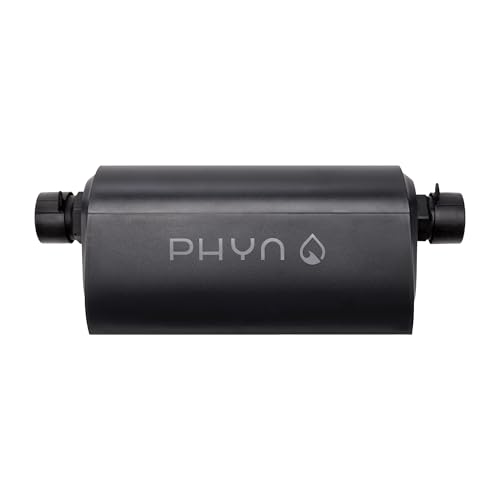
Phyn Plus Smart Water Assistant
Pressure sensors inside this unit sample hundreds of times per second, fast enough to catch drips of just a few drops per minute. It sits on the main line next to the meter and closes the valve once it confirms a leak. Setup benefits from a plumber familiar with pressure-based systems.
Pros
- Detects very small leaks through pressure analysis
- Tracks water use by fixture over time
- Automatic shutoff with a manual override in the app
Cons
- Setup complexity favors professional installation
- Alerts need a learning period before they stabilize

Grohe Sense Guard Smart Water Control
A plumber typically installs this valve directly into the main line, where it tracks flow, pressure and temperature continuously. Freeze risk triggers an automatic shutoff, a feature that matters in colder regions. Pairing it with the separate Grohe Sense puck sensor adds room-level coverage under sinks and near appliances.
Pros
- Freeze protection shuts off water before pipes burst
- Pairs with standalone Grohe Sense pucks for extra coverage
- Continuous flow tracking stays available in the app
Cons
- Professional installation is effectively required
- Room-level coverage needs sensors purchased separately
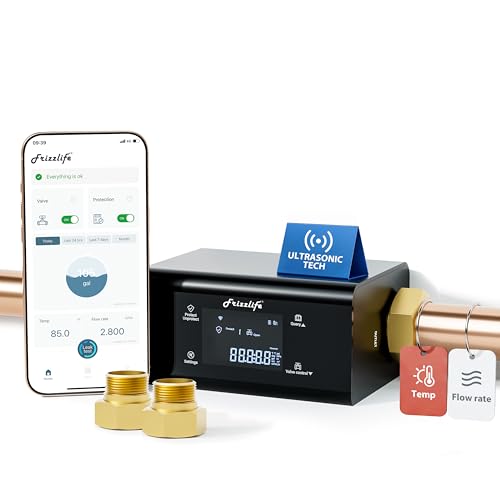
StreamLabs by Eaton Smart Home Water Monitor
An ultrasonic sensor straps onto the outside of the main pipe, so no cutting or soldering gets involved. Most owners finish setup in under thirty minutes without a plumber. On its own the monitor only alerts; pairing it with the separately sold StreamLabs Control valve adds automatic shutoff.
Pros
- No plumbing modification needed for the monitor itself
- Fast DIY setup most owners finish in one sitting
- Works alongside a separate shutoff valve for full protection
Cons
- Monitor alone does not shut off water
- Shutoff function depends on buying an additional valve

LeakSmart 2.0 Water Shutoff Valve Kit
This kit pairs an inline shutoff valve with wireless leak sensors placed near water heaters, washing machines and under sinks. Any paired sensor that detects water triggers the main valve to close, not just a leak at the meter. Z-Wave connectivity lets it join a Samsung SmartThings hub alongside other smart home devices.
Pros
- Sensors at appliances catch leaks before they reach the meter
- Expandable with additional Z-Wave leak sensors later
- Integrates into an existing SmartThings smart home setup
Cons
- Requires a SmartThings hub for full functionality
- Valve installation still calls for cutting into the main line

D-Link Wi-Fi Water Leak Sensor DCH-S1621
A compact puck sensor sits on the floor near a water heater, washing machine or sump pump and connects directly to home WiFi, no hub required. The mydlink app sends a push alert the moment its probe touches water. IFTTT support lets it trigger other smart home routines, though it only alerts and cannot shut off water.
Pros
- No hub needed, connects directly to home WiFi
- IFTTT support extends alerts into other smart home routines
- Extension cable option reaches tight spots like behind a water heater
Cons
- Cannot shut off water on its own
- Battery needs periodic replacement to keep alerts working
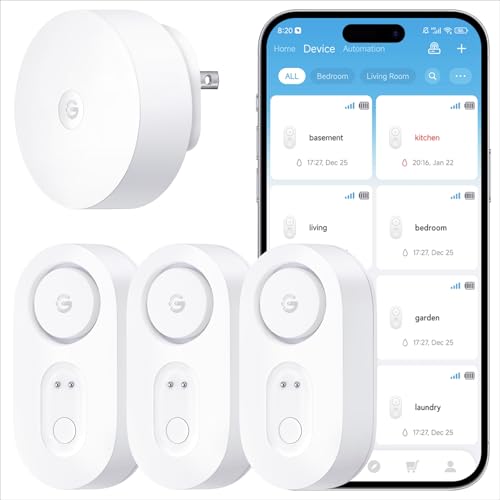
Govee WiFi Water Sensor
Battery power and a loud onboard alarm make this sensor simple to place under a sink or beside a washing machine. Its app sends a push notification the moment the probe contacts water, useful as an early warning even without an automatic valve. Multiple units can cover several rooms without extra wiring.
Pros
- Low cost per sensor makes multi-room coverage affordable
- Loud local alarm works even without app notifications
- Simple battery install with no plumbing involved
Cons
- No automatic shutoff, alerts only
- Relies on a stable WiFi signal to send remote notifications
Compared at a glance
| # | Model | Install location | Best for | Score | Price |
|---|---|---|---|---|---|
| 1 | Moen Flo by Moen Smart Water Monitor and Shutoff | Main water line, professional install recommended | Best overall | 9.4 | Check price |
| 2 | Phyn Plus Smart Water Assistant | Main water line near the meter | Best for pinpoint leak detection | 9.2 | Check price |
| 3 | Grohe Sense Guard Smart Water Control | Main water line, professional installation | Best for professional installation | 9.0 | Check price |
| 4 | StreamLabs by Eaton Smart Home Water Monitor | Strap-on ultrasonic sensor, no pipe cutting | Best DIY monitoring install | 8.8 | Check price |
| 5 | LeakSmart 2.0 Water Shutoff Valve Kit | Main line valve plus standalone room sensors | Best for multi-sensor coverage | 8.5 | Check price |
| 6 | D-Link Wi-Fi Water Leak Sensor DCH-S1621 | Placed on floor near appliance, no wiring | Best for smart home app integration | 8.2 | Check price |
| 7 | Govee WiFi Water Sensor | Battery powered, no wiring required | Best budget standalone sensor | 8.0 | Check price |
What to look for
What actually separates a leak detector from a shutoff system? A basic sensor only sends an alert, leaving someone to run and close a valve by hand. A true shutoff system closes the main line automatically once it confirms a leak. Whole-home valves from Moen Flo, Phyn Plus and Grohe Sense Guard sit inline on the main supply. Standalone sensors from Govee and D-Link watch a single spot and notify an app instead.
Where does the shutoff valve go, and who installs it? Most inline valves sit right after the main shutoff, ahead of the water heater and household plumbing. Pipe diameter, material and space around the meter all affect install difficulty. Phyn Plus and Grohe Sense Guard both call for a plumber comfortable with pressure sensors and valve wiring. StreamLabs skips that step for monitoring by strapping an ultrasonic sensor onto the pipe, though its shutoff function still needs a separate valve installed inline.
Which setup fits a renter or a small apartment? Cutting into a main line usually is not an option in a rental unit. Battery sensors like the Govee WiFi Water Sensor or the D-Link DCH-S1621 need no plumbing work and move easily to a new address. Placing one near a water heater and another under a kitchen sink covers the two spots most likely to leak in a rental.
How do these systems handle vacations and freezing pipes? Nobody wants to come home to a flooded floor after a week away. Flow-based systems like Moen Flo and Phyn Plus can switch to an away mode that treats any detected flow as a leak, since no one should be using water. Grohe Sense Guard adds temperature monitoring that triggers a shutoff before a frozen pipe bursts, a feature worth prioritizing in colder climates.
Questions worth asking
How does a smart water shutoff system work?
A valve installs inline on the main water supply and closes automatically once sensors confirm a leak. Detection methods vary: some track flow and pressure, others compare current use against a learned baseline. Once triggered, the valve shuts within seconds and the app sends a notification.
Can I install a water shutoff valve myself?
Some owners manage it, but most manufacturers recommend a licensed plumber. Valves like Phyn Plus and Grohe Sense Guard need precise placement near the meter and a stable WiFi connection nearby. Standalone leak sensors, by contrast, need no plumbing skill at all.
Do water leak sensors work without WiFi?
Local alarms on sensors like the Govee WiFi Water Sensor still sound without an internet connection. Remote push notifications, though, require WiFi or a hub to reach the app. A sensor that loses connectivity keeps its onboard siren but stops sending alerts to a phone.
What is the difference between Flo by Moen and Phyn Plus?
Both shut off water automatically from the main line. Moen Flo leans on learned usage patterns built over about two weeks, while Phyn Plus relies on high-frequency pressure sampling that can catch smaller drips sooner. Either works well; the better fit depends on how quickly a household wants alerts to stabilize.
Are water leak shutoff systems worth it for renters?
A full inline valve rarely makes sense in a rental, since it requires cutting into plumbing a tenant does not own. Standalone sensors like the D-Link DCH-S1621 or Govee WiFi Water Sensor deliver most of the early-warning benefit without any permanent modification.
How many leak sensors does a house need?
Placement matters more than count. Water heaters, washing machines, dishwashers and under-sink supply lines account for most household leaks. A kit like LeakSmart 2.0 covers two of those spots out of the box, and additional Z-Wave sensors extend coverage room by room.
Can these systems detect a slab leak?
Pressure-based systems such as Phyn Plus stand a better chance, since a slab leak still shows up as unexplained flow or a pressure drop on the main line. Standalone puck sensors cannot help here, because a slab leak happens underground, away from any surface sensor.
Do smart shutoff valves work during a power outage?
Most inline valves, including Moen Flo, include a battery backup that keeps the shutoff function active for a limited time. WiFi-dependent alerts stop reaching the app once the router loses power, even if the valve itself still works. Checking the backup runtime before buying matters most in areas with frequent outages.
Is a whole-home shutoff valve better than a single leak sensor?
A whole-home valve protects every fixture on the main line, while a single sensor only watches one spot. Households with an older water heater or a finished basement usually get more protection from the valve. Renters and single-room risks are often better served by one or two standalone sensors.
The verdict
Moen Flo by Moen earns the top spot for pairing automatic shutoff with a learning algorithm that adapts to real household use. Phyn Plus and Grohe Sense Guard both suit homes that want a professionally installed valve, with Phyn favoring sensitivity and Grohe adding freeze protection. Renters and smaller budgets are better served by standalone sensors like the Govee WiFi Water Sensor, which skip plumbing work entirely.