Acoustic Panels Compared: Foam, Fiberglass, and Ceiling Clouds
Auralex Studiofoam Wedges balance absorption and cost best for a home studio wall. GIK Acoustics 242 panels reach deeper into bass frequencies than foam. Primacoustic London 8 packages full room coverage in a single kit. All three ship as 2-inch panels that mount without major wall damage.
Auralex Studiofoam Wedges suit a home recording booth better than anything else on this list, absorbing mid and high frequencies at a 2-inch depth. Vocalists and podcasters get fast adhesive-tab installation without tools. Bass buildup in room corners stays untouched, since foam this thin does little below 250Hz.
NRC numbers alone will not tell you whether a panel kills flutter echo or actually tames a boomy corner. We compared thickness, core material, mounting hardware, and owner feedback against real setups: podcast closets, mix rooms, and rented apartments where drilling is not an option.
The top picks, ranked

Auralex Studiofoam Wedges
Open-cell wedge foam ships in 12×12-inch tiles built for vocal booths and small mix spaces. Its 2-inch profile rates near 0.85 NRC, enough to knock down flutter echo on bare drywall. Foam tabs on the back let a full wall go up in an afternoon without tools.
Pros
- Adhesive tabs skip tool-based installation
- Flutter echo drops noticeably on bare walls
- Light enough to reposition without help
Cons
- Low frequencies pass through mostly unaffected
- Foam yellows with UV exposure over years

GIK Acoustics 242 Acoustic Panel
Fabric-wrapped rigid fiberglass fills a wood frame built for corners and low-end buildup. At 24×48 inches and 2 inches thick, it rates above 1.0 NRC, reaching into low-mid range foam cannot touch. Wall clips hold the frame without sagging over months of use.
Pros
- Absorbs low-mid frequencies foam skips
- Wood frame resists sagging long term
- Sized for full wall coverage in one panel
Cons
- Needs stud mounting due to added weight
- Per-panel cost runs higher than foam

Primacoustic London 8 Room Kit
Broadway-style fiberglass panels arrive packaged as a kit sized for a small project studio. Impaling clips come in the box, cutting out a separate hardware order. Total coverage lands near 70 square feet, enough for first reflection points and a rear wall.
Pros
- One order covers walls, clips, and panels
- Sized to match a typical bedroom studio
- Clips avoid a separate hardware purchase
Cons
- Fixed count limits room-specific customizing
- Beveled edges look different from flat foam
ATS Acoustics Acoustic Panels
A rigid fiberglass core sits inside dozens of fabric color choices, built to match a room rather than stand out. Absorption lands near 1.0 NRC at 2 inches thick, close to GIK’s numbers. Custom fabric options fit a shared office or living-room studio setup.
Pros
- Fabric choices blend into finished rooms
- Absorption matches rigid fiberglass competitors
- Fits spaces where foam looks out of place
Cons
- Custom fabric orders add lead time
- Heavier build needs wall clips, not tabs

Foamily Acoustic Panels
Wedge foam sold in bulk packs covers a large wall area at a low cost per tile. A thinner 1-inch profile rates near 0.75 NRC, below thicker foam but still enough to soften bare drywall. Charcoal coloring hides dust better than lighter tile colors.
Pros
- Bulk packs lower the cost per tile
- Adhesive install needs no extra tools
- Enough tiles to cover a full wall
Cons
- Thinner foam absorbs less bass energy
- Edges crumble under rough handling

JBER Acoustic Foam Panels
Pyramid-cut foam tiles fit a closet or small podcast booth rather than a full studio wall. Two-inch thickness rates about 0.8 NRC, enough to cut the boxy sound of a tight enclosed space. Color choices beyond grey suit a booth doubling as an on-camera background.
Pros
- Sized right for closet-size booths
- Color options fit on-camera backgrounds
- NRC rating solid for the thickness
Cons
- Alone, insufficient for a full-size room
- Some packs sell adhesive separately
Acoustimac Acoustic Panels
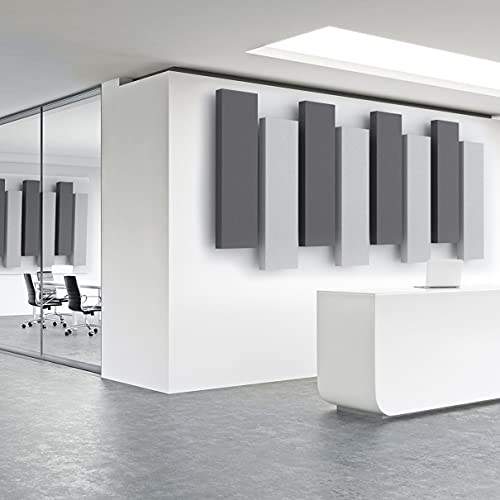
Fabric-wrapped fiberglass ships with an optional ceiling hanger kit for suspending panels above a mix position. Two-inch panels rate near 1.0 NRC, matching wall-mounted fiberglass options. A hanging cloud catches reflections a wall panel cannot reach, useful over hard, reflective flooring.
Pros
- Ceiling hanger kit sold as an option
- Catches reflections wall panels miss
- Absorption matches wall-mounted fiberglass
Cons
- Installation takes more time than wall mounting
- Unnecessary in small carpeted booths
Side by side
| # | Model | Thickness | Best for | Score | Price |
|---|---|---|---|---|---|
| 1 | Auralex Studiofoam Wedges | 2 in | Best overall | 9.4 | Check price |
| 2 | GIK Acoustics 242 Acoustic Panel | 2 in | Best for bass control | 9.1 | Check price |
| 3 | Primacoustic London 8 Room Kit | 8 panels | Best value | 8.9 | Check price |
| 4 | ATS Acoustics Acoustic Panels | 2 in | Best for custom colors | 8.6 | Check price |
| 5 | Foamily Acoustic Panels | 1 in | Best budget | 8.3 | Check price |
| 6 | JBER Acoustic Foam Panels | 2 in | Best for podcast booths | 8.1 | Check price |
| 7 | Acoustimac Acoustic Panels | 2 in | Best for ceiling clouds | 8.0 | Check price |
What matters most
NRC rating and thickness, explained Noise Reduction Coefficient averages absorption across four frequencies, from 250Hz to 2000Hz. A 0.85 rating means a panel absorbs 85 percent of sound energy in that range and reflects the rest. Thickness changes which frequencies get absorbed, not just how much. One-inch foam handles mid and high tones but does little below 250Hz. Panels at 2 inches or more, like the GIK 242, stretch absorption into the low-mid range where voice and instrument fundamentals sit.
Foam wedges versus rigid fiberglass panels Auralex, Foamily, and JBER sell open-cell polyurethane cut into wedges or pyramids. GIK and ATS Acoustics instead pack dense mineral or glass fiber into a wood frame wrapped in fabric. Fiberglass typically outperforms foam of equal thickness on bass response. Extra weight means fiberglass needs a frame and clips rather than adhesive tabs. Foam suits fast, low-cost setups, while fiberglass suits rooms where low-frequency control actually matters.
How many panels does a small studio need? Treating 20 to 30 percent of wall surface is a common starting point for a bedroom studio. A 10-by-12-foot vocal booth often needs 6 to 8 panels sized 24×48 inches, placed at first reflection points and behind the microphone. Kits like the Primacoustic London 8 target that range and include clips, removing the guesswork. Larger rooms with hard floors need more coverage, often a ceiling cloud like the Acoustimac hanger kit added on top.
Mounting hardware and where placement matters most Adhesive foam tabs hold lightweight panels fine but fail under a heavier fabric-wrapped fiberglass board over time. Z-clips or impaling clips, screwed into studs, carry that weight and allow removal without drywall damage. First reflection points, where sound bounces from speaker to ear on a side wall, return the most benefit per panel. Corners need separate attention, since bass buildup there ignores how many flat panels line the walls.
Questions worth asking
How many acoustic panels do I need for a small room?
A 10×12 room typically needs 6 to 8 panels sized 24×48 inches, covering first reflection points and the wall behind the listening position. Primacoustic packages the London 8 kit around that exact coverage target. Rehearsal spaces or larger rooms often need close to double that count.
What counts as a good NRC rating for a panel?
0.7 or higher works well for most home studio panels. GIK Acoustics 242 panels rate above 1.0 at 2 inches thick, while thinner Foamily wedges land near 0.75. Higher NRC numbers mean more sound energy absorbed instead of bounced back into the room.
Acoustic foam vs acoustic panels: what is the difference?
Acoustic foam describes open-cell polyurethane wedges, the kind Auralex and JBER sell. Acoustic panels more broadly cover rigid fiberglass or mineral wool boards wrapped in fabric, like ATS Acoustics or Acoustimac. Foam costs less and weighs less, while fabric-wrapped panels generally absorb more at equal thickness.
Can acoustic panels stop sound from leaving a room?
No, absorptive panels cut echo and reverb inside a room but barely reduce sound transmission through walls. Blocking sound from reaching a neighboring room takes mass, like extra drywall layers or mineral wool packed into the wall cavity. Surface panels alone will not soundproof a room.
Where should acoustic panels go in a home studio?
Start at first reflection points on the side walls, found by sliding a mirror along the wall from the mix position until the speaker appears in it. Add one panel behind the listening position and one above it on the ceiling. Corners need separate bass trapping, since flat wall panels skip that low-frequency buildup.
Do acoustic panels help in a podcast booth?
Yes, and booths often need fewer panels than a music room because speech sits in a narrower frequency band. JBER or Foamily wedge tiles handle the mid and high frequencies causing boominess in a small closet-sized booth. A rug or heavy curtain over a hard floor helps beyond that.
Is thicker foam always the better choice?
Not necessarily. Thicker panels absorb lower frequencies more effectively, but a 4-inch panel eats more room depth and costs more per square foot than a 2-inch option. Speech-focused booths often do fine at 2 inches, while bass-heavy mix rooms benefit from thicker options like the GIK 242.
How do you mount acoustic panels without damaging walls?
Z-clips or impaling clips screwed into studs hold fabric-wrapped panels securely and come off without drywall damage. Lightweight foam needs only adhesive tabs or spray adhesive, since it carries little weight. Renters should check clip options before drilling into any studs.
Which acoustic panel handles bass frequencies best here?
GIK Acoustics 242 panels rate above 1.0 NRC at 2 inches thick, reaching further into low-mid frequencies than foam options in this lineup. ATS Acoustics panels come close at a similar thickness. Foam wedges from Auralex, Foamily, and JBER absorb mid and high tones but leave bass mostly untouched.
Are ceiling clouds worth adding to a mix room?
They help most in rooms with hard, reflective flooring where a wall panel cannot catch overhead reflections. Acoustimac sells a fiberglass panel with an optional ceiling hanger kit for exactly that setup. Small, carpeted booths usually skip this step since floor reflections are already dampened.
Our take
Auralex Studiofoam Wedges make the strongest first purchase for anyone treating a vocal booth or mix room, since 2-inch foam handles the mid and high frequencies behind most echo complaints and installs in an afternoon. Anyone fighting boomy bass in a dedicated room should skip straight to GIK Acoustics 242 panels instead, since rigid fiberglass reaches further into the low end than foam ever will. Renters or first-time buyers watching cost can start with the Foamily pack and add panels as the room demands more.