Aquarium Decor Built for Big Fish and Large Tanks
Fluval Malaysian Driftwood is our top pick because it is dense enough that a large fish cannot shift it. The Penn-Plax Stone Replica Aquarium Cave gives serious shelter for territorial species, and Zoo Med Mopani Wood is the best value large centrepiece.
For a tank holding large or boisterous fish, Fluval Malaysian Driftwood is the pick, because dense hardwood stays where you put it when an oscar decides to redecorate. The Penn-Plax Stone Replica Aquarium Cave gives territorial cichlids and plecos a defensible shelter, and Zoo Med Mopani Wood is the better value option if you need a big centrepiece.
Decorating a large tank is a different problem from a nano setup, since big fish uproot, push and sometimes swallow anything that is not heavy or too large to move. We compared items on weight and stability on sand or gravel, whether caves are big enough for an adult fish to turn around in, smooth edges that will not damage a fish barrelling past, effects on water chemistry, and how each one behaves under a strong filter flow.
The best picks, ranked

Fluval Malaysian Driftwood
Malaysian driftwood is unusually dense, so it sinks on its own and resists being shoved around by large cichlids or catfish. The branching shapes break sightlines, which reduces aggression in territorial tanks. Owners report it releases tannins for the first few weeks, tinting the water in a way many large fish actually prefer.
Pros
- Heavy enough to resist large fish
- Breaks sightlines to reduce aggression
- Plecos graze on the surface
Cons
- Tints water for several weeks
- Shape varies from listing photos
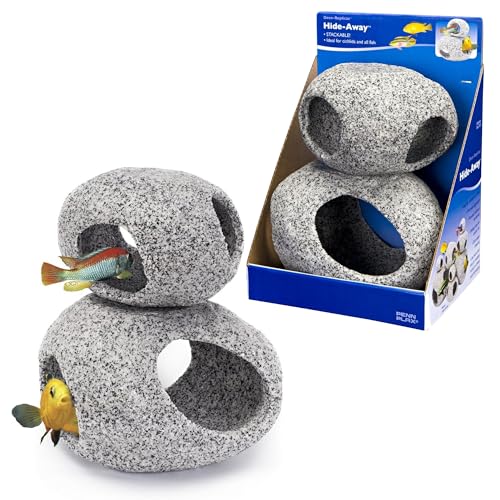
Penn-Plax Stone Replica Aquarium Cave
A moulded stone style cave with an opening large enough for a full grown cichlid or pleco to back into, which is what makes it useful rather than decorative. The resin construction is inert and will not alter water chemistry. Owners report it gives territorial fish a defensible base, which noticeably calms a busy tank.
Pros
- Opening sized for adult fish
- Inert and safe in any water
- Heavy enough to stay in place
Cons
- Takes up significant floor space
- Interior is awkward to clean

Blue Ribbon Exotic Environments Sunken Ship
A large wreck ornament with open decks and hull openings big enough for sizeable fish to pass through rather than get wedged in. It works as the single focal point in a four foot tank. Owners report the paint holds up well to algae scraping and the base sits stably on sand.
Pros
- Openings sized for larger fish
- Strong visual centrepiece
- Stable on sand or gravel
Cons
- Bulky, needs a wide tank
- Detailed areas trap debris

Zoo Med Mopani Wood
Large mopani pieces give a lot of visual impact for a modest outlay, and the two tone colouring looks striking against sand. It is dense enough to sink after a soak and heavy enough that most fish leave it alone. Owners report scrubbing and soaking before use cuts down the initial tannin release considerably.
Pros
- Large piece for the outlay
- Distinctive two tone appearance
- Good grazing surface for plecos
Cons
- Needs soaking before it sinks
- Heavy tannin release at first

Zoo Med Sinking Ceramic Log
Ceramic means it sinks straight away with no soaking, no tannins and no change to water chemistry, which suits keepers who want a cave without altering parameters. The tube shape is ideal for catfish and loaches that like to wedge themselves in. Owners report it is easy to lift out and scrub during maintenance.
Pros
- No soaking or tannin release
- Inert in all water types
- Simple to clean
Cons
- Looks less natural than real wood
- Only one entrance on some sizes
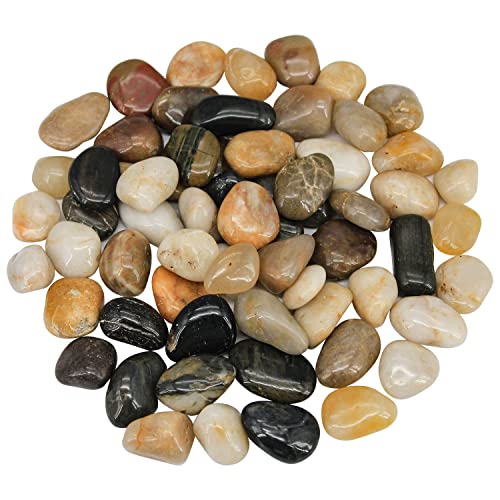
Marina Decorative Natural Rock
Realistic moulded rock that is light enough to position safely against glass yet stable once bedded into substrate. Because it is resin rather than real stone, it will not raise hardness the way limestone rock does. Owners report it stacks well to build ledges and overhangs without risking a rockslide.
Pros
- Safer against glass than real stone
- No effect on water hardness
- Builds ledges and caves
Cons
- Light enough to be moved by big fish
- Less convincing up close

hygger Aquarium Rock Cave Decoration
A straightforward resin cave that adds shelter to a larger tank without much outlay, useful when several fish each need their own territory. It sits stably on gravel and the openings are smooth. Owners report buying two or three is a cheap way to reduce squabbling in a cichlid setup.
Pros
- Cheap way to add territories
- Smooth, fin safe openings
- Stable on gravel or sand
Cons
- Smaller than dedicated large caves
- Finish quality varies
Side by side
| # | Model | Material | Best for | Score | Price |
|---|---|---|---|---|---|
| 1 | Fluval Malaysian Driftwood | Dense natural hardwood | Best overall | 9.4 | Check price |
| 2 | Penn-Plax Stone Replica Aquarium Cave | Non toxic moulded resin | Best cave | 9.2 | Check price |
| 3 | Blue Ribbon Exotic Environments Sunken Ship | Non toxic resin | Best statement piece | 9.0 | Check price |
| 4 | Zoo Med Mopani Wood | Natural mopani hardwood | Best value centrepiece | 8.8 | Check price |
| 5 | Zoo Med Sinking Ceramic Log | Fired ceramic | Best for bottom dwellers | 8.6 | Check price |
| 6 | Marina Decorative Natural Rock | Moulded resin rock | Best for aquascaping | 8.3 | Check price |
| 7 | hygger Aquarium Rock Cave Decoration | Non toxic resin | Best budget | 8.0 | Check price |
What to look for
Weight is the deciding factor with big fish Large cichlids, oscars and plecos rearrange a tank as a matter of routine, digging under ornaments and shoving anything light across the floor. Dense driftwood, ceramic and heavy resin stay put. Light hollow ornaments end up against the filter intake within a week. If an item feels light in your hand out of the water, it will not survive contact with a determined big fish.
Size the caves to the adult fish, not the juvenile A cave that a young fish uses happily becomes a trap once it doubles in length. Look at the adult size of your species and choose shelters with openings and interiors that allow a full grown fish to turn around and reverse out. Two exits are safer than one, and smooth interior surfaces prevent the scrapes that lead to infections in fish that wedge themselves in tightly.
Watch what your decor does to water chemistry Natural wood releases tannins and nudges pH downwards, which suits South American species and Asian biotopes but works against African rift lake cichlids that want hard alkaline water. Limestone and shells do the opposite, raising hardness steadily. Resin and ceramic are inert and change nothing, which makes them the safe default if your fish need stable, specific parameters.
Build stable structures, not stacked ones Rockwork toppled by a digging fish can crack a tank base or crush an inhabitant. Bed the bottom pieces directly onto the glass or a foam mat before adding substrate so nothing can be undermined, and avoid balancing tall stacks. Aquarium safe silicone or an eggcrate base plate is worth using in any tank with fish that excavate under decor.
Common questions
What decorations are safest for large aggressive fish?
Dense driftwood, fired ceramic and heavy moulded resin. All three resist being moved, have no small parts to swallow and hold up to constant contact. Avoid lightweight hollow ornaments and anything with thin projecting details.
Will my big fish swallow small decorations?
Large cichlids and catfish will mouth almost anything, and gravel or small ornaments can become lodged. Use decor that is clearly too large to fit in the mouth of your biggest fish, and prefer sand or larger substrate in tanks with big mouths.
Do I need to boil driftwood before adding it?
Boiling or a long soak helps it sink faster, removes surface debris and reduces the initial tannin release. It is not strictly required for dense woods that already sink, but it makes the first few weeks much tidier.
How many caves does a cichlid tank need?
More than you have fish, as a rule of thumb, so that a displaced fish always has somewhere to retreat. Spreading caves along the back and sides breaks up territories and reduces the fighting that comes from a single contested shelter.
Can I use real rocks from outside?
Only with care. Rinse and scrub thoroughly, avoid anything crumbly, and test with vinegar. Fizzing means carbonates that will raise hardness and pH. Rocks with metallic veins or unknown origins are best avoided entirely.
How do I clean decorations in a big tank?
Lift items out during a water change and scrub with an algae pad in a bucket of tank water. Never use soap. For heavy pieces that are awkward to remove, scrub in place and siphon the debris that lifts off.
Will decorations reduce aggression?
Usually yes. Breaking sightlines is one of the most effective ways to calm a territorial tank, because fish that cannot see each other constantly are far less likely to chase. Tall wood and rock structures work better than low flat ornaments.
Do plecos need wood specifically?
Many common plecos rasp on wood and appear to benefit from having it available, and it also hosts the biofilm they graze on. Providing at least one substantial piece of driftwood is standard practice in tanks housing them.
Final word
Fluval Malaysian Driftwood is the piece we would build a large tank around, since it sinks on its own, resists rearrangement and gives big fish the cover they need. Add the Penn-Plax Stone Replica Aquarium Cave for territorial species, and Zoo Med Mopani Wood if you want maximum impact for the outlay.