ATV Tires for Mud, Rock and Everyday Trail Riding
The Maxxis Bighorn 2.0 is our overall pick for handling mixed terrain without punishing ride quality. The ITP Mud Lite AT is the long standing trail value choice, and the STI Outback Max is the one to fit when deep mud is the main challenge.
The Maxxis Bighorn 2.0 is the ATV tire we would fit to most machines that see a bit of everything, since it grips loose ground without turning rough on hardpack. Riders who stay on marked trails will be well served by the ITP Mud Lite AT, and anyone regularly bogged down in deep mud should look at the STI Outback Max.
Choosing ATV tires is complicated because a tread that transforms a machine in mud can make it wander and howl on gravel roads, and heavier tires blunt acceleration and add strain to the driveline. Ply rating and carcass construction matter as much as tread depth. We compared published tread patterns, ply ratings, construction types, weights and sizing options, alongside what owners report about puncture resistance and wear on mixed terrain.
The best picks, ranked
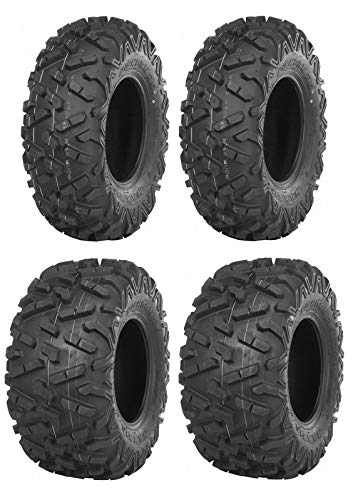
Maxxis Bighorn 2.0
The Bighorn 2.0 uses a radial carcass with a directional tread that clears mud yet stays composed on hard packed trails. Radial construction gives it a noticeably smoother ride than bias ply rivals, and the sidewalls resist punctures well in rocky terrain. It is the default upgrade for riders who cover varied ground.
Pros
- Excellent balance across terrain types
- Smooth ride from radial carcass
- Strong puncture resistance
Cons
- Heavier than basic trail tires
- Limited in deep mud

ITP Mud Lite AT
The Mud Lite AT has been a default trail tire for decades because it is light, quiet enough on hard surfaces and grips well in soft ground. Its lower weight helps smaller machines keep their acceleration and puts less load on axles. It is not a deep mud tire despite the name, but for general riding it is hard to beat.
Pros
- Light weight preserves acceleration
- Predictable on hardpack and soft ground
- Widely available sizes
Cons
- Not a true deep mud tire
- Wears faster on gravel

STI Outback Max
Deep aggressive lugs with a self cleaning pattern make the Outback Max a serious mud tire that still walks over rocks and roots. An eight ply carcass gives real puncture protection where sharp debris hides under water. Expect noise and vibration on paved sections, which is the trade off for tread this aggressive.
Pros
- Strong bite in deep mud
- Tough eight ply carcass
- Clears itself well
Cons
- Noisy on hard surfaces
- Heavy compared with trail tires

GBC Dirt Commander
The Dirt Commander sits between a trail tire and a mud tire, with tall lugs that dig into soft ground while remaining manageable on trails. The eight ply rating gives it good resistance to sidewall damage on rocky ground. Owners report it is a solid choice for riders who want more bite than a trail tire without full mud tire noise.
Pros
- Genuine all round grip
- Tough eight ply construction
- Reasonable manners on hardpack
Cons
- Heavier than trail tires
- Some tread noise at speed

Kenda Bearclaw HTR
The Bearclaw HTR delivers a conventional trail tread at a lower cost than the premium names, with a six ply rating that suits recreational riding. It grips well in loose dirt and gravel and is a common choice for replacing worn factory tires. Longevity does not match the top tires here, but the value is obvious.
Pros
- Affordable replacement option
- Good grip in loose dirt
- Wide size availability
Cons
- Shorter tread life
- Struggles in deep mud

Carlisle ACT HD
The ACT HD is built for utility quads that tow, plough and carry loads rather than chase trails. The heavy duty carcass resists sidewall damage around farm and property work, and the tread pattern is designed to limit turf damage. It is the right tire for a working machine rather than a recreational one.
Pros
- Built for load carrying
- Limits turf damage
- Durable sidewalls
Cons
- Uninspiring in mud
- Not aimed at trail riding

Interco Swamp Lite
The Swamp Lite offers deep mud tread at a lower weight than most dedicated mud tires, which keeps smaller machines usable. It paddles well through soft ground and clears mud quickly. On hard surfaces it is noisy and vague, so this is a tire to fit when the riding really is wet.
Pros
- Strong mud performance for the weight
- Clears itself quickly
- Easier on driveline than heavy mud tires
Cons
- Vague and noisy on hardpack
- Thin lugs wear quickly on gravel
How to pick the right one
Match tread depth to where you actually ride Deep aggressive lugs transform performance in mud and swamp but make the machine noisy, vague and quick to wear on gravel and hardpack. Trail treads with shallower angled lugs feel far better on mixed ground and last longer. Be honest about the proportion of your riding that is genuinely deep mud, because most riders spend more time on firm trails than they expect.
Ply rating is about puncture resistance, not just load A six ply tire is adequate for recreational trail riding on reasonably clean ground. Eight ply carcasses resist punctures from rocks, stumps and hidden debris, which matters if you ride where you cannot see what is under the water or leaf litter. The trade off is extra weight and a firmer ride, so do not fit heavier plies than your terrain needs.
Radial or bias ply changes the ride Bias ply tires have stiffer sidewalls, cost less and are the traditional choice for ATVs. Radial construction lets the sidewall flex more independently of the tread, which improves ride comfort, traction on uneven ground and heat resistance over long rides. Radials generally cost more and are worth it for riders covering long distances on varied terrain.
Weight and sizing affect the whole machine Larger and heavier tires slow acceleration, add strain to axles and bearings, and can affect braking. Going up in size may also require clearance changes or a lift. If your machine is smaller displacement, staying near the factory size with a lighter tire usually gives better real world performance than fitting the most aggressive option available.
Compared at a glance
| # | Model | Construction | Best for | Score | Price |
|---|---|---|---|---|---|
| 1 | Maxxis Bighorn 2.0 | Radial | Best overall | 9.4 | Check price |
| 2 | ITP Mud Lite AT | Bias ply | Best value | 9.1 | Check price |
| 3 | STI Outback Max | Bias ply | Best for mud | 9.0 | Check price |
| 4 | GBC Dirt Commander | Bias ply | Best for mixed terrain | 8.8 | Check price |
| 5 | Kenda Bearclaw HTR | Bias ply | Best budget | 8.5 | Check price |
| 6 | Carlisle ACT HD | Bias ply | Best for utility work | 8.2 | Check price |
| 7 | Interco Swamp Lite | Bias ply | Best for deep mud on a budget | 8.0 | Check price |
Common questions
What is the best all round ATV tire?
A radial all terrain design like the Maxxis Bighorn 2.0 covers the widest range of conditions, gripping in soft ground while remaining composed on hardpack. Dedicated mud tires perform better in swamp but are noticeably worse everywhere else.
What ply rating do I need?
Six ply suits most recreational trail riding. Move to eight ply if you ride rocky terrain, wooded ground with hidden debris, or carry heavy loads, since the extra layers mainly buy puncture resistance.
Are radial ATV tires better than bias ply?
Radials ride more smoothly, conform better to uneven ground and run cooler on long rides. Bias ply tires are cheaper and have stiffer sidewalls, which some riders prefer for low pressure rock crawling.
Do bigger ATV tires hurt performance?
They can. Larger diameters and heavier carcasses reduce acceleration, add stress to axles and bearings, and lengthen braking distances. Smaller displacement machines feel this most, so match tire size to engine capability.
What pressure should ATV tires run?
Follow the machine manufacturer’s recommendation, which is usually low by car standards. Running too low risks unseating the bead in hard cornering, while too high reduces the contact patch and grip on loose ground.
How long do ATV tires last?
It depends heavily on terrain. Trail riding on soft ground can give several seasons, while regular gravel and paved riding wears aggressive lugs quickly. Rotating tires and keeping pressures correct extends life.
Can I mix different tires front and rear?
Many riders run a slightly narrower front tire for steering and a wider rear for drive, which is a common factory arrangement. Mixing entirely different tread types front to rear can make handling unpredictable, so keep the pattern family consistent.
Do mud tires damage trails?
Aggressive lugs dig more and can tear soft trail surfaces, particularly when wet. Many riding areas ask for less aggressive treads for exactly this reason, so check local rules before fitting a deep mud tire.
Final word
For most riders covering varied ground, the Maxxis Bighorn 2.0 gives the best combination of grip, ride quality and durability. The ITP Mud Lite AT remains an excellent lighter trail option, and the STI Outback Max is the tire to fit when mud is the real obstacle. Check your machine’s recommended sizing and pressures before ordering, since fitting oversized tires affects far more than traction.


