Dash Cameras That Capture Plates Day and Night
The Garmin Dash Cam 67W leads for its wide field of view and dependable voice control in a very small body. The VIOFO A129 Plus Duo is the better choice when rear coverage matters, and the Rove R2-4K delivers sharp daytime plate capture at the lowest outlay here.
For most drivers the Garmin Dash Cam 67W is the one to fit, because it combines a genuinely wide 180 degree view with a body small enough to hide behind the mirror. If you need to record what happens behind you as well, the VIOFO A129 Plus Duo is the stronger two channel option, and the Rove R2-4K is the value pick for clear daytime footage.
Dash cameras are harder to compare than the marketing suggests, because a 4K label means nothing if the sensor cannot resolve a number plate under streetlights or the unit overheats and stops recording on a hot afternoon. We compared published sensor and resolution specifications, field of view figures, night mode implementations, parking mode power requirements and supported card capacities, alongside what owners report about heat cut outs, card corruption and mount reliability.
How to pick the right one
Resolution matters less than the sensor behind it A 4K badge on the box does not guarantee a readable number plate, because the sensor, lens and processing decide how much detail survives in poor light. Cameras built around a good low light sensor at 1440p routinely outperform cheaper 4K units after dark, which is when a lot of incidents happen. Look for the sensor model in the specification list and check sample footage at night, not just the headline pixel count.
Decide early whether you need parking mode Parking surveillance is the feature most buyers want and most underestimate. It needs a constant power source, which means either a hardwire kit spliced into the fuse box or a separate battery pack, since the cigarette socket usually loses power with the ignition. Buffered parking mode is the version worth having, because it keeps a few seconds of footage from before the impact rather than starting to record after the bump has happened.
Get the memory card right the first time Dash cameras write constantly and overwrite continuously, which destroys ordinary memory cards quickly. Use a high endurance microSD card rated for surveillance duty and sized to the camera’s stated maximum, then format it in the camera itself rather than a computer. Reformatting every month or two is the single most effective way to avoid the corrupted card that leaves you with no footage on the one day you need it.
Mounting, heat and the law Adhesive mounts hold better than suction cups in hot weather, where suction failures are common and a camera dangling on its cable records nothing useful. Position the unit behind the rear view mirror so it does not obstruct your view, and route the cable into the headlining and down the pillar to keep it tidy. Rules on windscreen mounted devices and on recording audio of passengers vary by region, so check your local requirements before fitting.
What we recommend

Garmin Dash Cam 67W
Garmin fits a 180 degree lens and 1440p recording into a camera roughly the size of a key fob, which means it disappears behind the rear view mirror. Voice control lets you save a clip without taking your hands off the wheel. The magnetic mount and app pairing make it one of the least fiddly cameras to live with day to day.
Pros
- Very wide view captures adjacent lanes
- Tiny body hides behind the mirror
- Voice commands save clips hands free
Cons
- No rear camera in the box
- Small screen makes menu work fiddly

VIOFO A129 Plus Duo Dual Dash Cam
The A129 Plus Duo pairs a 1440p front camera with a 1080p rear unit, covering the two angles that matter most in a collision claim. Buffered parking mode and optional hardwiring let it keep watch while the car is unattended. Owners report the Sony sensor holds detail well in low light, which is where cheaper duals fall apart.
Pros
- Genuine rear coverage included
- Strong low light performance
- Buffered parking mode captures the impact
Cons
- Rear cable run takes real installation time
- Parking mode requires a hardwire kit
Nextbase 622GW Dash Cam
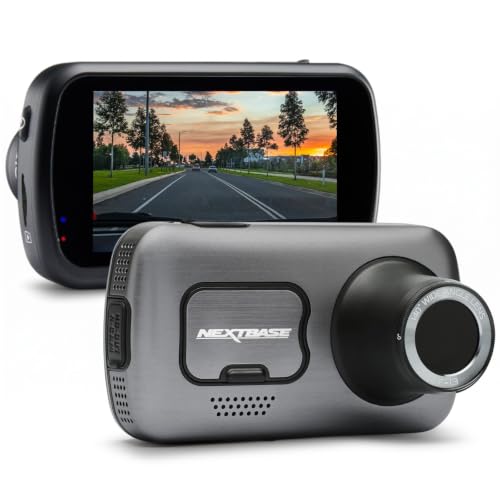
Nextbase aims the 622GW at drivers who want the most detail possible, with 4K capture, image stabilisation and an enhanced night mode that lifts shadow detail. Emergency SOS response and what3words location reporting are built in. It is a large unit, so check it clears your windscreen sensor housing before ordering.
Pros
- Highest resolution capture here
- Enhanced night mode lifts detail
- Responsive touchscreen interface
Cons
- Bulky body takes windscreen space
- 4K files fill cards very quickly
Vantrue N4 Three Channel Dash Cam
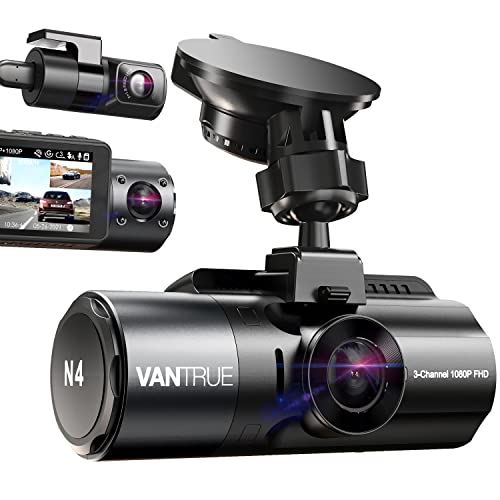
The N4 records forward, inside the cabin and out the back at once, which is exactly what private hire and rideshare drivers need for passenger disputes. Infrared LEDs illuminate the cabin without dazzling anyone at night. It is a chunky unit and the three streams demand a large, high endurance memory card.
Pros
- Covers cabin as well as road
- Infrared cabin view works in the dark
- Useful for passenger dispute evidence
Cons
- Large and visible on the screen
- Resolution drops when all channels run

Rove R2-4K Dash Cam
Rove undercuts the established brands while still offering high resolution capture, built in GPS logging and Wi-Fi transfer to a phone. Daytime plate capture is genuinely good for the outlay. Night performance is a step behind the premium units, which is the honest trade you make at this level.
Pros
- High resolution for a modest outlay
- GPS speed and location logging included
- App transfer works without a card reader
Cons
- Night footage trails the premium cameras
- Suction mount can drop in extreme heat

Garmin Dash Cam Mini 2
The Mini 2 has no screen at all, which is how Garmin shrank it to roughly the size of a car key. Everything is configured through the phone app or by voice. It is the camera to choose when you want a record of every journey without a gadget sitting in your eyeline.
Pros
- Almost invisible once fitted
- Simple app based setup
- Live view from the phone app
Cons
- 1080p only, so less plate detail
- No screen for quick playback in the car

REDTIGER F7N Dual Dash Cam
REDTIGER bundles a front and rear camera plus a hardwire kit for less than most single channel rivals. The 4K front sensor produces respectable daytime footage and the rear camera covers tailgaters. Build quality and app polish are where the savings show, so treat it as a lot of coverage rather than the finest image here.
Pros
- Two cameras for the outlay of one rival
- Hardwire kit often included
- Clear daytime front footage
Cons
- App and menus feel unpolished
- Low light detail is limited
How they compare
| # | Model | Resolution | Best for | Score | Price |
|---|---|---|---|---|---|
| 1 | Garmin Dash Cam 67W | 1440p | Best overall | 9.4 | Check price |
| 2 | VIOFO A129 Plus Duo Dual Dash Cam | 1440p | Best for front and rear | 9.2 | Check price |
| 3 | Nextbase 622GW Dash Cam | 4K | Best for night driving | 9.0 | Check price |
| 4 | Vantrue N4 Three Channel Dash Cam | Front, cabin and rear | Best for rideshare drivers | 8.8 | Check price |
| 5 | Rove R2-4K Dash Cam | 4K | Best value | 8.6 | Check price |
| 6 | Garmin Dash Cam Mini 2 | 1080p | Best for discreet fitting | 8.3 | Check price |
| 7 | REDTIGER F7N Dual Dash Cam | 4K | Best budget dual | 8.0 | Check price |
Frequently asked questions
Do dash cameras record when the car is switched off?
Only if they are wired for it. A camera on the cigarette socket usually powers down with the ignition, so parking surveillance requires a hardwire kit fitted to a permanent live fuse, or a dedicated battery pack that isolates the camera from the car battery.
Will a dash camera drain my car battery?
A properly installed hardwire kit includes voltage cut off protection that stops recording before the battery falls too low to start the engine. Without that protection, continuous parking recording can flatten a battery over several days of the car sitting unused.
What memory card should I use?
A high endurance microSD card designed for continuous recording, sized within the camera’s stated maximum capacity. Standard cards intended for photos wear out fast under the constant overwriting a dash camera performs, and card failure is the most common cause of missing footage.
Is 4K worth it over 1440p?
Sometimes. 4K gives more detail on distant plates in good light, but it produces much larger files and some units run hotter. A strong 1440p camera with a good low light sensor is often the better real world choice, especially for night driving.
Do I need a rear camera as well?
Rear cameras are valuable because being hit from behind is one of the most common claim scenarios, and they also capture tailgating. The trade is a longer installation, since the cable has to run the length of the car.
How long is footage kept?
Cameras loop continuously, overwriting the oldest files once the card is full, so the retention window depends on card size and resolution. Files marked by the impact sensor or saved manually are locked and protected from overwriting until you delete them.
Can heat damage a dash camera?
Sustained high temperatures inside a parked car can cause a camera to stop recording to protect itself, and they shorten the life of internal batteries. Cameras that use a supercapacitor instead of a lithium battery cope much better in hot climates.
Does a dash camera lower insurance costs?
Some insurers offer a discount and many will accept footage as evidence in a disputed claim, but there is no universal reduction. Check with your own insurer before assuming a saving, and keep footage of any incident backed up off the card.
The verdict
The Garmin Dash Cam 67W is the dash camera we would fit to most cars, thanks to its very wide coverage, compact body and painless setup. Drivers who want rear protection should step across to the VIOFO A129 Plus Duo, and rideshare drivers are better served by the three channel Vantrue N4.