How to Choose an Autofeed Paper Shredder for Home Offices
Fellowes AutoMax 200C swallows a 200 sheet stack and recovers from jams with little help, which suits mixed household paperwork. Bonsaii AutoShred C149-D fits steady weekly purges at lower outlay. Choose the Amazon Basics 100-Sheet Autofeed Micro-Cut when particle size matters more than tray capacity.
Fellowes AutoMax 200C handles the widest range of home paperwork, since stapled, folded mail goes in as one 200 sheet load. Bonsaii AutoShred C149-D covers smaller weekly piles for less. Amazon Basics 100-Sheet Autofeed Micro-Cut is the cheapest route to confetti sized particles.
Headline sheet numbers describe the tray, not the cutting head, so two machines with identical trays can differ by an hour on the same backlog. Run time, bin volume and jam recovery decide that gap. Rankings here weigh published security levels, duty cycle ratings and what owners report about staples, glossy inserts and window envelopes.
The top picks, ranked

Fellowes AutoMax 200C
Two hundred sheets drop into a locking tray, and a separate manual slot takes cards without lifting the lid. Staples and paper clips feed through as loaded, so sorting a pile first becomes optional. A 9 gallon bin holds the output of a full tray, which keeps emptying breaks rare.
Pros
- Tray swallows a month of household mail in one load
- Manual slot takes cards and receipts separately
- Jam protection reverses and clears with little intervention
Cons
- Footprint crowds a compact desk area
- Cross-cut particles are larger than micro-cut rivals
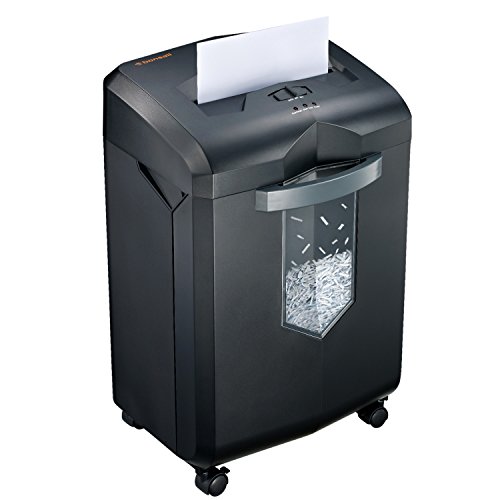
Bonsaii AutoShred C149-D 18-Sheet Autofeed Shredder
Eighteen sheets sit in the tray and six more feed through the manual slot, which suits a weekly pile rather than a filing purge. Continuous running lasts longer than most entry level autofeed units, so the cooldown interrupts less often. A pull out bin empties without tipping the cutting head off first.
Pros
- Runs longer before the cooldown kicks in
- Pull out bin empties in one movement
- Manual slot accepts credit cards
Cons
- Small tray means several loads for a backlog
- Motor noise carries further than premium office units

Amazon Basics 100-Sheet Autofeed Micro-Cut Shredder
Micro-cut security at this tier is unusual, and 100 sheets still fit the tray. P-4 output covers tax paperwork and anything printed with a full account number. Clean unstapled stacks feed best, so a quick sort before loading pays for itself in fewer stoppages.
Pros
- Micro-cut security without stepping up a tier
- Tray covers a month of household mail
- Compact footprint for 100 sheet capacity
Cons
- Staples and folded sheets cause more stoppages
- Shorter rated run time before it cools
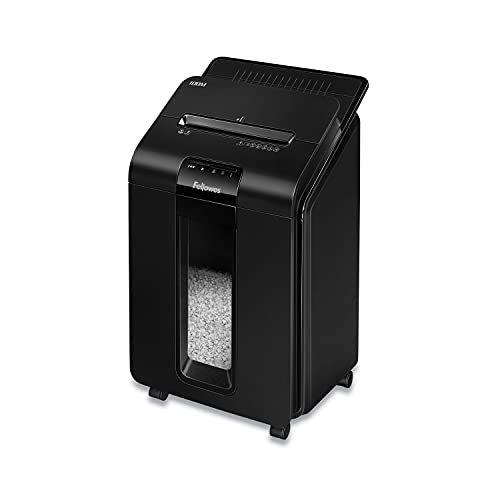
Fellowes AutoMax 100M
Half the tray of the 200C buys a far smaller particle. Micro-cut output at P-4 suits tax records, medical letters and old bank statements. Its 7 gallon bin fills quicker than cross-cut machines, because fine particles pack loosely rather than nesting together.
Pros
- Particle size suits account numbers and tax files
- Jam protection copes with mixed paperwork
- Quiet enough to run in a shared room
Cons
- Bin needs emptying more often than cross-cut units
- Tray is half the size of the AutoMax 200C

Swingline Stack-and-Shred 200X
Several people feeding one machine is the pattern this is built around. A locking lid keeps queued documents private between sessions, and 200 sheets stay inside until the run finishes. Staples and clips go in as they arrive, which removes the sorting ritual that stops people shredding at all.
Pros
- Lockable lid keeps queued paperwork out of sight
- Accepts staples and clips without sorting
- Manual slot takes 10 sheets at a time
Cons
- Heavier to move than home focused models
- No micro-cut option in the line
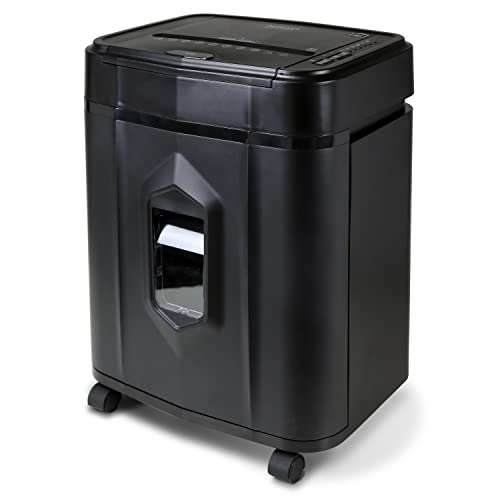
Aurora AU1000XA 100-Sheet Autofeed Shredder
Duty cycle decides whether a decade of filing takes an afternoon or a weekend, and Aurora rates this one for extended continuous operation. An overload triggers automatic reverse instead of a manual clear. Controls amount to a few buttons, and the finish is plain rather than polished.
Pros
- Extended run time rating suits backlog clearing
- Reverses automatically when it senses an overload
- Controls need no manual to work out
Cons
- Plain construction next to office brands
- Cross-cut particles larger than micro-cut options

Swingline Stack-and-Shred 60X
Sixty sheets covers a week of mail, not a filing cabinet. Its footprint fits beside a desk where a 200 sheet machine would block the walkway. Clean stacks work best, since a smaller motor labours on heavily stapled bundles.
Pros
- Smallest footprint among the autofeed picks
- Tray still covers a week of household mail
- Light enough to carry between rooms
Cons
- 4 gallon bin fills within a couple of sessions
- Heavily stapled bundles slow it down
How to pick the right one
What to look for in an autofeed paper shredder Four numbers settle most of this decision: tray capacity, cut security, rated run time and bin volume. Tray capacity is not sheet capacity, because the head pulls only a handful of pages at a time from the stack. Cut security sets particle size, which in turn sets how fast the bin fills. Run time governs long sessions and bin volume decides how often you stop. Read those figures in the manual rather than on the front of the box.
Cross-cut vs micro-cut: which security level do you need Cross-cut heads leave small rectangles, enough for junk mail, expired statements and school letters. Micro-cut reduces the same page to confetti sized particles, the sensible level for tax records, medical letters and anything carrying a full account number. P-4 is the standard the micro-cut picks here reach. Two costs come with that smaller particle: bins fill faster and feed rates usually drop.
How long can a shredder run before it needs to cool down Every consumer shredder carries a duty cycle, meaning a rated run time followed by a forced cooldown. A short cycle turns years of filing into a weekend of waiting. Weight the run time rating heavily if you shred in occasional large purges rather than small weekly piles. Aurora and Bonsaii publish longer ratings than most, and owners report budget units reaching cooldown sooner than their listings suggest.
Which documents will jam an autofeed tray Plastic windows in envelopes, glossy catalogue inserts and laminated cards cause most stoppages. Staples and paper clips pass through mid range and premium heads, while budget trays prefer a clean stack. Folded corners are the quiet culprit, since two pages enter the rollers as one thick sheet. Where a manual slot exists, send cards, receipts and anything stiff through that instead.
Side by side
| # | Model | Autofeed capacity | Best for | Score | Price |
|---|---|---|---|---|---|
| 1 | Fellowes AutoMax 200C | 200 sheets | Best overall | 9.4 | Check price |
| 2 | Bonsaii AutoShred C149-D 18-Sheet Autofeed Shredder | 18 sheets | Best value | 9.2 | Check price |
| 3 | Amazon Basics 100-Sheet Autofeed Micro-Cut Shredder | 100 sheets | Best budget | 9.0 | Check price |
| 4 | Fellowes AutoMax 100M | 100 sheets | Best for sensitive records | 8.8 | Check price |
| 5 | Swingline Stack-and-Shred 200X | 200 sheets | Best for shared offices | 8.6 | Check price |
| 6 | Aurora AU1000XA 100-Sheet Autofeed Shredder | 100 sheets | Best for long sessions | 8.3 | Check price |
| 7 | Swingline Stack-and-Shred 60X | 60 sheets | Best for small desks | 8.0 | Check price |
Frequently asked questions
How does an autofeed shredder differ from a manual one?
Manual models need you to hand feed a few sheets at a time and stand over them. An autofeed unit holds a whole stack under a lid and pulls pages through on its own. You load it, close the lid and leave the room.
Can autofeed shredders handle staples and paper clips?
Mid range and premium heads accept both without sorting, and the specification sheet states it plainly. Budget trays are less tolerant, and owners report staple jams on those machines. Pulling clips off first still costs less time than clearing a jam.
Is cross-cut or micro-cut better for home documents?
Cross-cut is adequate for junk mail, expired statements and general correspondence. Switch to micro-cut once tax records, medical paperwork or full account numbers go through regularly. Micro-cut fills the bin faster, so factor emptying frequency into the choice.
Why does my shredder stop before the tray is empty?
Consumer shredders shut down for a cooldown once the motor reaches its rated run time. Nothing has broken. It restarts on its own after cooling, usually within 20 to 40 minutes depending on the model.
How often should you empty a shredder bin?
Empty at around three quarters full rather than waiting for a stoppage, because overfilling is a leading cause of jams. Micro-cut particles pack loosely and reach that point far sooner than cross-cut strips. A window in the bin makes the level easy to check.
Do autofeed shredders need oiling?
Cutting heads jam less and draw less current when oiled periodically. Most manufacturers suggest oiling after a set number of bin emptyings. Use shredder oil or oiled sheets, never cooking or household oils, which gum the blades.
Can you shred credit cards and CDs in an autofeed tray?
Cards belong in the manual slot on almost every model, not the tray. Some units also take CDs through that slot or a dedicated one. Loading either into the autofeed tray risks damaging the pull rollers.
Is a bigger autofeed tray always better?
Only if paperwork arrives in large batches. A 60 to 100 sheet tray with a good run time rating clears a weekly pile faster than a 200 sheet tray attached to a slow head. Desk space is the other constraint worth weighing.
Which autofeed shredder suits a small home office?
Swingline Stack-and-Shred 60X takes the least floor space while still holding a week of mail. Amazon Basics 100-Sheet Autofeed Micro-Cut is the alternative if security outranks footprint. Both fit beside a desk without blocking a walkway.
How many sheets does the cutting head take at once?
Typically five to ten pages, regardless of how large the tray is. The tray is a queue, and the head works through it steadily. That is why run time and feed rate predict real world speed better than the headline number.
Our pick
Fellowes AutoMax 200C is the machine most households and small offices will be happiest with, because the large tray and forgiving feed let you load it once and walk away. Bonsaii AutoShred C149-D makes more sense for a small weekly pile than an occasional purge. Where account numbers and tax records dominate the stack, step to the Amazon Basics 100-Sheet Autofeed Micro-Cut and accept the smaller bin.