How Beginners Should Choose Their First Camera
Canon’s EOS R50 is the best all-round first camera, small and guided enough to learn on while sharing a mount with professional bodies. The Sony ZV-E10 II suits video and content creation, and the Nikon Z50 II offers better handling and a viewfinder from day one.
Most first-time buyers should start with the Canon EOS R50, though the Sony ZV-E10 II fits better if video and content matter most, and the Nikon Z50 II suits anyone who wants a viewfinder and a proper grip from day one.
Overbuying is the real risk with a first camera, since a heavy, complicated body often ends up left at home. We compared beginner-friendly features, weight, autofocus reliability and how much room each lens mount leaves to grow, across seven current bodies.
The shortlist, ranked

Canon EOS R50
A guided interface explains each setting as you change it, easing the jump out of phone photography. Subject-detection autofocus inherited from Canon’s pro line keeps a moving child or pet sharp with no setup. The RF mount matches professional bodies, so lenses carry forward if you upgrade later.
Pros
- Light body that is genuinely easy to carry
- Reliable subject-tracking autofocus
- Shares the RF mount with professional cameras
Cons
- No in body stabilization
- Small grip suits smaller hands better

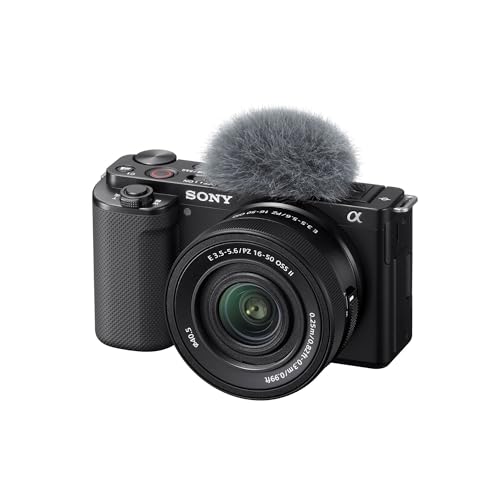
Sony ZV-E10 II
A fully articulating screen and a one-button background-defocus control make self-recorded video simple before you understand aperture. A built-in microphone captures usable sound without an accessory. The E mount taps Sony’s large, affordable lens catalogue, which carries over if you later move to full frame.
Pros
- Built for easy self-recorded video
- Large, affordable E-mount lens catalogue
- Capable built-in microphone
Cons
- No viewfinder for bright daylight shooting
- No in body stabilization

Nikon Z50 II
A viewfinder steadies shots and blocks the glare that washes out a rear screen outdoors, which helps some beginners learn faster. A deep grip stays comfortable through a long day of shooting. Clear menus and logical controls reduce the guesswork common on a first camera.
Pros
- Viewfinder helps compose in bright light
- Deep, comfortable grip for extended use
- Clear, easy-to-read menu system
Cons
- Native Z-mount lens range is still growing
- Heavier than the smallest rivals here

Canon EOS R100
This is Canon’s most affordable route into the RF system, deliberately simple for a first camera. It skips a touchscreen and in body stabilization to hit its price point, yet its APS-C sensor still outperforms any phone. For someone testing whether photography will stick, it is a low-risk way to find out.
Pros
- Lowest-cost entry into a modern RF system
- Light body that is easy to carry daily
- Same RF mount as pricier Canon bodies
Cons
- Fixed screen with no touch control
- 4K video is heavily cropped

Fujifilm X-T30 II
Physical dials for shutter speed and exposure make changing a setting a visible, deliberate act rather than a menu dive. That tactile approach helps exposure fundamentals stick early. A 26 megapixel sensor and Fujifilm’s color profiles produce images many owners share straight from the camera.
Pros
- Dials make exposure fundamentals click faster
- Strong color straight out of camera
- Compact, well-built body
Cons
- Small grip without an add-on accessory
- Autofocus trails Canon and Sony on fast action

Sony Alpha a6100
Fast autofocus and a viewfinder at a low price have made this a beginner favorite for years. Eye tracking locks onto people and pets, making sharp shots easy for a newcomer. The E mount taps the same enormous lens catalogue as Sony’s other bodies, the widest affordable selection on this list.
Pros
- Quick, reliable autofocus for the price
- Viewfinder plus a flip-up screen
- Widest choice of affordable E-mount lenses
Cons
- Menus feel dense and dated
- No in body stabilization

Panasonic Lumix G100D
A small Micro Four Thirds body and lens weigh little enough to slip into a bag without a second thought. A fully articulating screen and a helpful built-in microphone make casual video easy. The smaller sensor trades some low-light reach for that portability, which suits travel and family use.
Pros
- Very light for carrying everywhere
- Articulating screen with decent built-in audio
- Small, affordable Micro Four Thirds lenses
Cons
- Smaller sensor limits low-light performance
- 4K video caps out at 30 frames per second
Side by side
| # | Model | Sensor | Best for | Score | Price |
|---|---|---|---|---|---|
| 1 | Canon EOS R50 | 24 megapixel APS-C | Best overall | 9.3 | Check price |
| 2 | Sony ZV-E10 II | 26 megapixel APS-C | Best for video | 9.1 | Check price |
| 3 | Nikon Z50 II | 21 megapixel APS-C | Best for handling | 9.0 | Check price |
| 4 | Canon EOS R100 | 24 megapixel APS-C | Best budget | 8.4 | Check price |
| 5 | Fujifilm X-T30 II | 26 megapixel APS-C | Best for learning | 8.8 | Check price |
| 6 | Sony Alpha a6100 | 24 megapixel APS-C | Best value | 8.6 | Check price |
| 7 | Panasonic Lumix G100D | 20 megapixel Micro Four Thirds | Best for travel | 8.2 | Check price |
What matters most
What makes a good first camera for beginners A heavy body with impressive specs does no good sitting in a cupboard because it is a chore to bring along. Beginners improve by shooting often, and that happens when a camera is light and pleasant to carry. Weigh size and comfort as heavily as any single feature, since the camera you actually take out teaches more than the one that looks best on paper.
How much does autofocus matter for a new photographer Subject and eye detection reliably nails focus on a face or pet, freeing a newcomer to concentrate on composition and light. That removes the most common cause of disappointing early shots. Every camera compared here focuses capably, though the Canon and Sony bodies lead for tracking fast-moving subjects.
Which lens mount should a beginner choose Buying a camera body really means buying into a lens system you will add to over time. A mount with plenty of affordable lenses, from the maker and from third parties, keeps costs down and options open. Sony E and Micro Four Thirds offer the deepest budget lens choice, while Canon RF and Nikon Z lean more on native glass for now.
Which camera features can a beginner skip for now It is easy to get sold on numbers that will not matter for months. Very high burst rates, professional video codecs and huge resolution add cost and complexity that early shooting rarely uses. Prioritize a comfortable body, dependable autofocus and one versatile lens, then add capability as skills and interests develop.
Good to know
Should a beginner buy mirrorless or a DSLR?
Mirrorless, for almost everyone. New cameras, lenses and features are developed there now, and mirrorless autofocus and live previews make learning easier than an older DSLR.
Do I need to understand manual settings to start shooting?
No. Every camera compared here includes automatic and guided modes that produce good results immediately, letting you learn manual control gradually as confidence grows.
Is a kit lens good enough for a beginner to start with?
Yes. A kit zoom is versatile and teaches you which focal lengths you enjoy. Many beginners later add one affordable prime lens for low light and portraits.
How many megapixels does a beginner actually need?
Around 24 megapixels is plenty, and it is what most cameras here offer. That resolves fine detail and allows cropping while keeping file sizes manageable.
Does a viewfinder matter for a first camera?
It helps in bright sunlight and steadies the camera against your face, though it is not essential. Some excellent starter cameras rely on the rear screen instead to save size and cost.
Will my lenses still work if I upgrade my camera body later?
Yes, as long as you stay on the same mount. A system with a clear upgrade path means lenses bought now carry over to a better body down the line.
Is in body stabilization important for a beginner camera?
It helps with handheld video and low light, but most starter cameras skip it to save cost. Stabilized lenses or good lighting cover much of the same ground.
How much should a first camera cost?
Enough for a current body with modern autofocus, with some budget held back for a second lens. A good lens on a modest body usually beats an expensive body paired with only a kit zoom.
Canon EOS R50 vs Sony ZV-E10 II, which is the better first camera?
The R50 suits general stills and guided learning better. The ZV-E10 II is built specifically around self-recorded video, so the right pick depends on which one matters more to you.
The verdict
The Canon EOS R50 remains the best all-round first camera: light enough to carry daily, forgiving enough to learn on, and part of a system worth growing into. Lean toward the Sony ZV-E10 II if video is the main interest, or the Nikon Z50 II for a viewfinder and proper grip from the start. On the tightest budget, the Canon EOS R100 still delivers a large leap over any phone.